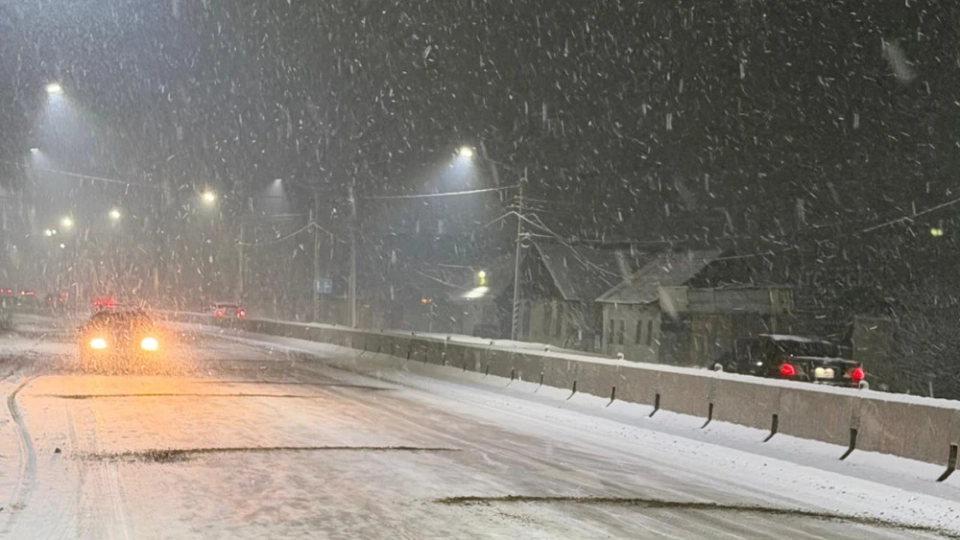
In the capital, Bishkek, and in the Chui Valley, the average daytime temperature in the first half of January ranged from +3 to +15 °C, with occasional peaks reaching +15…+16 °C. Nighttime temperatures varied from -6 to 0 °C, and on some days they reached +1…+2 °C.
Precipitation has mostly been minimal, primarily in the form of rain or wet snow at the beginning of the month. Subsequently, there have been many sunny and dry days. As of now, in mid-January, the weather remains mild, with daytime temperatures around +8…+13 °C, giving it an almost spring-like character.
However, significantly lower temperatures are observed in the high mountain valleys: during the day from -5 to +5 °C, while at night the temperature can drop to -15…-27 °C. In particular, in the Ak-Tala district of the Naryn region, temperatures reach -30…-35 degrees. In this regard, local authorities have decided to switch to remote learning for schoolchildren.
Among the Kyrgyz, there is a proverb: “Toksondun tüşkönü jaman. Childenin chykany jaman,” which signifies the beginning of a cold period called “tokson,” starting on December 11. In some years, its start can shift by 3-7 days forward or backward. Usually, during this time, snowfalls occur, and severe frosts are observed.
Traditionally, the “tokson” period covers the time from December 13 to March 13. However, some folk astronomers claim that its duration is from December 18 to March 18. During this time, the weather changes sharply, and frosts come to the region. A week before the start of this period, the temperature drops sharply, reflecting the folk expression “ötükchönö salam ait, ötügi jokkó özüm baram” — analogous to the Russian saying “Frost bids the clothed to bow, while the unclothed he visits himself.”
The “tokson” period is divided into three phases:
- initial phase — from December 13 to January 8;
- middle phase — from January 8 to February 18;
- final phase — from February 18 to March 13.
According to local elders, there is a saying “Tokson ketpey, ton ketpeit” — as long as tokson does not leave, the frosts will not disappear. As soon as the “toksondu chäl” (which can be translated as “90-year-old old man”) leaves, the weather becomes warmer, and sometimes “sary kar” (yellow snow) falls, and it may also rain. People say: “Toksondugu abyshtka ontop ary-beri bir yptasynan ekinchi yptasyna oodarylyp atat” — the old man groans and rolls from side to side. The period after March 13 is called “toksondugu chäl ketti,” symbolizing the arrival of spring and improved weather conditions.
After the end of the “tokson” period, the time of winds begins in the Kochkor district. Some residents, feeling the cold, believe that the cold period known as “childe” (consisting of the 40 coldest days of the year) has begun, although it actually lasts from January 8 to February 18.
Sherimbek Ömürkaliev, a resident of the village of Kara-Küngöy in the Kochkor district of the Naryn region, previously informed a correspondent from Turmush about the division of “kysh childe” into 6 periods, which in total last forty days and forty nights.
“The first period, called “kyrdach,” lasts from January 8 to 13. The second, a six-day period, lasts from January 14 to 19. The third six-day period — “Zhetenin zheti uulu” — is from January 20 to 26. This time is considered the coldest days of “childe.” The fourth period, “Kangtar,” lasts just one day, January 27, and signifies that the twentieth day of “childe” has passed.
Then comes the second half of “childe.” The fifth period, “Üt,” covers the time from January 28 to February 11, when heavy snowfalls and rains are expected in many regions. The sixth period, called “Apkyt sapkyt alty kün,” lasts from February 12 to 18. The complete end of “childe” is expected on February 18,” he added.