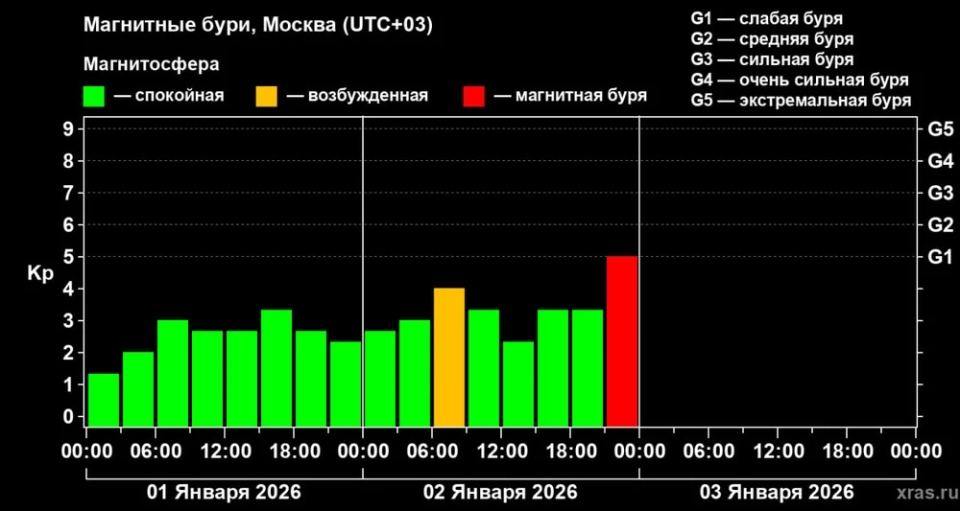
The auroras reached the lower boundary of about 50 degrees latitude, with their peak observed from 1:00 to 3:00 Moscow time, at a maximum intensity of 10 on the scale. However, due to poor weather conditions, observing this phenomenon was difficult.
The best conditions for observation were in the Kemerovo and Chelyabinsk regions, the Khanty-Mansi Autonomous Okrug, and in some areas of the Murmansk region. Auroras were also visible over a significant part of Europe, including Scandinavia, Poland, and Germany, as reported by specialists from the Institute of Cosmic Research of the Russian Academy of Sciences (IKI RAN).
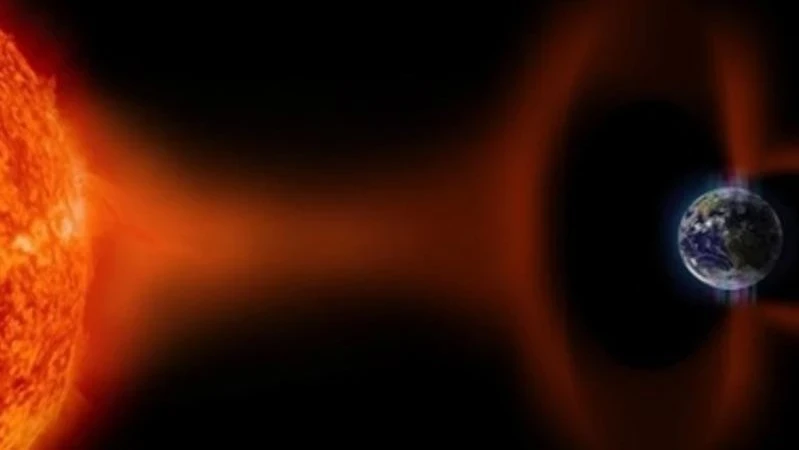
Scientists believe that the cause of this magnetic storm was a cloud of plasma ejected by the Sun during one of the weak flares in the previous days. In particular, on January 8, a powerful explosion occurred on the Sun, which coincided with the event that became the catalyst for the storms, according to IKI RAN.
The forecast released earlier was based on a less powerful event that was expected to start only in the middle of the day. However, the earlier arrival of the plasma cloud and the high intensity of the auroras came as a surprise, noted the Russian Academy of Sciences.
The first magnetic storm of 2026 began on January 3, caused by plasma ejected as a result of a flare on December 31.