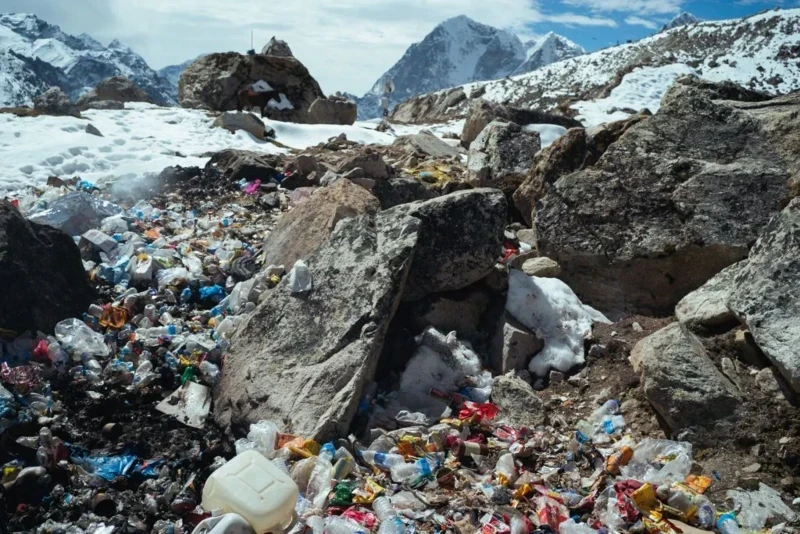
Initially, it was expected that this program would help solve the problem of waste on the highest peak in the world, where it is estimated that about 50 tons of waste has accumulated. However, after 11 years, officials decided to halt the program, noting that it did not yield significant results and waste continues to accumulate.
As Himala Gautam, head of Nepal's tourism department, told the BBC, the waste problem has not only persisted but the deposit system has become an "administrative burden." According to him, most climbers have returned their deposits, but this did not solve the problem, as much of the waste remained in the lower camps, while the upper areas continued to be polluted.
Tsering Sherpa, head of the pollution control committee in Sagarmatha National Park, noted that climbers usually only bring down oxygen tanks, while tents and food packaging are left behind. On average, each climber leaves behind 12 kg of waste during the acclimatization process, which takes about six weeks.
Regional authorities emphasize that the main difficulty lies in the lack of oversight. According to Sherpa, inspections are only conducted at the checkpoint above the Khumbu Glacier, while other areas remain unmonitored.
In hopes of improving the situation, Nepalese authorities plan to implement a new system. Climbers will be charged a non-refundable fee for waste cleanup, which will go towards organizing oversight at Camp 2 and maintaining mountain rangers to ensure that climbers take their waste with them.
The new fee is expected to be the same $4,000 as the previously established deposit and will come into effect after parliamentary approval. Local Sherpas have long advocated for changes to the existing system.
Mingma Sherpa, head of the Pasang Lhamu municipality, noted that there have been no cases where climbers were punished for leaving waste, leading to doubts about the effectiveness of the deposit system. He hopes that the new scheme with a non-refundable fee will help create a fund for cleaning up the mountain.
The issue of waste on Everest remains unresolved, but it is believed that there is a significant amount, including human waste, which does not decompose due to low temperatures. Each year, the number of climbers and their support staff increases, raising growing concerns about the state of the environment.