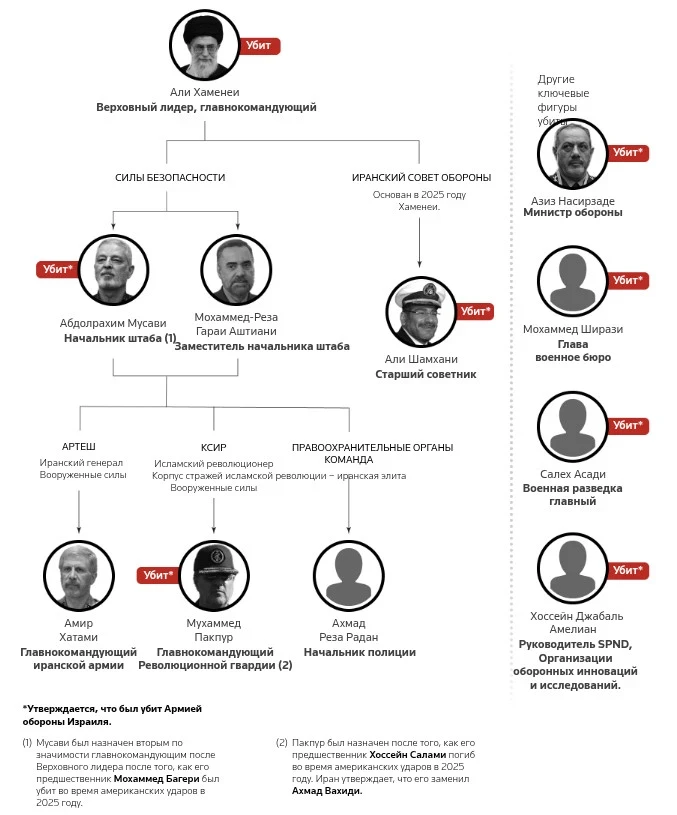
As a result of these attacks, several key representatives of the Iranian military leadership were also killed, as reported by the Israeli side.
According to Reuters, a number of high-ranking Iranian military officials have been eliminated during Israeli operations over the past two years, significantly weakening the influence of Iranian proxy forces in the Middle East.
On Sunday, Iranian President Masoud Pezeshkian announced the establishment of a temporary governing council that will perform the duties of the Supreme Leader. The council includes himself, the head of the judiciary, and one of the members of the Guardian Council of the Constitution.
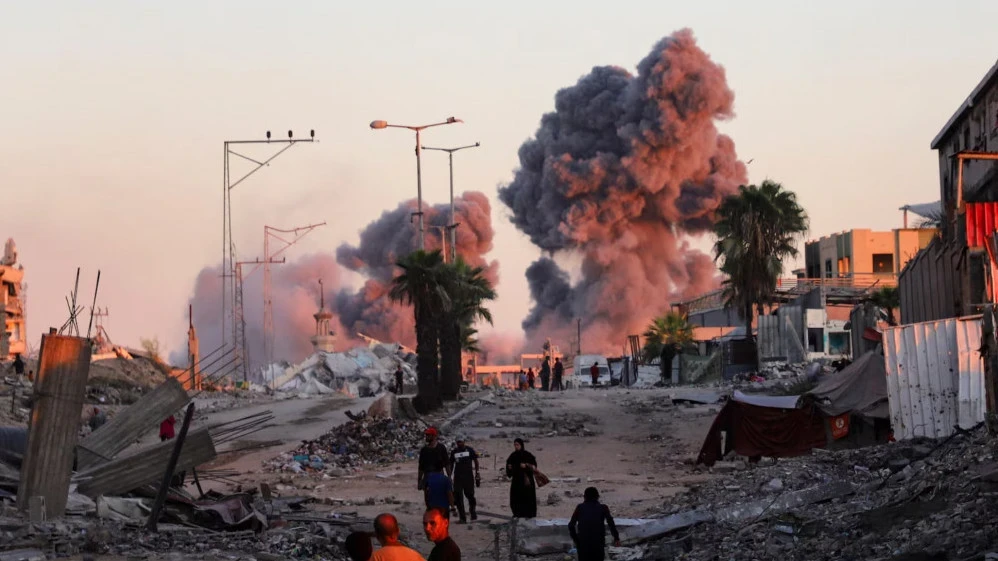
Ali Larijani, head of the security service, accused the US and Israel of trying to divide Iran and create chaos, warning "separatist groups" against possible actions against the state. These statements were made against the backdrop of a new wave of airstrikes, including on a girls' primary school. However, Reuters was unable to confirm these reports.
Power Structure in Iran
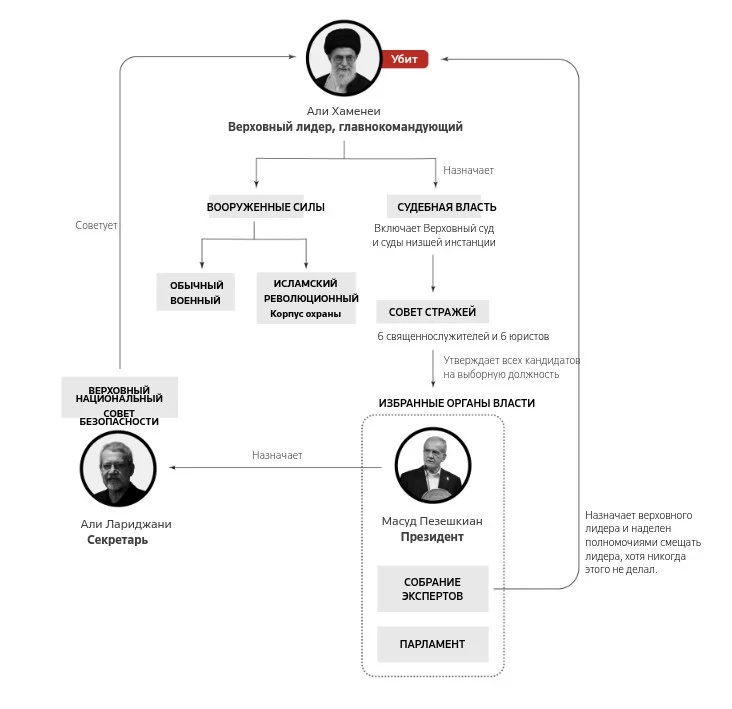
After the assassination of Khamenei, senior American officials expressed doubts that US and Israeli military actions would lead to an immediate regime change in Iran.
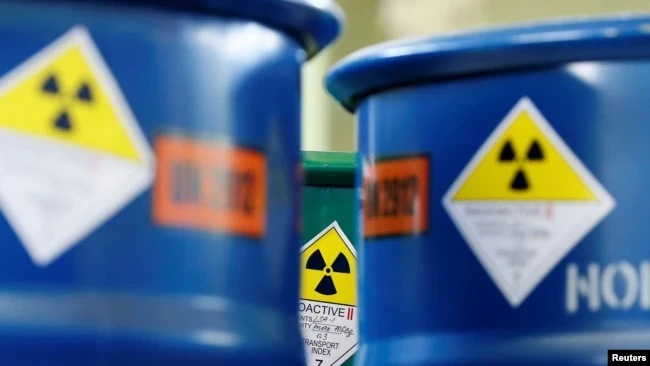
Discussions in American intelligence circles have not only focused on the potential consequences of a change in the Iranian government. In recent months, there have been active debates among various agencies about how Khamenei's death could affect Iran's nuclear program and negotiations with the US.
Anonymous sources told Reuters that American officials were also considering how Khamenei's death or overthrow could impact Iran's nuclear and missile programs.
Map of Attacks on Iran and Tehran's Response (March 1, 2026, 16:27 GMT+6)
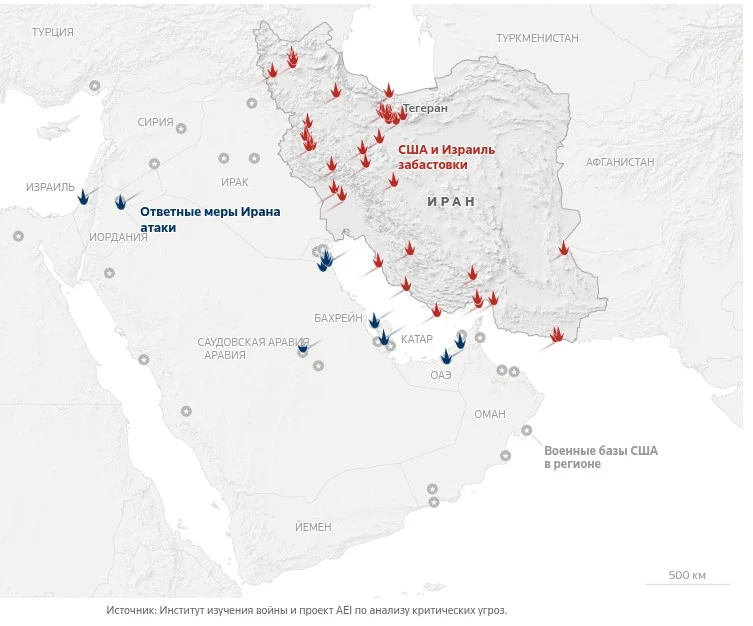
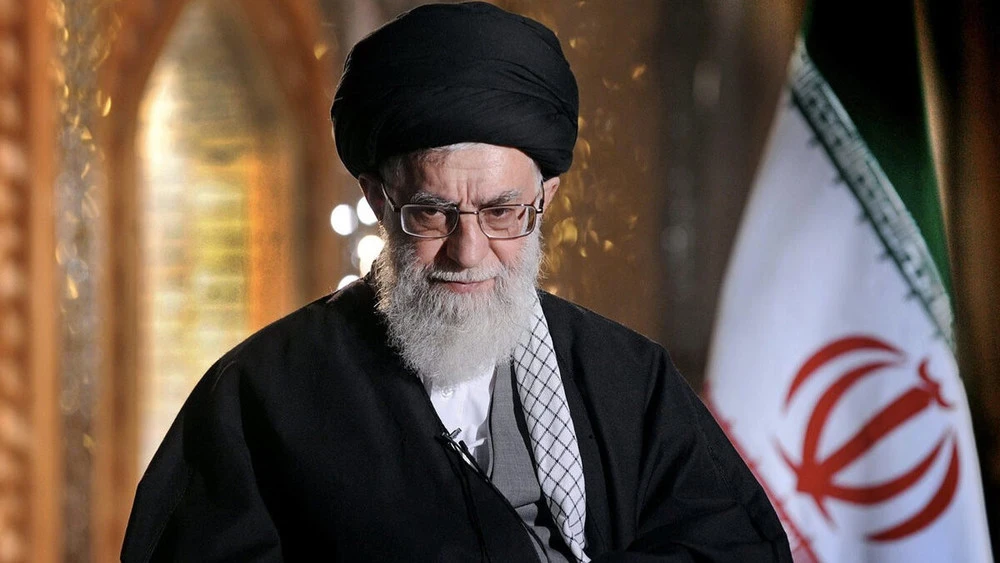
Saturday's attacks by the US and Israel were the most significant in decades, culminating in the assassination of Supreme Leader Khamenei.
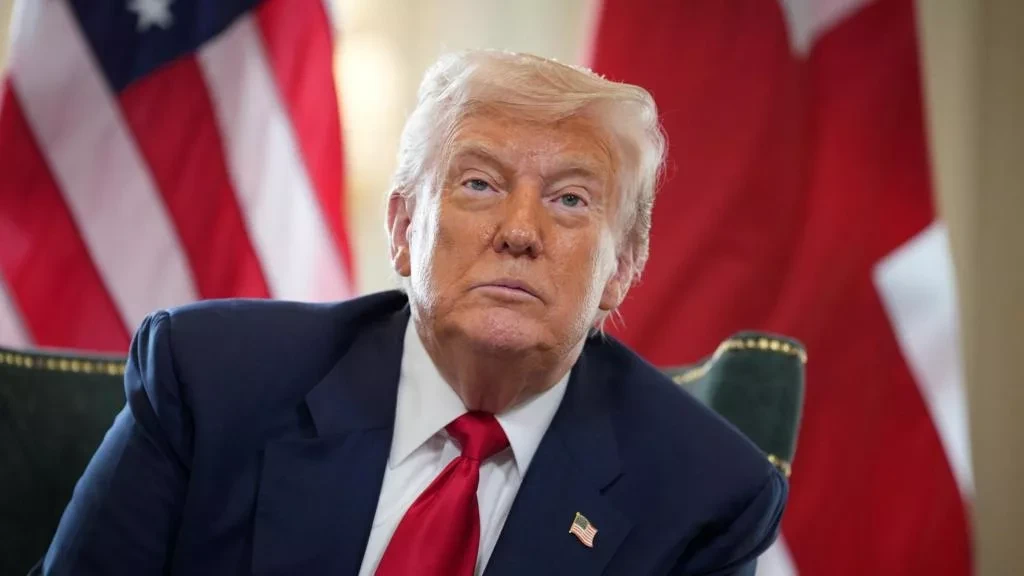
This event has become the largest foreign policy risk during Donald Trump's presidency, who, in seeking re-election, positioned himself as the "president of peace," preferring diplomatic solutions regarding Iran.
During the operation, the United States used a variety of weapons, including Tomahawk cruise missiles, stealth fighters, and for the first time in combat, low-cost strike drones developed based on Iranian technologies.
Iran characterized these strikes as illegal and baseless, responding with missile strikes against Israel and several other countries where American troops are located in the Persian Gulf.