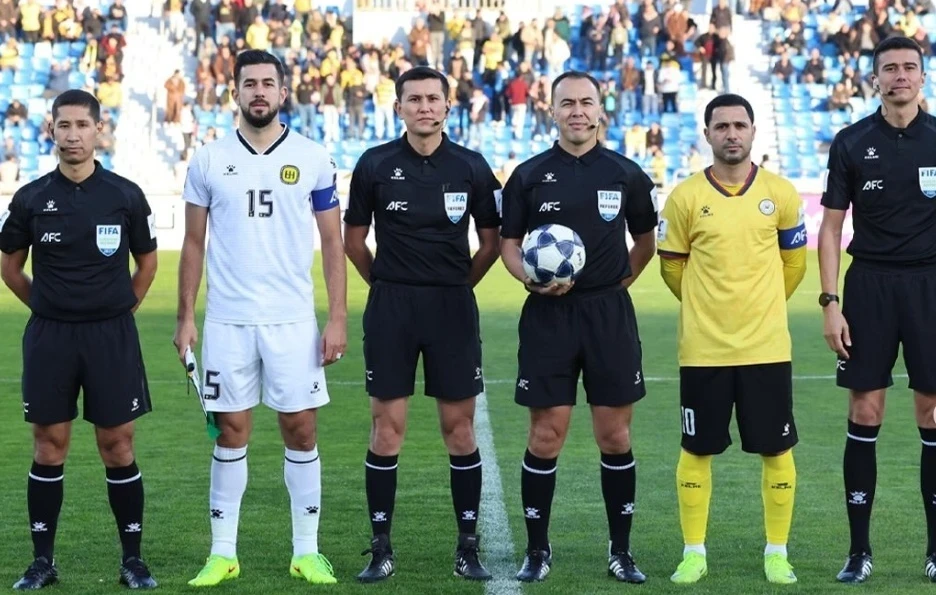
The motto of the event: "Hearing is possible thanks to technology. Being heard is thanks to people."“I am the mother of a child with hearing impairment; my son’s name is Alinur. I have three children, and only he has hearing problems. Alinur is in the second grade and is successfully mastering the curriculum. He uses binaural hearing aids,” the woman shares.
Alinur's mother noted that many parents expect their child to start speaking immediately after hearing aids are fitted. However, for this, the development of understanding is necessary: the child must learn to comprehend information and adapt to the surrounding environment.
“During the rehabilitation process, we used a comprehensive approach: classes with a deaf educator, speech therapist, and defectologist, as well as physical and motor development. This yielded significant results. Alinur became more stable, and his coordination improved. Children with hearing impairments often experience vestibular system dysfunction, which can manifest as clumsiness. Developing motor skills and proprioception allows the child to better perceive the world and develop speech,” notes Rysbaeva.
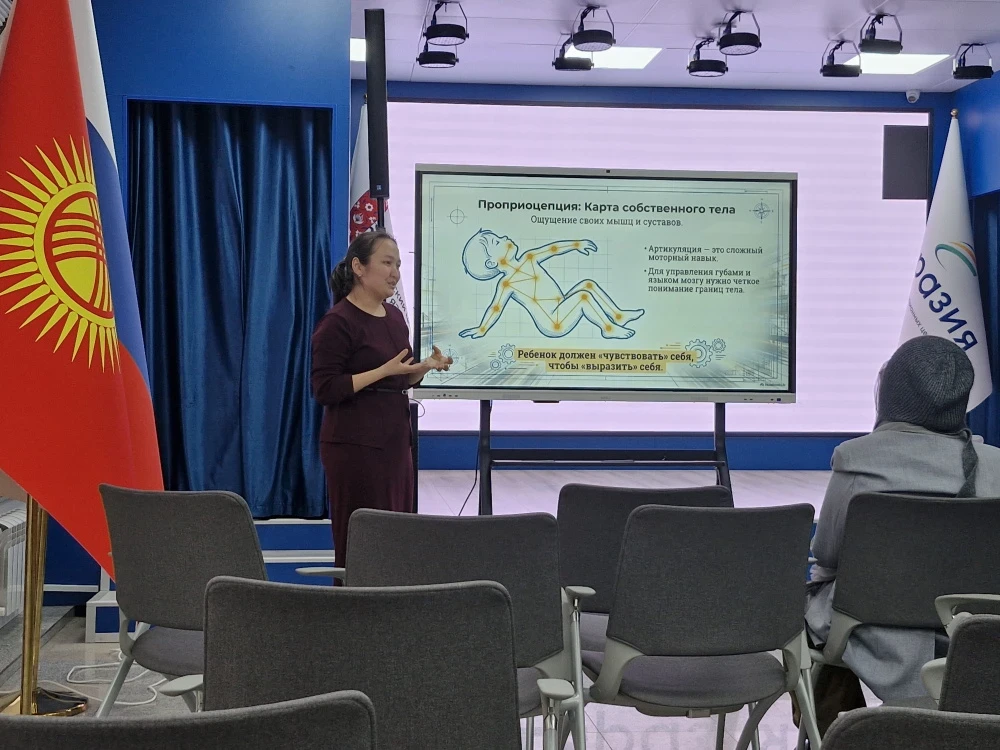
Tattygul Rysbaeva. Event dedicated to the International Day of Cochlear Implantation.
“Children who start hearing later perceive the world mainly through sight. For example, at five years old, Alinur learned the multiplication table thanks to cartoons and visual learning. He has a special passion for numbers, knows them in Russian and English, can count to a million, and perform arithmetic operations. But his speech developed more slowly than his mathematical skills,” the mother recounts.
After starting to use hearing aids, work on vocabulary became active. They used visual cards, where, for example, the process of opening a window was depicted. “I pronounced words and showed actions to establish a connection between the word and its meaning,” shares Alinur's mother.
During walks to kindergarten, they discussed everything they saw: cars, houses, trees, grass. This repetition process helped the child reinforce new words through hearing, visually, and tactilely.
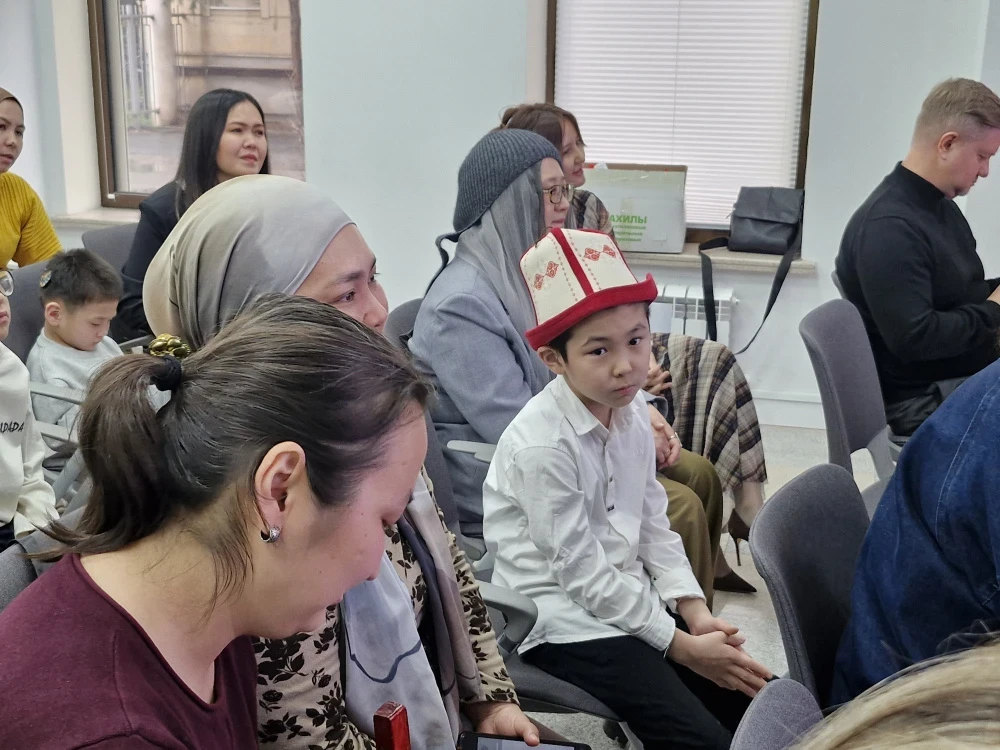
Alinur. Event dedicated to the International Day of Cochlear Implantation.
Rysbaeva emphasizes that such work requires the constant involvement of the entire family.
“Only the involvement of the whole family in the rehabilitation process brings results,” she is confident.It is also important to take care of the hearing aids, which require constant maintenance. “Batteries run out quickly. After work, I always check if everything is okay with the devices. We clean them at least every two days, as earwax can block the tube. The devices need to be dried properly and removed at night so they can 'rest' and not make sounds,” Tattygul Rysbaeva explains.
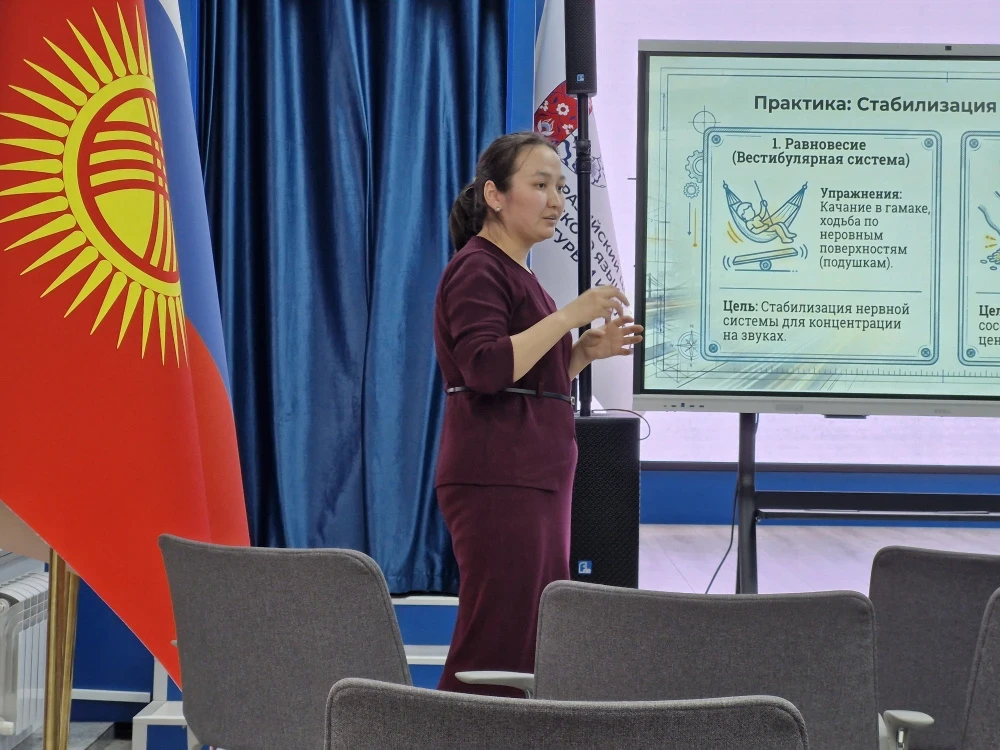
Tattygul Rysbaeva. Event dedicated to the International Day of Cochlear Implantation.
It is also important to explain to the child that these are his hearing aids and no one should touch them. He should be able to explain to other children that these are not headphones, but devices that help him hear.
“Once, a classmate asked Alinur if he had headphones. He calmly explained that these are hearing aids,” Rysbaeva shares.“Before enrolling Alinur in school, I discussed this with the administration and teachers. I emphasized the importance of an inclusive environment for his full development as a member of society. He is teachable and attentive, and he has no mental disorders. Usually, children with hearing impairments are directed to specialized institutions, but we were recommended a mainstream school,” she recounts.
Rysbaeva adds that those around them respond appropriately to her son's characteristics. They have not faced blatant discrimination. “Perhaps someone thinks something to themselves, but no one expresses negative comments aloud. I see my child as a full member of society and never allow anyone to treat him with pity. I am stricter with him than with other children because if high goals are not set, he may start to become lazy,” the mother shares.
Today, Alinur does his homework independently (except for complex math problems). He helps his younger brother, who is in the first grade, keeps track of his assignments, and brings the necessary books. The boy feels his responsibility as an older brother.
“I want to emphasize: before losing his hearing, Alinur reacted well to sounds. For example, he could hear when a soda was opened in the kitchen from another room. He heard, but then he lost his hearing. It is important to be open and kind to children and people with special needs,” concludes Tattygul Rysbaeva.