A recent analysis conducted by the Singularis analytical club and published on the VB.KG platform highlights pressing security issues in the context of global changes. Club members, representing various professions, are convinced that the world is entering a period of "great reset" in security. In light of conflicts in the Middle East and Central Asia, the survival of countries like Kyrgyzstan is shifting from theory to harsh reality. The club's work covers various aspects of security, and it is time not only to analyze but also to act to prevent potential threats.
The current global situation is characterized by serious challenges. Following the death of Ali Khamenei on February 28 and the launch of Operation "Epic Fury" in March 2026, Iran has ceased to be a reliable supplier of energy resources. This has caused oil prices to surge to $100–150 per barrel, negatively impacting countries dependent on imports. Kyrgyzstan, in particular, may face rising prices for fuel and lubricants, given its 90% dependence on external supplies, as well as logistical issues. Additionally, the conflict between Kabul and Islamabad, which began in February 2026, has created a new zone of instability at the borders of Central Asia. Pakistan, with its nuclear arsenal and an army of 650,000, is forced to direct resources towards combating the Taliban, which adversely affects regional initiatives such as CASA-1000. At the same time, Afghanistan, with its experience of prolonged guerrilla warfare, is becoming a "black hole," generating streams of refugees, the number of which has already exceeded 115,000 by March 2026.
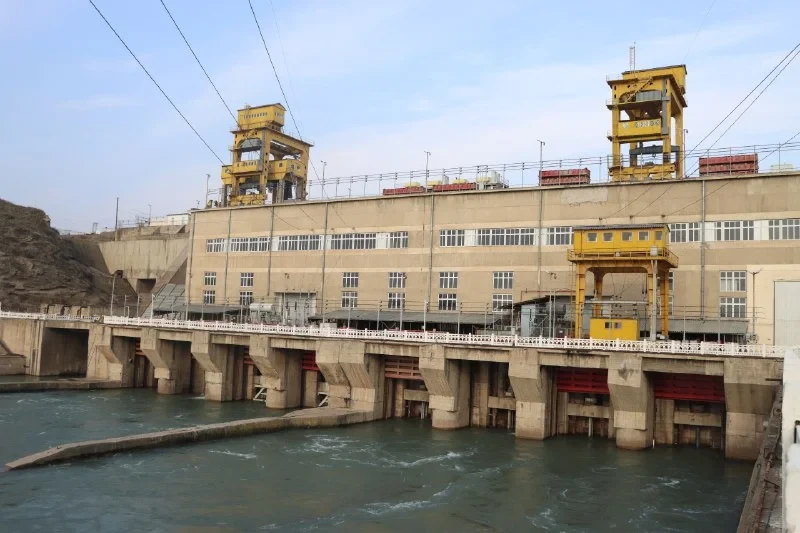
The experience of past crises, such as the Indian blackout of 2012 (which left 670 million people without power) and the pandemic of 2020, has revealed Kyrgyzstan's vulnerability—its dependence on food and medicine imports. The closure of borders in 2020 led to shortages of basic goods and paralysis of the healthcare system. The current situation in Iran and Afghanistan is not a "distant war," but a harbinger of an impending energy, banking, and food crisis in Kyrgyzstan. The country faces a constant electricity deficit: winter consumption exceeds generation, and the water level in the Toktogul reservoir often falls to critically low levels (below 6-7 billion cubic meters). Authorities must consider: what will happen if the regional energy system of Central Asia fails due to cyberattacks or sabotage amid a global conflict? Will the hydroelectric power plants have enough resources for the country to function autonomously if electricity supplies from Kazakhstan and Turkmenistan are cut off?
The economy of Kyrgyzstan significantly relies on cashless transactions and remittances from migrants, which increases the risk of a banking blackout. In the event of a SWIFT shutdown or large-scale server failures due to a lack of electricity, Visa and Elkart cards will become useless. Does the National Bank of the Kyrgyz Republic have a backup plan in case of a global internet shutdown or attacks on the banking sector? How prepared is the country to revert to cash circulation in the context of the som's devaluation? Food security also raises serious concerns: Kyrgyzstan imports the majority of its wheat, sugar, and vegetable oil. Conflicts in Iran and Afghanistan block southern transport corridors, and if the northern borders are closed, the food supplies in state reserves will last only 2-3 months.
The analysis of events in March 2026 shows that the world has become extremely unpredictable. The main conclusions for Kyrgyzstan are as follows: energy independence is critically necessary—without the construction of new capacities (small hydropower plants, solar stations), any disruption in the region could lead to a humanitarian catastrophe; it is essential to develop nuclear power plants that are not dependent on climate, water resources, and external conditions. The localization of critically important data and payment systems within the country should become a priority. Food security must become the number one issue—self-sufficiency in basic products is a matter of national security, not just economics. Unfortunately, Kyrgyzstan is not yet ready for a "full blockade." The experience of COVID-19 taught us survival in isolation; however, a large-scale energy and financial blockade requires strategic decisions that must be made immediately. The time to think has come, and it is time to stop viewing everything through the lens of the phrase "It can't be!"
In the film "World War Z" (2013), there is an important concept of the "Tenth Man," which represents a rule introduced by Mossad chief Yürgen Warmbrunn. This principle arose in response to Israel's repeated unpreparedness for unexpected threats. The essence of the rule is that if nine out of ten council members come to the same conclusion, the tenth must disagree. His task is to assume that the others are wrong and to begin preparing for the most unlikely scenarios. Yürgen Warmbrunn emphasized: "If nine of us, receiving the same information, come to the same conclusion, the duty of the tenth is to disagree. No matter how unlikely it may seem, he must seek evidence that the other nine are wrong." People often do not believe in the possibility of disasters until they happen—that is simply human nature. It would be bitter if Kyrgyzstan does not find that very tenth person who can become a Messiah in our turbulent times.