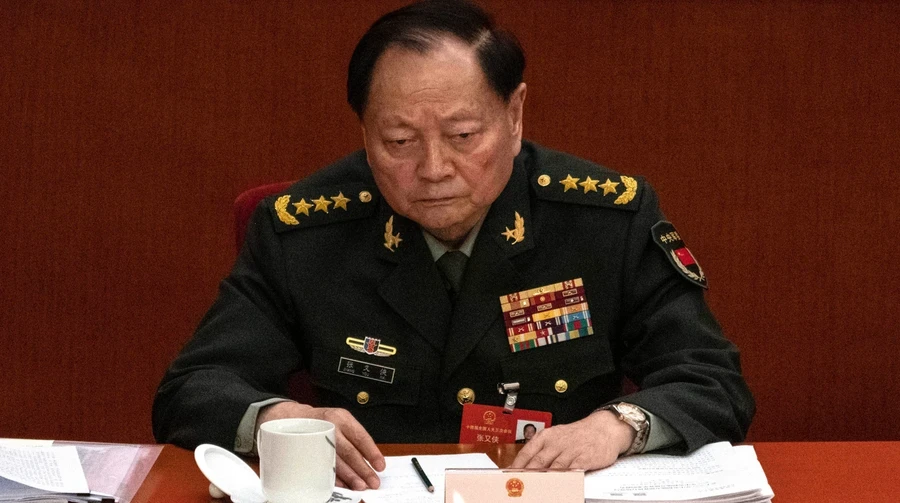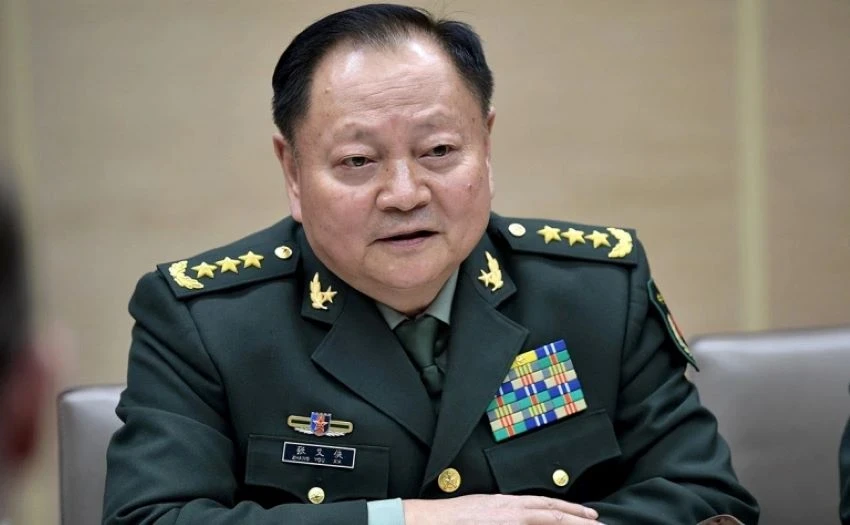
Over the weekend, General Zhang Youxia, who held the position of Vice Chairman of the Central Military Commission and was a member of the Communist Party's Politburo, was dismissed in China. This event raises many questions about Beijing's intentions regarding Taiwan, as well as its competitive struggle with the United States and China's status as a stable player in the Asian region, notes Reid Standish.
According to information provided by Beijing on January 24, General Zhang Youxia, a close ally of Xi Jinping, is now under investigation. His unexpected dismissal has practically left Xi Jinping as the sole representative of the top command in the armed forces. Experts on Chinese affairs assert that this could significantly impact the continuity of power, raising interest among both China's allies and adversaries.
“For decades, China has cultivated an image of a country with clear long-term strategies, planning the expansion of its influence and competition with the U.S. However, this raises questions about the actual state of affairs within the country and how much control Xi Jinping has over his environment,” comments Temur Umarov, an expert at the Carnegie Center in Berlin.
WHAT HAPPENED AND WHY IS IT IMPORTANT?
In the context of the opacity of the Chinese political system, it is difficult to ascertain the true reasons for the dismissal, but it occurred just before an important summit in Beijing with Donald Trump, scheduled for April. This decision was also made against the backdrop of political maneuvering ahead of the upcoming elections, which occur every five years. In 2027, Xi Jinping is expected to run for a fourth term as the leader of the Communist Party.
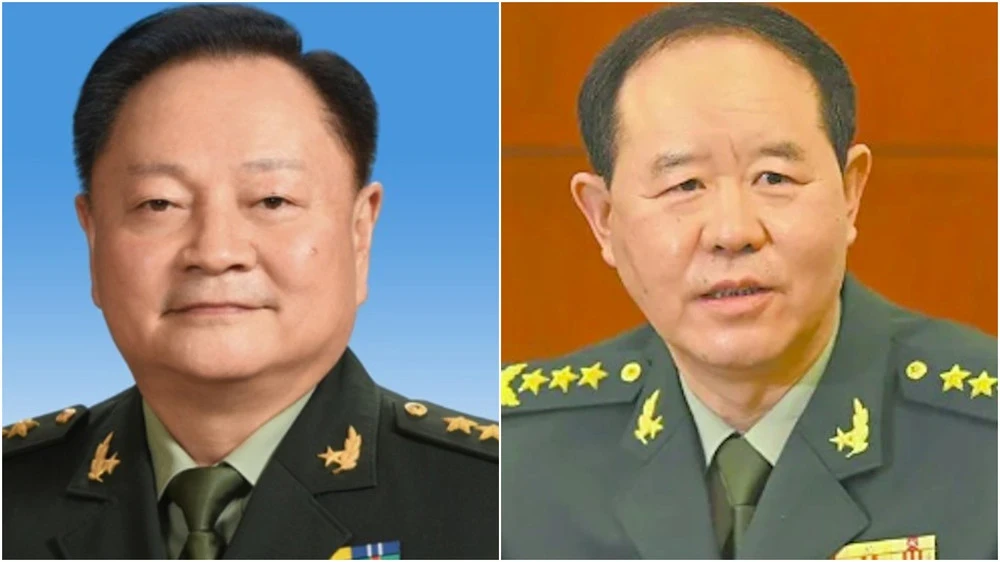
The Chinese Ministry of Defense stated that Zhang Youxia is accused of “serious violations of discipline and law.” Similar accusations have been made against another general, Liu Zhenli, who also holds a high position in the Central Military Commission.
In an editorial column of the military publication Liberation Army Daily on January 25, it is emphasized that Zhang Youxia and Liu Zhenli “betrayed the trust and expectations” of the party and the Central Military Commission, leading to the emergence of corruption and political problems that threaten the party's absolute leadership over the army.
The American newspaper Wall Street Journal, citing sources, reports that Zhang Youxia is accused of leaking information about China's nuclear programs to the U.S. and accepting bribes for promoting military personnel to high positions.
RFE/RL cannot independently confirm this information.
Some analysts express doubts about the accusations of leaking intelligence information. Neil Thomas, a researcher at the China Analysis Center, believes it is hard to believe that such an experienced general as Zhang Youxia could betray the country's interests and pass secrets to its main rival, as he mentioned in his post on platform X.
Zhang Youxia is also among the “princelings” — descendants of high-ranking party officials and revolution veterans. His father fought alongside Xi Jinping's father in the civil war that ended with the communists' victory in 1949, and both held key positions. Additionally, Zhang Youxia has combat experience, having participated in conflicts with Vietnam in the 1980s.
His removal appears to be part of a broader campaign to cleanse the upper echelons of the Chinese armed forces, which has been ongoing for the past few years. From 2023 to the fall of 2025, about 20 generals have been dismissed, six of whom were from the rocket forces responsible for both nuclear and conventional arsenals.
After these dismissals, only one active officer and two active members remain in the Central Military Commission, including Xi Jinping.
WHAT DOES THIS MEAN FOR CHINA'S NEIGHBORS?
The events surrounding Zhang Youxia, one of China's most influential generals and a member of the Politburo, raise questions about the level of discontent within the Chinese elite.
This certainly draws the attention of Beijing's regional partners in Central Asia, who traditionally view China's political stability as a model of resilience in the face of the upheavals faced by Central Asian countries after the collapse of the Soviet Union.
“This purge and the instability it creates will cause concern among decision-makers in Central Asia,” adds Umarov.
Zhang actively engaged with world leaders, making numerous trips to the U.S. and meeting with officials in many Asian countries — from Pakistan to Vietnam. He also served as co-chair of the Russian-Chinese intergovernmental commission on military-technical cooperation and visited Moscow multiple times for talks with high-ranking officials, most recently in November when he met with Defense Minister Andrei Belousov.
Umarov believes that the general's dismissal is unlikely to affect China's security cooperation with its neighbors.
Central Asia, he says, has been building ties with China for many years, and these relationships are “institutionalized.” Security cooperation covers several areas, including law enforcement and arms supplies.
WHAT DOES THIS MEAN FOR TAIWAN?
Changes within China may also affect countries in the Pacific region, especially Taiwan, which Beijing considers part of its territory.
Experts argue that Zhang Youxia's removal could impact China's military ambitions regarding Taiwan. Xi Jinping has repeatedly stated the need for the island's reunification with the mainland, even threatening force if necessary.
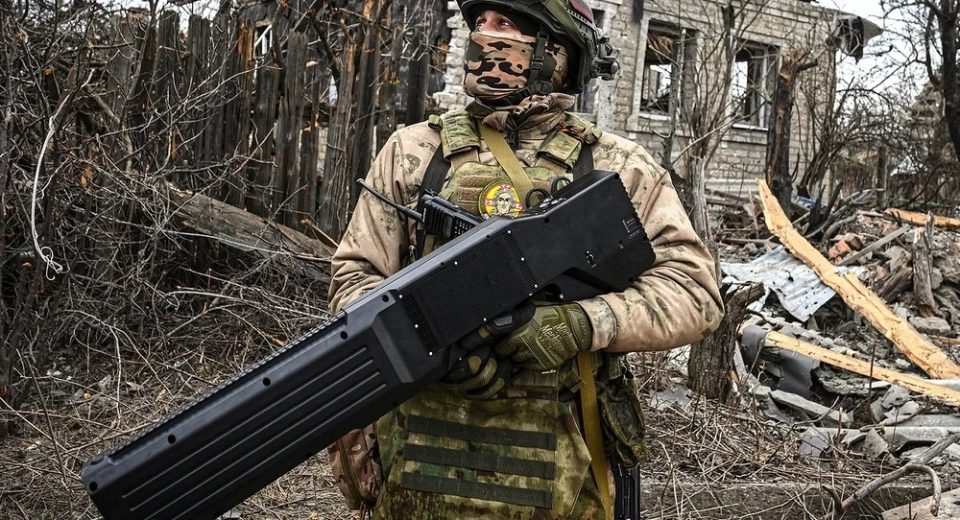
In late 2025, China conducted large-scale military exercises around Taiwan, and Beijing regularly sends its aircraft and ships into its air and maritime space.
“We will closely monitor changes in the upper echelons of power in the party, government, and military of China,” stated Taiwan's Defense Minister Wellington Koo on January 26. “We will not allow personnel changes to weaken our vigilance or reduce our readiness for possible war.”
Drew Thompson, a former Asia strategist at the Pentagon and currently working at the Rajaratnam School of International Studies (RSIS) at Nanyang Technological University in Singapore, emphasizes that purges in Beijing will impact Taiwan and the United States, which supports the island.
“For the U.S. deterrence strategy to be successful, Xi Jinping needs to have competent generals on his side who can provide him with objective advice,” Thompson notes in his newsletter.
He also points to potential risks associated with Xi Jinping commanding the army through a narrow circle of people, which could lead to miscalculations in management.
The arrest of Zhang Youxia was a signal of the breakdown of the unwritten rules of party aristocracy, which could provoke a coalition against Xi Jinping within the communist nomenklatura.
The ten most influential communist clans in China (according to Telegram channels):
The Deng Xiaoping Clan
Heir — son Deng Pufan. The family's influence has decreased, but residual prestige remains.
The Chen Yun Clan
Heir — son Chen Yuan, controlling large financial flows.
The Ye Jianying Clan
Heir — Ye Xuanlian, connected to military intelligence.
The Jiang Zemin Clan
Heir — son Jiang Mianheng, controlling telecommunications.
The Wang Zheng Clan
Heir — son Wang Jun, connected to major investment corporations.
The Yao Yilin Clan
Heir — Wang Qishan, married to Yao's daughter.
The Zeng Qinghong Clan
A protégé of Jiang Zemin, with connections in the intelligence services.
The Hu Jintao Clan
Maintains support at all levels of power.
The Wen Jiabao Clan
The family's wealth significantly increased under Hu Jintao.
The Li Peng Clan
Heir — daughter Li Xiaolin, controlling the energy sector.
The Chinese political system is broken — Foreign Policy.
Before Zhang Youxia's arrest, Xi Jinping's purges followed unwritten rules, according to which:
— Politburo members were not prosecuted;
— “Princelings” were protected from accusations;
— retirees from the Standing Committee remained above suspicion.
Zhang's arrest signaled that the rules of “the higher the rank, the safer” and “the closer to family ties, the more protection” no longer apply.
Xi Jinping's actions have shown that he is willing to act even against those who were close to him, which raises questions about his control over the situation.
However, his excessive power may become the cause of his downfall. After many years of fighting corruption, the situation does not appear successful, and Xi Jinping finds himself ineffective in eradicating corruption.
The established system may prove more fragile, and political decisions more conservative and mechanical, making it difficult to find competent individuals willing to take responsibility.
Thus, the question is not who will be able to oppose Xi Jinping, but who will be able to continue working with him.