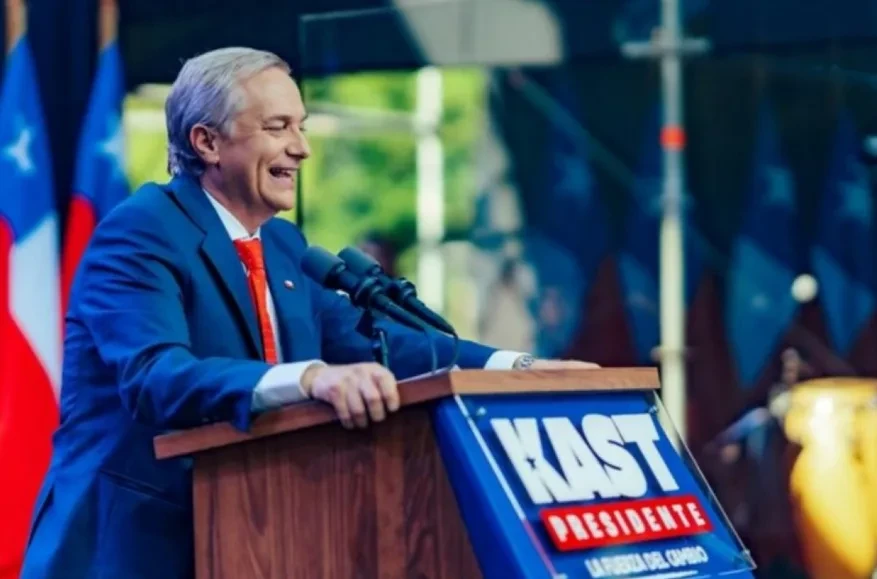
The elections in Chile, which concluded in December with the triumph of the far-right politician José Antonio Kast, were the result of citizens' dissatisfaction with the current social reforms of the left-wing government and failures in drafting a new constitution, which was the main demand of the protesters in 2019. Kast, the son of a veteran of the German Wehrmacht who praises Pinochet and supports Argentine President Milei, came to power through democratic voting. He promises economic liberalization, increased working hours, strict financial discipline, and control over migration, as noted by Víctor Márquez.
Unexpected Success
The elections, in which José Antonio Kast, leader of the Republican Party, won in the second round, were both a shock and a predictable outcome. In the first round, he lost to the candidate from the Communist Party, Jeanette Jara (23.9% to 26.8%), but in the second round, the gap was 58.2% to 41.8% in his favor. Kast managed to win in all 16 regions of the country, which was unprecedented for Chile.
This is also the first victory for a president who gathered 7.2 million votes out of 18.5 million residents of the country. Voter turnout was 85%, likely due to the introduction of mandatory voting in the referendum on the new constitution three years ago.
Two other right-wing candidates, Johannes Kaiser and Evelyn Matthei, who together garnered about 26% of the votes, immediately announced their support for Kast after the first round, contributing to his victory.
These elections demonstrated a deep polarization in Chilean society, where many felt that the choice was between socialism and fascism. Populist Franco Parisi, who came in third in the first round, urged his supporters to cast invalid ballots to avoid choosing between two extremes.
Searching for the Perfect Constitution
So why has Chile's political course shifted so far to the right this time? The answer lies in key events that have impacted the country over the past six years.
In October 2019, Chile was engulfed in mass protests known as the "Chilean October Revolution." They began due to a minor increase in subway fares, which was the last straw. The protests quickly escalated into a general strike with demands for the president's resignation, the convening of a Constituent Assembly, and the adoption of a new constitution. The state of emergency declared by right-wing President Piñera only exacerbated the situation: on October 25, one in ten Chileans took to the streets.
The protests were accompanied by violence from both sides, resulting in dozens of deaths and thousands of arrests. However, the government showed wisdom by removing the military from the streets and initiating dialogue with opposition forces. As a result, a peace agreement was signed, which provided for a national referendum on choosing between a new constitution and the old one adopted under Pinochet in 1980.
This period became a symbol of public awakening and hope. All editions of the Chilean Constitution were sold out, discussed at meetings, and the very idea of adopting a new constitution through democratic means became a unique event in modern history. Political scientists even compared it to "direct democracy" in Switzerland.
The attempt to adopt a radically new constitution with the participation of the entire population became a unique event in modern history
The national referendum was scheduled for April 2020, but due to the pandemic, it was postponed to October. As a result, 78% of Chileans supported the idea of drafting a new constitution. In May 2021, a Constitutional Assembly of 155 members was elected, predominantly composed of representatives of leftist forces, with quotas for women and indigenous peoples.
However, by the time of its election, the situation in the country had changed. Protests and the pandemic negatively affected the economy: Chile's GDP fell by 5.8%, and unemployment reached 13%. Social rights began to take a back seat against the backdrop of economic problems.
Work on the text of the new constitution took over a year and was put to a referendum on September 4, 2022. However, the document turned out to be complex and too radical, with a clear bias towards political correctness.
The new constitution proclaimed Chile as a multinational state, and indigenous rights became part of the legal system. However, many Chileans perceived this as a "constitution of minorities," leading to 62% voting against it, expressing their loyalty to the republican flag.
Interestingly, among those celebrating the victory against the new constitution were those who had voted for its drafting in 2020 and then chose Kast in the 2021 elections instead of the left coalition candidate.
In the 2021 presidential elections, Chileans again faced a choice between extremes: Gabriel Boric, a former leader of student protests, and Kast. Boric, despite recent protests, won the election in the second round, receiving 56% of the votes.
Upon taking office in March 2022, Boric was unable to implement reforms. The failure of the referendum on the new constitution triggered a political crisis, and the left began a new attempt to create a constitution without a Constitutional Assembly. In 2022, they agreed to prepare a new text with the participation of 24 experts and 50 members of the Constitutional Council.
The resulting text turned out to be even more conservative than the old one, preserving private pension funds and medical institutions. The ruling left coalition, realizing that it was ideologically closer to Pinochet, called for a vote against it.
In the second referendum on December 17, 2023, 55.7% of Chileans rejected the new draft, and Boric announced the end of the constitutional process, as the results showed that society was dissatisfied with any of the proposed versions.
The results of the two referendums showed that Chileans did not want either a left or a right constitution
Three years of fruitless political disputes led to fatigue and dissatisfaction, giving Kast the opportunity to hope for public support in the next elections.
The Most Right-Wing President Since Pinochet
In 2025, José Antonio Kast was nominated from the Republican Party he founded. Previously, he had been a member of the Independent Democratic Union for over 20 years and held a seat in the National Congress for four consecutive terms, but did not initiate any significant legislation, opposing laws on divorce, contraception, and same-sex marriage.
Kast opposed divorce, contraceptives, abortion, same-sex marriage, and anti-discrimination laws
In 2016, leaving the party, Kast declared its moderation and ran for president as an independent candidate. In 2021 and 2025, he ran from his far-right party.
If Gabriel Boric's government was the most leftist in a long time, Kast became the most right-wing president since the Pinochet era, with his views largely shaped by his father's influence.
The Son of a Wehrmacht Lieutenant
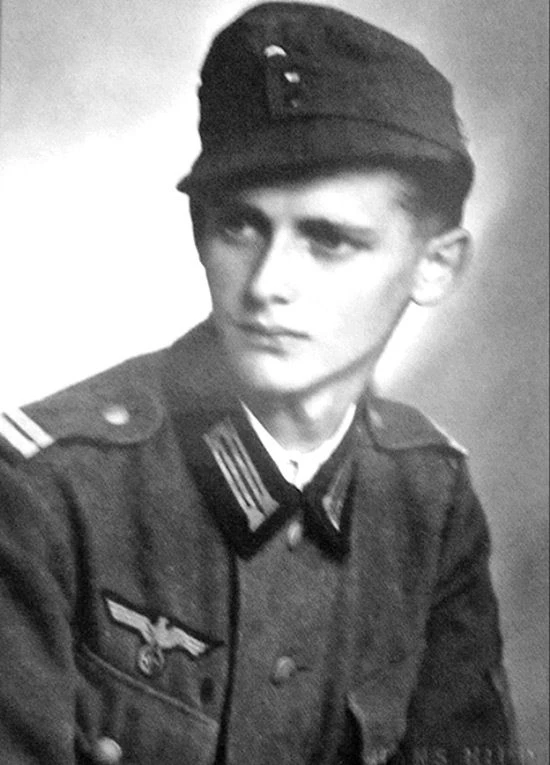
José Antonio Kast is the youngest of ten children of German immigrants. His father, Michael, a lieutenant in the Wehrmacht, fled Germany after the war to Chile, where he founded a sausage business.
Investigative journalism shows that the Kast family collaborated with the Pinochet regime, including the involvement of family members in torture and interrogations. Michael was a member of the NSDAP, and his son Miguel held high positions in the government during the dictatorship.
In 1988, during the plebiscite, young Kast actively supported the extension of Pinochet's powers and continued to praise his methods.
During his first presidential campaign in 2017, Kast stated that if Pinochet were alive, he would vote for him. These words became a subject of criticism from opponents.
Kast also maintained a connection with the Dignidad colony, where Nazis were hiding from persecution.
In 2017, Kast ran for president on behalf of a group of military personnel and relatives of those convicted of crimes against humanity, expressing pride in the Pinochet regime and promising to pardon the convicted.
Among them was Miguel Krasnov, convicted of crimes against humanity. Kast visited him in prison multiple times.
Kast also opposed the use of contraceptives, which confirms his conservative views, and he has nine children. His eldest son has already become a deputy.
Emergency Government
During his second presidential campaign, Kast used the slogan "Let's Make Chile a Great Country," reflecting the population's disappointment with traditional parties. He promised to address issues of crime and migration through tough measures.
In the upcoming 2025 elections, Kast softened his views somewhat and focused on an "emergency government," ignoring ideological differences.
After his victory on December 14, Kast promised to implement his plan within the first 90 days, including tax reform, deregulation, and cuts to government spending.
His tax program proposes lowering taxes for large companies, which has drawn criticism for increasing inequality in the country.
Kast also intends to change the law on the 40-hour workweek and cut government spending by $6 billion over a year and a half, raising suspicions about its realism.
Thus, his program appears to be a harsh austerity measure, but the details remain unclear. The first steps of his government are already being compared to the Pinochet regime.
The first measures announced by Kast represent an austerity program
The elections were conducted with a high degree of transparency: the results were known less than an hour after the polls closed. Jeanette Jara acknowledged her defeat, and Boric congratulated Kast by phone.
"Long Live Freedom, Damn It!"
Kast's victory marks the end of a turbulent period of change in Chile. For many, it means that dreams of social change are postponed. This is a significant defeat for the left after the restoration of democracy in 1990.
All democratic governments have faced limitations of the old economic model, leading to minor changes and ultimately to mass protests.
After the left government failed to adopt a new constitution and implement reforms, Chileans once again chose Kast, even though the choice was between bad and very bad.

The Political Map of South America. Left-wing governments are marked in red, right-wing in blue
Kast's victory is part of a broader rightward shift in Latin America, also observed in Argentina and Bolivia. Kast made his first international visit to Argentina, to Milei, who was the first to congratulate him on his success.
In a social video, Presidents Kast and Milei with a chainsaw declare: "Freedom is once again advancing in Latin America!"

Although Kast's policies may not include the extremes of Pinochet, they are unlikely to resolve the issues that drove Chileans to the streets six years ago. His promises to build new prisons and strengthen borders may temporarily improve the situation; however, cuts to social programs and labor rights could lead to protests again.
Much depends on the growth of global copper demand, which could positively impact the Chilean economy. The absence of elections in the next three years will give Kast the freedom to implement his plan until public opinion shifts.