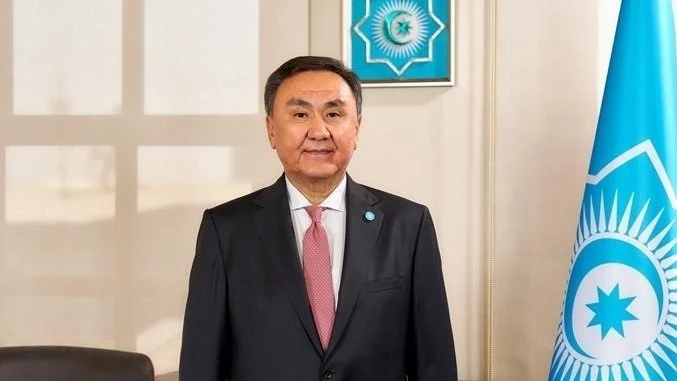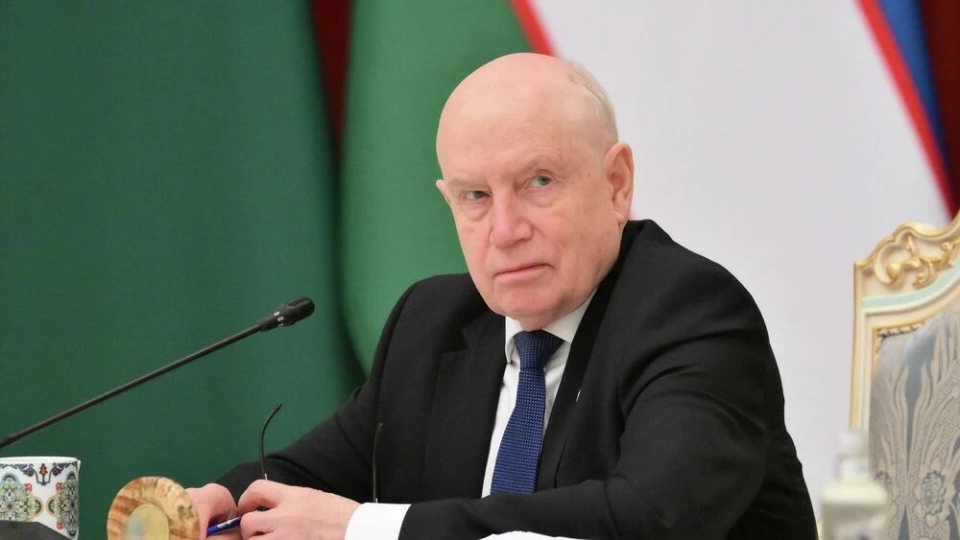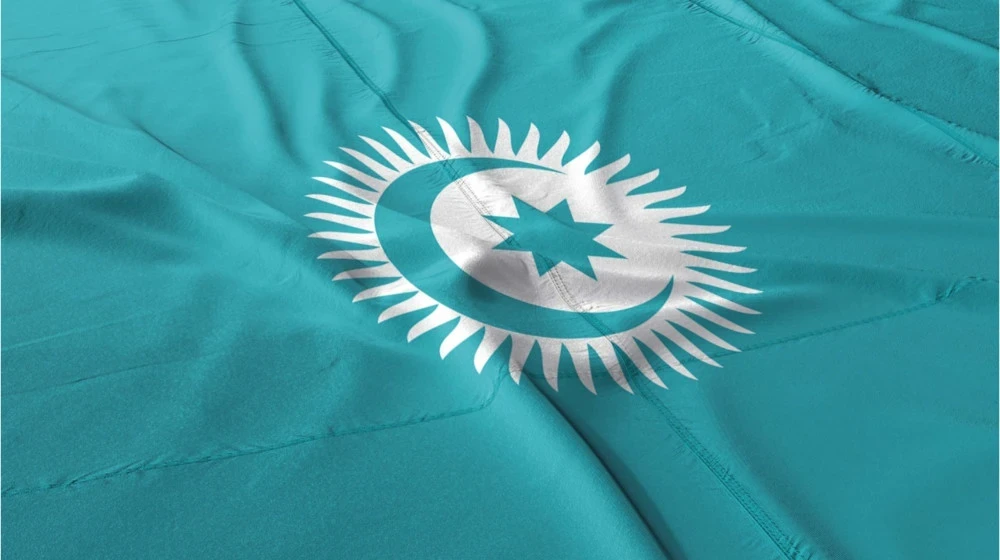
The visit of Kubanychbek Omuraliev, the Secretary General of the Organization of Turkic States, to the United States last month unfortunately did not attract the attention it deserved. For the U.S., which wishes to maintain competitiveness in the context of global geopolitical struggles, it is necessary to engage more seriously with structures like the OTS.
What is the Organization of Turkic States?
The Organization of Turkic States is an intergovernmental union that brings together various Turkic countries of Eurasia with the aim of developing a common identity and culture, as well as aligning geopolitical interests.
The idea of creating this organization was voiced in 2006 by the President of Kazakhstan, Nursultan Nazarbayev, who proposed deepening cooperation among Turkic countries. In 2009, Turkey, Kazakhstan, Kyrgyzstan, and Azerbaijan established the Turkic Council – the predecessor of the current OTS. In 2019, Uzbekistan joined the organization, and in 2021 the current name was adopted. In addition to the five full members, Turkmenistan, Hungary, and the Turkish Republic of Northern Cyprus are observers.
The significance of the Organization of Turkic States
The OTS members are located in one of the most geopolitically significant regions of the world. Together, they comprise over 160 million people, and the territory of the organization covers about 1.6 million square miles with a gross domestic product close to 2 trillion dollars. These states possess significant reserves of natural resources, including oil and gas, as well as rare earth minerals.
Moreover, they are situated along key trade routes, such as the Turkish Straits, the Middle Corridor, and the Ganja Corridor in Azerbaijan, through which major oil, gas, and fiber-optic networks connect Central Asia with European markets, bypassing Russia and Iran.
The influence of the OTS extends beyond the member states. Tens of millions of ethnic Turks live in various corners of Eurasia, from the Balkans to Western China and in the Russian Arctic. These communities, often oriented towards major Turkic states, especially Turkey, are influenced by its cultural products, including television and music. For example, one of the hits of 2025 – "Homay" by the Bashkir group "Ay Yola" – achieved significant success in global charts, surpassing artists like Kendrick Lamar and Lady Gaga.
The Bashkirs, being a Turkic people, highlight how far Turkic cultural influence extends beyond independent states. With the revival of Turkic identity, the OTS is likely to increase its influence among Turkic communities across Eurasia, explaining why this organization, despite its relatively small aggregate GDP, plays a significant role in Eurasian politics.
Coordination and cooperation among Turkic states reflect a broader revival of Turkic political, cultural, and strategic identity. All states within the OTS, except for Turkey, have historically faced oppression from the Russian Empire and the Soviet Union, which limited the use of local Turkic languages and promoted Russification.
For instance, the Kazakh Khanate existed until 1731, occupying a significant part of modern Kazakhstan. During the Soviet period, the Kazakh language became secondary, and career advancement without knowledge of Russian became difficult, making Kazakh speakers a minority in Kazakhstan.
After the collapse of the Soviet Union, Turkic countries in Central Asia began to restore their cultural and linguistic heritage, including the transition from Cyrillic to Latin script. In 2024, a proposal was made at the OTS level to create a 34-letter common Turkic alphabet, as well as an emphasis on national languages in education. Uzbekistan is replacing Russian terms in the army with Uzbek equivalents.
Previously, the ambitions of Turkic states were limited, focusing on cultural and economic issues, but the situation changed after 2020. During the Second Karabakh War between Armenia and Azerbaijan, Turkic solidarity had a noticeable impact on the geopolitical situation. Kazakhstan and Kyrgyzstan, despite being members of the CSTO, demonstrated support for Azerbaijan, leading to a decrease in Russia's influence in the region.
What are the goals of the Organization of Turkic States?
The Organization of Turkic States has begun to expand its ambitions, including deeper economic integration and even the possible creation of a system similar to a customs union. At this year's OTS summit in Gabala, emphasis was placed on security cooperation, and Azerbaijan proposed to hold the first OTS military exercises in 2026, which could be an important step for the organization.
As of today, Russia and China play key roles in the geopolitics of Eurasia; however, deepening cooperation among Turkic states implies that the OTS could become another center of power in this region. Therefore, the U.S. needs to establish interaction with the OTS.
President Donald Trump has the opportunity to strengthen this cooperation in 2024. In his first year in office, he showed interest in the region by mediating a peace agreement between Armenia and Azerbaijan, which could potentially open a new transport route, improving Turkey's connection with Central Asia.
Additionally, Trump actively expanded engagement with Central Asia, holding the "Five Plus One" summit and signing new agreements in business and trade. He also invited Kazakhstan and Uzbekistan to the G20 meeting in Miami at the end of the year.
Trump maintains strong relations with Turkish President Recep Tayyip Erdoğan, who is a driving force behind the OTS. Given Turkey's importance in NATO, the U.S. has every opportunity to deepen its engagement with this organization.
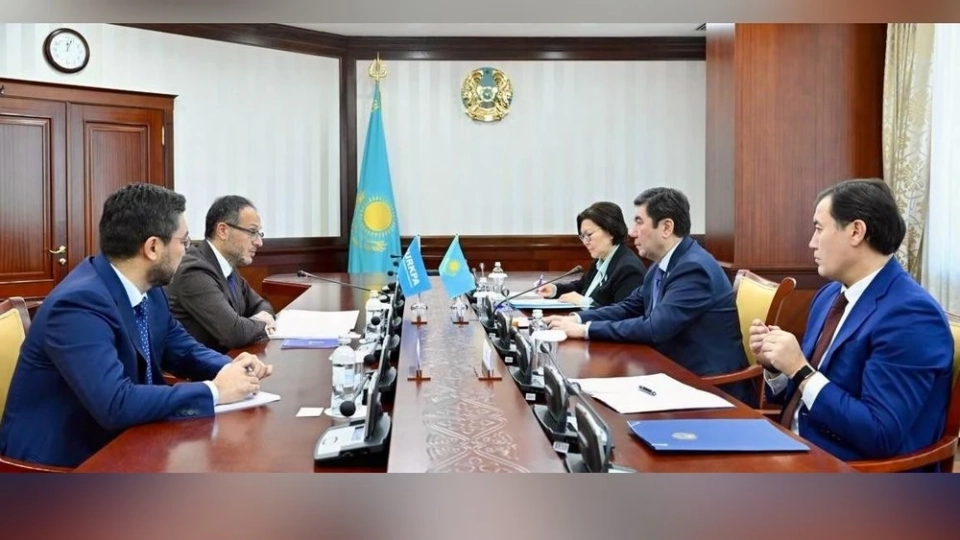
During Omuraliev's visit to Washington, he met with Assistant Secretary of State for South and Central Asian Affairs S. Paul Kapur. While this interaction is better than none, it is necessary for the head of such an important organization as the OTS to engage with high-profile American officials. Regular meetings and possibly President Trump's participation in the OTS summit could significantly strengthen these ties.
OTS members pursue a balanced foreign policy among world powers. A more active U.S. involvement could strengthen their positions in this process. At the same time, the OTS is becoming one of the few geopolitical poles in Eurasia that, according to Washington, can balance the influence of Russia and China.
Although OTS countries might not describe themselves this way, this is indeed how they are perceived in Washington. Nevertheless, establishing relations between the U.S. and the OTS will require targeted effort and sustained attention. Ignoring this opportunity would be tantamount to a geopolitical oversight and would not align with U.S. interests in the context of global competitive struggles.