In this regard, AKIpress refreshes an archived interview with Kasymbek Tazabekov, who is the founder of pediatric orthopedics in Kyrgyzstan, a distinguished physician, and the creator of the "Healthy Children" Foundation. This interview was recorded in 2005, and despite the years that have passed, the issues raised in it remain relevant.
Kasymbek Tazabekov is the author of more than 70 scientific publications and 10 books, as well as the founder of the Kyrgyz school of traumatology and orthopedics. In his interview, he emphasizes the importance of early diagnosis of hip dysplasia, which, if left untreated, can lead to hip dislocation and disability. In 2025, in honor of Tazabekov's 90th anniversary, a conference titled "Current Issues in Pediatric Traumatology and Orthopedics" was held, gathering specialists from Germany, Kazakhstan, China, the Netherlands, Russia, the USA, and Uzbekistan to discuss modern methods of diagnosis and treatment.
Tazabekov highlights that when the disease is diagnosed in the first weeks of life, treatment is successful in more than 90% of cases, often without the need for surgery. Key aspects remain the training of medical personnel and the attentive attitude of parents towards the early symptoms of the disease.
Material from the 2005 archive:
According to data from the Information Center of the Ministry of Health of the Kyrgyz Republic (2005), among 299,000 newborns, 3,218 cases of congenital anomalies were registered over three years. Of these, 1,496 cases, or 46%, were congenital hip dislocation, which occurs in 5 newborns out of 1,000. This is a severe orthopedic pathology, often resulting from the more common diagnosis of hip dysplasia, which can be considered the initial and easily treatable stage of the disease.
Hip dysplasia is the most common pediatric orthopedic disease, occurring in 16-18 children out of 1,000.
Without timely diagnosis and treatment, dysplasia can progress to hip dislocation, which inevitably leads to severe disability.
Treating such a condition is extremely difficult, prolonged, and does not always yield positive results.
Unfortunately, there are situations where even the most severe surgeries do not produce the desired effect.
Children with disabilities become a real trial for parents. The dreadful diagnosis of "Your child is disabled" becomes an unbearable burden. In such cases, many lose hope, and life seems to be a complete loss. When we see a mother with a disabled child on the street, we often look away out of shame and pity, feeling relieved that it hasn’t affected us.
Meeting with Kasymbek Tazabekov, a renowned orthopedic surgeon in Kyrgyzstan, an associate professor at the KGMI, full of enthusiasm, instills hope that fewer parents will face such a diagnosis, as dysplasia can be effectively treated. It is surprising that it is not necessary to launch large-scale state programs or carry out complex healthcare reforms that require time and financial investments, which are often lacking. Is it possible to change something, and what is needed for that?
The answer turned out to be simple. It is enough for one person to sincerely want to help, possessing the necessary knowledge, experience, and organizational skills, as well as some financial resources. In 2002, Kasymbek Tazabekov founded the "Healthy Children" foundation with the support of DFID, local companies "Areopag-Bishkek," "AKI," and the NGO "Center for Corporate Technologies," beginning the implementation of a project for the early detection of hip dysplasia and training doctors in maternity hospitals to recognize the symptoms of the disease. The results were impressive — the recovery rate exceeds 90%. We met with Kasymbek Tazabekov and asked him to talk about the causes of the disease, its manifestations, and treatment methods, as well as the project that allowed for such significant results in a short time.
- Kasymbek Tazabekovich, please tell us about the disease. When does it begin to manifest, and what is its danger?
- Children are often born not so much with hip dislocation as with hip dysplasia, which is not a serious problem if the disease is detected in time. If it is not diagnosed, it can progress to hip dislocation. This is much more serious, requiring long and complicated treatment, and such children require much more attention. Treatment of advanced cases at an older age is not always successful. Sometimes it turns out to be completely useless. Negligence from doctors and parents leads to children with congenital hip dislocation being admitted to clinics at an age when they should already be starting to walk, making conservative treatment impossible. Therefore, it is critically important to identify such cases in maternity hospitals in the first days or at least in the first weeks after birth.
If treatment begins even in the second year of life, it does not guarantee success, as anatomical changes in the joint occur, which progress and can lead to severe disability. However, if the disease is detected at an early stage, in the first days of the child's life, the recovery rate is almost 100%. Although there are exceptions, in 90% of cases, excellent results can be achieved. And this can be done without surgical intervention and plaster casts.
- When did you establish the foundation?
- I founded the "Healthy Children" Foundation in 2002 to identify the focal points of this disease and develop new methods to combat it. I traveled to all problem areas and examined 8,442 children from 6 maternity hospitals within a year. These maternity hospitals are located in the Kochkor, Kemin, Suzak, and Aksu districts, as well as the Jalal-Abad and Karakol regional maternity hospitals. Of these, 564 children were identified with suspected dysplasia, among which dysplasia was diagnosed in 428 cases, and hip dislocation in 136 cases. During that year, 449 out of 564 children were successfully treated.
- Did you identify them in maternity hospitals, in the first days after birth?
- Yes, precisely in the first days. This is very important, as early diagnosis prevents the development of dysplasia into dislocation. There are 65 children left who need further treatment. Our task is to train maternity hospital specialists to recognize the disease and know its signs.
- Are there specialists in maternity hospitals who can suspect dysplasia?
- Unfortunately, there are no such specialists in maternity hospitals. Most regional and district clinics and hospitals do not even have orthopedic surgeons. As is known, family doctor groups (GSV) have been created in clinics, which include general practitioners who are not familiar with the early clinical diagnosis of hip dysplasia. Often, they do not pay attention to this pathology. Therefore, I needed to train micro-pediatricians, neonatologists, obstetricians-gynecologists, and even maternity hospital nurses so that they know what to pay attention to and what the signs of the disease are.
We posted descriptions of the clinical signs of the disease in both doctors' offices and delivery rooms so that not only doctors but also mothers and relatives could carefully monitor the symptoms of the disease. It is critically important that no child is discharged from the maternity hospital without a preliminary orthopedic examination by a doctor.
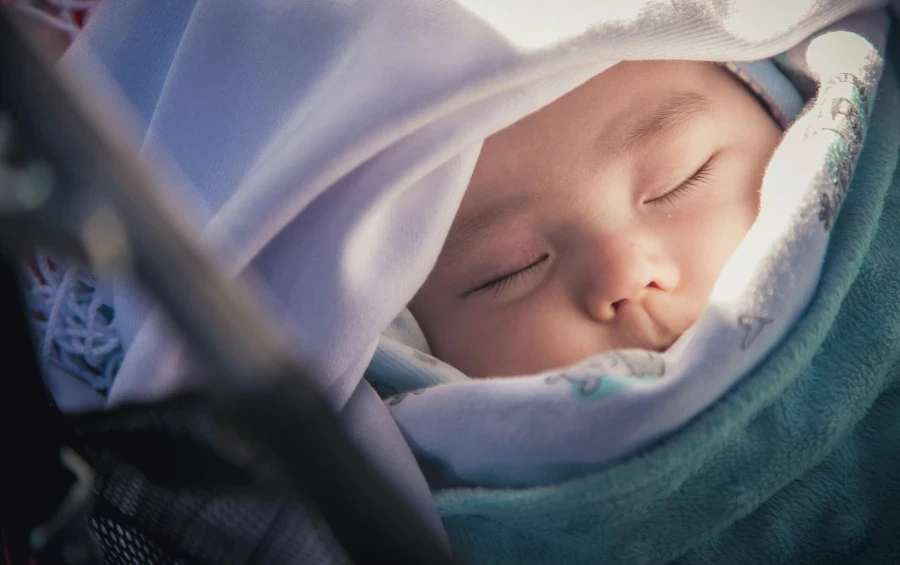
In each maternity hospital, it was necessary to train 3 neonatologists and 1 orthopedic surgeon from among pediatric surgeons. I set myself the task of imparting knowledge to these doctors by conducting lectures and practical classes on proper treatment. Treatment at an early stage is not very complicated. The first step is to swaddle the child correctly; we call it wide swaddling or "envelope" swaddling, where the child's legs are in a spread position. Swaddling should be done for 3-4 months, and after that, the child is completely cured. Children with clinical signs of the disease should not leave the maternity hospital without an envelope or without training the mother in wide swaddling. After discharge, such children need to be monitored to control the recovery process.
For this reason, every two months I traveled not only to identify new patients but also to check how the treatment of already identified children was progressing.
- What are the results of your work?
- Thanks to the treatment, no hip dysplasia in the mentioned maternity hospitals progressed to hip dislocation. Even clinically and radiologically identified hip dislocation in 136 cases ended with the recovery of 70 children, and they were removed from the register. The remaining 65 children continue treatment, and the results will be known in 1-1.5 years. However, there are difficulties related to parental negligence. In rural areas, especially during seasonal work (harvesting or grazing), parents do not attend follow-up consultations and treatment adjustments, which worsens the condition of such children.
- This seems to be our Kyrgyz feature — "it will pass on its own." Parents begin to worry only after a year when the child starts to walk?
- Yes, changes are not noticeable until a year. But when children start walking, it becomes obvious. The child may begin to limp, and parents start to worry. Unfortunately, sometimes this happens too late.
- What could be the cause of the pathology?
- The cause may be consanguinity, which also often leads to such pathologies. For example, in the Aksu district, there is a lineage of Sart-Kalmaks who, in order to preserve their lineage, engage in consanguineous marriages.
- What about nutrition and living conditions? Can they be the cause of the disease?
- Yes, this is especially important for the child's mother. Harmful factors such as smoking and alcohol also play a role. For instance, in the Issyk-Kul region, women often consume alcohol, and conception while intoxicated can lead to such pathologies.
Poor nutrition, lack of vitamins, poor living conditions, and poverty all negatively affect the health of the future child. In Kyrgyz families, there are often many children: as many as are born, that many are raised. As a result, there can be up to 10-12 children in a family. I met a person who lives in Bishkek and has 12 children from one marriage and 12 from another marriage — a total of 24 children. Frequent childbirth, when a woman's body does not have time to recover, leads to anemia and pathologies.
- What are the consequences of the disease, besides limping?
- Not only limping. Subsequently, such children become disabled. From the third year of life, such children are recognized as disabled by government decree.
Our task is to prevent disability, to treat before the child is one year old, while they still do not realize what limping is. Recently, cases of the disease have become frequent among Dungans and incoming Tajiks. If the disease is not detected in time, complex surgical intervention is required at 1.5-2 years — children spend years in the hospital. And what is surgery for a child? It involves anesthesia, instruments, fixation, and prolonged suffering. Of course, we perform surgeries and do not yield to Russian doctors, but the results are not always excellent, and this is not due to poor execution of surgeries, but because the child is in an advanced stage.
- So, if a well-trained doctor diagnoses the child in time, there will be no severe consequences? We just need to train the doctors?
- Not only train them, but they also need to be financially incentivized. I trained micro-pediatricians, district doctors, and surgeons. Depending on our capabilities, we additionally paid 500 soms per month. When a doctor receives payment, he is motivated not to overlook the disease and to carefully examine the child. If a year later a child with such a diagnosis is identified in his area, I will ask him: where are the results? The funding for these doctors was provided by a foundation that included large businessmen. But now these funds have run out, and I cannot continue my work in these areas. The doctors' interest remains, but support from parents is needed so that such children do not have to be taken to Bishkek and subjected to prolonged and difficult treatment. But much depends on the conscientiousness of the doctor, on how thoroughly he conducts the examination. Many excuses can be found, and as a result, the child will remain limping for life.
- Kasymbek Tazabekovich, where in Kyrgyzstan is this disease most prevalent?
- In studying this problem, I concluded that congenital hip dislocation in Kyrgyzstan is unevenly distributed, with regions that we call endemic where it occurs more frequently. There are also places where this disease is practically not found.
Unfortunately, this problem has not received due attention for a long time. 10-12 years ago, I traveled all over Kyrgyzstan and examined where this pathology is most pronounced. It turned out to be widespread in the Suzak district of the Jalal-Abad region, in the Kochkor and Atbashy districts of the Naryn region, and in certain areas of the Issyk-Kul region. In Suzak, for example, according to our data, the pathology occurs in 12-15 cases per 1,000 newborns, while the average figures for the country are 5 cases per 1,000.
I was interested in why the Suzak district is so severely affected by this disease. It turned out that there is the Kogart River in this area, which contains almost no iodine, or its content is very low. Iodine deficiency, as it turned out, causes not only goiter but also the pathology I am studying.
What is the statistics in other countries?
- According to statistics, in Kyrgyzstan and the CIS countries, among 1,000 born children, there are from 3 to 5 cases, or 0.3-0.5%. These are average figures, but in the Suzak district (Kogart zone), this percentage reaches 1%, which means that among 1,000 children, there are 10-12 sick.
Next are the Kochkor and Atbashy districts with 0.7-0.8%, meaning that among 1,000 children, there are 8-9 cases of the disease. In the Chui and Issyk-Kul valleys, the figures are within the average values. In some places, the disease is practically not recorded.
For example, in Talas. In the territory of the CIS, the most common disease is observed in North Ossetia — up to 17 cases per 1,000 newborns. These are also mountainous areas. They also use national cradles similar to our "beshik," where for 6-7 months the child is tightly swaddled in the described position of the legs. There are northern areas in the tundra region, such as the Selkup district and Chukotka, where a high frequency of pathology is also noted. Among 1,000 examined children, there are 70-80 limping. The reason is that these ethnic groups were isolated and came from mixed marriages. It is important to note that the heredity of the disease is more often manifested through the maternal line. As a result, if the father limps, and the mother limps, then the child is likely to be limping as well. How did they eat? They learned about bread only in 1953. Lack of vitamins and proper nutrition, as well as blood mixing, lead to a high frequency of the disease.
- Is the Ministry of Health aware of your project?
- The Ministry of Health is aware, the chief surgeon is also informed, our institute is familiar with our method, and articles have been published. This is a new method of early detection and treatment. We discuss this issue on television, radio, and in print, but the shift is still very insignificant. This work needs to continue. Even the neonatologists themselves admit that until recently they knew very little about this pathology and hardly engaged in early detection and treatment. We covered the Jalal-Abad region, some areas of the Naryn and Issyk-Kul regions, but there are cases when the disease goes unnoticed, even in the prosperous Chui region and in Bishkek. Any diseases are easier to treat at the very early stage. The main thing is to correctly and timely identify the disease and start treatment as early as possible.
This will help avoid complications and surgical intervention. Economically, it is also more justified.
- Do you plan to continue this work?
- I have dedicated my entire life to this and intend to continue working as long as I have the strength. Every healed child is a reward for my labor. Currently, I have found a way to continue the work of the foundation. Six district maternity hospitals already have experience in diagnosis and consultation and can really help mothers in treating their children.
This experience, which I consider successful, I would like to spread to other maternity hospitals.
- Thank you for the interview, and we wish you success!