Not New Viruses
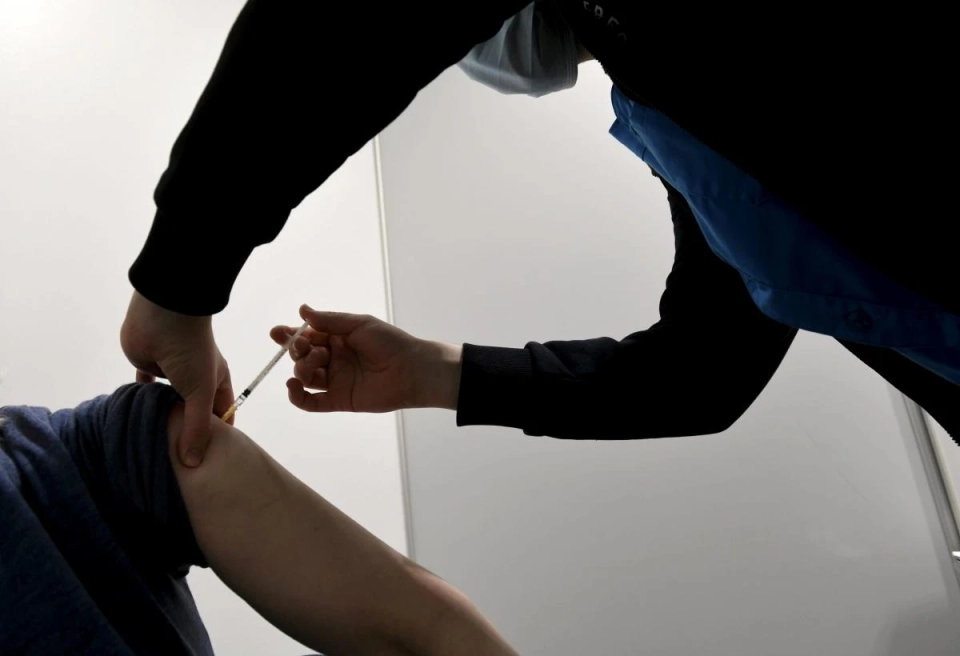
At the beginning of the year, cases of metapneumovirus infection were reported in Kyrgyzstan, causing concern among the population. However, medical professionals reassured the public, stating that this is not a new virus but part of a group of acute respiratory viruses (ARVI), with only about 250 cases registered in the country over the past three years.By the end of the year, Kyrgyz citizens faced Hong Kong flu, which also became a cause for concern. Nevertheless, it turned out to be a well-known virus first identified in Hong Kong in 1968. The World Health Organization reported a new variant of Hong Kong flu; however, experts assured that vaccination remains effective, and genetic drift does not reduce immunity levels. The surge in cases was characterized as expected and insignificant, according to epidemiologists.
Personnel Changes in the Ministry
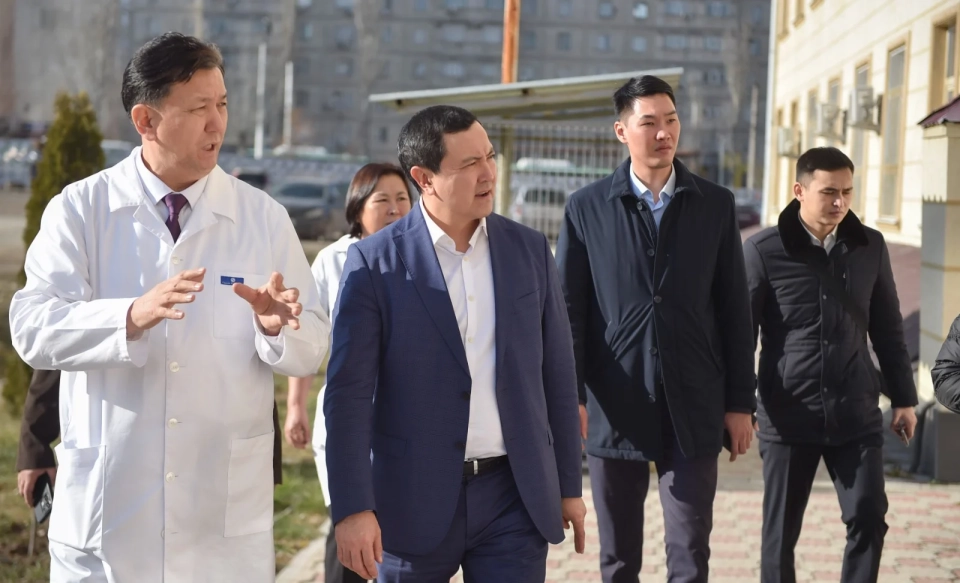
In February, Alymkadyr Beishenaliev left the post of Minister of Health, and Erkin Checheybaev took his place. However, he held this position for a short time—only until December 1. During his tenure, he received a reprimand from the president and faced criticism for the idea of relocating major hospitals outside the capital and for stating that treatment should not be free.December became a month of change for the Ministry of Health, when Kanibek Dosmambetov, a person from a different field, unexpectedly became its interim head. Previously, he worked in the Main Department of the State National Security Committee for the Jalal-Abad region and had no connection to medicine. A representative of the president's office noted that this step is aimed at deep reforms in a system that requires change.
Tragedy in Cardiac Surgery
On February 11, a fire occurred at the Research Institute of Cardiac Surgery in Bishkek, resulting in the deaths of two children who were on artificial ventilation after surgeries. Their condition worsened due to the underlying disease, as reported by doctors.The fire was caused by an explosion of a stabilizer for angiocardography. After the incident, repair work began in the building, and patients were transferred to other medical facilities.
Medications for Children with SMA
In March, a meeting in the Jogorku Kenesh discussed access to treatment for children with spinal muscular atrophy (SMA). The issues raised regarding the procurement of medications became a subject of public resonance on social media.Nargiza Tokhtasinova, Deputy Director of "Kyrgyzpharmacy," reported that Aruzat Tashmatova with SMA received an injection of "Zolgensma," but it did not have the expected effect. The girl's mother explained that the medication did indeed stop the progression of the disease, which was the goal. She noted that no one expected Aruzat to be able to stand up immediately after the injection. "Kyrgyzpharmacy" commented on this statement, adding that the effectiveness of the drug decreases if used at a later age.
Return to Management
Sabyrbek Jumabekov again took the position of director of the National Center for Traumatology and Orthopedics, which was previously designated for the construction of a new institution, rather than a reworked emergency center.Consolidation of Health Institutions
The Ministry of Health attempted to merge the Republican Center for HIV Control with the National Institute of Public Health.The past year was also a time when the Ministry of Health tried to merge the hepatitis and HIV control centers, which caused dissatisfaction among patients who feared for the integrity of the service system and the possibility of increased medication prices. Experts conducted an analysis, and the merger did not take place.
Ban on Vapes
Starting July 1, a ban on the import, sale, and use of vapes was introduced in Kyrgyzstan.According to the Code of Administrative Offenses, the following fines are imposed for the use of electronic cigarettes:
- for individuals—100 calculation indicators (10,000 soms), for legal entities—600 calculation indicators (60,000 soms);
- for the sale of electronic cigarettes—200 calculation indicators (20,000 soms) for individuals and 650 calculation indicators (65,000 soms) for legal entities.
Malfunctions in Oncology
In July, the situation with linear accelerators at the National Center for Oncology and Hematology worsened, both of which broke down. They were repaired in September.Inspections of Private Medical Institutions
The Ministry of Health continued its work to bring order to the field of private medicine.In July, several women filed complaints against a plastic surgeon, resulting in the closure of his clinic for 90 days.
It later became known that the Ministry of Health suspended the activities of 78 private clinics for serious violations.
In December, the agency reported the suspension of 263 private institutions due to gross violations.
Idea of Legalizing Tips
In August, it was proposed in Kyrgyzstan to legalize tips for medical workers.At a meeting of the commission on debureaucratization, Justice Minister Ayaz Bayetov stated that tips for waiters are considered normal, while tips for doctors are perceived as bribes, which is wrong. He suggested considering the concept of "voluntary co-payment" for medical workers.
Later, Bayetov clarified that the meeting did not discuss the "legalization of tips," but rather the mechanism of "voluntary co-payment," which should be transparent and go through the cash register, as well as involve small amounts.
This proposal sparked public discussions. Deputy Prime Minister Edil Baisalov emphasized that the idea of tips is not the official position of the cabinet. He noted that state policy aims for decent pay for medical workers in the next three to four years.
Study of Lead Levels in Children's Blood
A large-scale study conducted in Kyrgyzstan showed that every fifth preschool-aged child has elevated lead levels in their blood (over 5 µg/dL), which requires intervention according to WHO recommendations.Tightening Punishment for Attacks on Medical Workers
In November, President Sadyr Japarov signed a law that tightens criminal liability for violent actions against medical workers and public figures.Penalties now include fines ranging from 500 to 1000 calculation indicators, as well as imprisonment for a term of three to five years.
Autonomy of Medical Institutions
Starting January 1, 2026, a pilot project will be launched in Kyrgyzstan aimed at providing financial autonomy to several medical institutions. President Sadyr Japarov signed the corresponding decree. About 20 healthcare organizations will have the opportunity to earn legally and manage their finances. If the project proves effective, it is planned to expand it nationwide.Details about the project can be found by following the link.
Photo on the main page is illustrative: timeout.ru, life.ru, freepik.com.