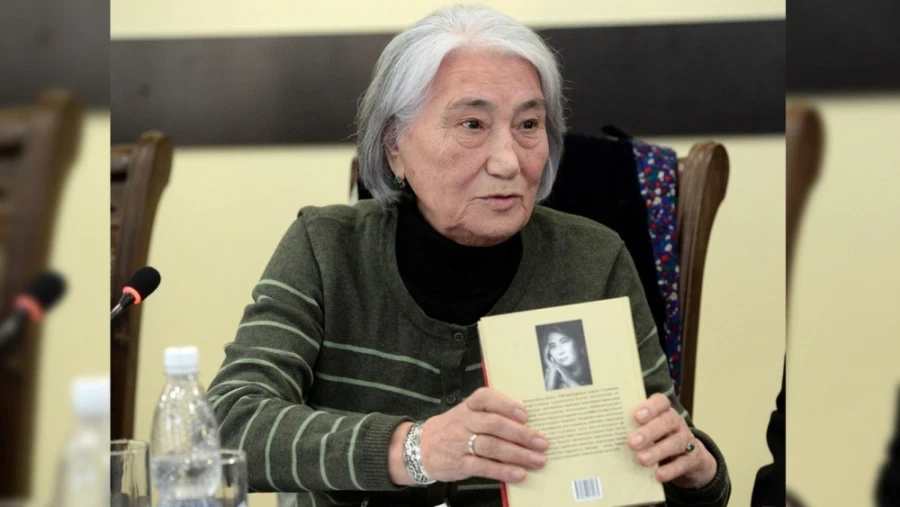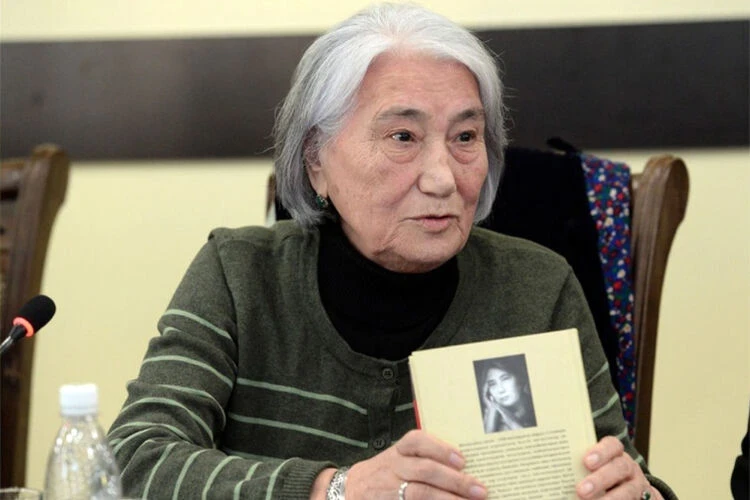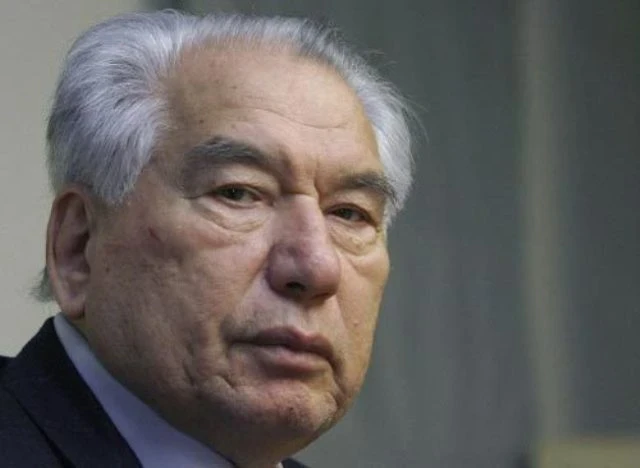
In her address, Roza Torokulovna touches on the topic of malicious rumors and accusations that are actively spreading around her brother Chyngyz:
Dear Kyrgyz people!
I decided to reach out to you for an important reason. Recently, I fell seriously ill and spent a lot of time in the hospital. Now, thank God, I am feeling better. I live with hope for well-being for as long as I am granted.
Recently, my heart has been filled with pain because some people are spreading false rumors and tarnishing the memory of my brother Chyngyz. I cannot accept this, and it deeply distresses me. Seventeen years have passed since his departure, yet there are still those who do not let his spirit rest, discussing him as if they were close friends or had sat at the same table with him.
According to folk wisdom, one should not speak ill of the deceased; however, unfortunately, this is happening. I wonder if enemies of the Kyrgyz people are behind these rumors, trying to sow discord among us. Or do they think that no one will stand up for Chyngyz? The truth remains unclear at this moment, as there are very few of his contemporaries left.
I do not harbor malice towards these people; that is on their conscience. The support of my brother comes from Manas-ata, as the great Sayakbay Karalaev said. I do not wish to hate those who tarnish his memory, but I call for caution...
In 1991, Ata-Beyit was opened, where the remains of 137 innocent victims are buried, including my father. I was able to forgive his murderers. And I forgive these people too. But again, the question arises: "Is this a conscious attempt to divide the Kyrgyz people?" Perhaps that is their goal—who knows? I leave everything to God's judgment.
This year I will turn 89. I have experienced much, both good and bad. I have seen both rises and falls. But no one has ever caused me such grief as I feel now…
After the arrest and execution of my father, we lived in poverty. We endured hunger and severe trials, being persecuted as "children of the enemy of the people." But I am grateful to the Kyrgyz people and my father's relatives. A thousand thanks to the people of Sheker and the people of Talas! Thanks to their help, we survived.
I especially want to thank my mother, Nagima Aitmatova. Despite all the difficulties, she managed to raise us. Unfortunately, there were those who attacked her, both then and now…
My mother was a strong woman. She brought us, the children of Torokul, to Sheker and said: "You are Kyrgyz, be with your people!" She raised us among the people, instilling a deep sense of belonging to the Kyrgyz nation.
— Chyngyz, Ilgiz, my children, my daughters, you are the descendants of Torokul. Hold your heads high. Wherever you are, do not disgrace your father's name, — that is what our mother told us.
All my brothers and sisters dedicated their lives to the people and their land. Who can say that they have done harm to anyone?
I am particularly upset that all sins are attributed to Chyngyz, blaming him for everything. Oh, if only he could come now and say: "This did not happen, but this did," perhaps the gossipers would fall silent…
Chyngyz glorified the Kyrgyz people to the whole world. He brought the epic "Manas" to every corner of the planet and invested much effort into the development of the Kyrgyz language, even under the existing Soviet system. He fought for the opening of Kyrgyz schools in Frunze and succeeded in opening two of them!
However, now we ourselves tarnish his memory by criticizing him. Just yesterday, representatives of the Kazakh people called me and asked: "What is happening with you? Why are there so many scandals surrounding Aitmatov?"
No matter how much my soul aches for my brother, I cannot turn away from my people. What should I tell them? I felt ashamed and hurt…
None of the internet gossip corresponds to reality. I have evidence for my words.
Rumors are spreading that Chyngyz wrote only in Russian, did not know the Kyrgyz language, and did not write in it. For such people, it does not matter that his books have been translated into 185 languages.
For your information: in terms of the number of published books, Aitmatov ranks third in the world after Shakespeare and Tolstoy.
Why he stopped writing in Kyrgyz, I will also explain. In 1957, he was pursued by high-ranking Soviet officials who claimed that he undermined Soviet ideology. They even threatened my mother that her son might meet the same fate as his father Torokul. Imagine what my mother felt upon hearing such words…
Chyngyz could not get out of bed for a long time, and only after his father's rehabilitation did he begin to recover. Perhaps his father's spirit supported him. I will not name the names of those who started the campaign against Chyngyz. I have forgiven them too.
Due to this persecution, he had no opportunity to write and publish in Kyrgyz. It was we, the Kyrgyz, who did not allow him to write, putting sticks in his wheels. He searched for a way out for a long time, not knowing what to do. The great poet Alexander Tvardovsky learned about the obstacles he faced at home. He supported my brother: "Chyngyz, write in Russian! We will publish you in the magazine 'Novy Mir.' Then your fellow countrymen will not be able to touch you." That is how he began to write in Russian.
As far as I know, his works were not published in Kyrgyzstan for about 15 years and were only printed in Russia. This can also be confirmed. Chyngyz grew up in Sheker, among ordinary people, knew his native language well, and wrote his first books in Kyrgyz. He was proud of his language and defended it.
The Kyrgyz people have never seen evil from Aitmatov—only good. He sincerely cared for each of you.
Some accuse him of "living in luxury in Europe" during the 1990s when the people were suffering. This is not true. He was the ambassador of Kyrgyzstan and was the first to establish connections with the West—in France, Belgium, England, and Germany.
“My people live in Central Asia. We, the Kyrgyz, though a small nation, are capable of equal relations”—he made a huge contribution to the international recognition of our young independent republic. His diplomatic activity is a separate page in history.
There are also those who claim that during the events in Osh in 1990, Chyngyz Aitmatov was "on the side of the Uzbeks." Let me tell you about this as well, and you can judge for yourselves.
After the events of 1990, I asked him: "Why didn't you return to Osh immediately, but flew to Uzbekistan?" He replied:
— There was no time. I was in Moscow at that time. I was worried that the conflict would escalate into armed confrontation, so I decided to meet with Islam Karimov. For this, I contacted his assistant. "Okay, Islam Abduganievich will receive you," the assistant replied. There was no time to delay; I had to fly out immediately. That is why I could not return to Kyrgyzstan right away.
— And what did you say to Karimov then? — I asked, barely calming down from his answer.
— Islam Abduganievich was waiting for me. I came with two Uzbek writers, and we talked for a long time. In the end, I told the President of Uzbekistan: "We are brotherly peoples: Kyrgyz, Uzbeks, Kazakhs—we have a common origin. If a serious conflict breaks out between us, it could lead to great trouble for all of Central Asia."
As a result, Karimov replied: "Chyngyz Torokulovich, I understand you. Not a single one of our soldiers will cross the border into Kyrgyzstan." And he kept his word.
Thus, my brother prevented a great war in Central Asia. Can one call a traitor someone who stopped the conflict between Uzbekistan and Kyrgyzstan?
Some accuse Aitmatov of electing Askar Akayev. This is also untrue. Akayev was elected by the Supreme Council, not Aitmatov. When the three previous candidates did not pass, my brother suggested: "Pay attention to the young Akayev; perhaps he will be suitable." This is true. But my brother was not in Kyrgyzstan at the time of the elections and did not interfere in the process.
I want to emphasize that we should not tarnish the presidents. The president is a symbol, like the flag, the coat of arms, and our Manas. Why should we trample our own symbols in the dirt? How do we appear in the eyes of the international community?
Now to the main point. My dear Kyrgyz people, fellow Talas residents! You did not abandon us; you saved us in difficult times. And now I ask: do not let the name of Chyngyz be trampled on! A developing people respects itself and cherishes its culture. Let us live in peace and harmony and be vigilant against enemies!
Bishkek, January 26, 2026