The goal of the project is to remind about the importance of family values and to reveal the beauty and talents of married women.
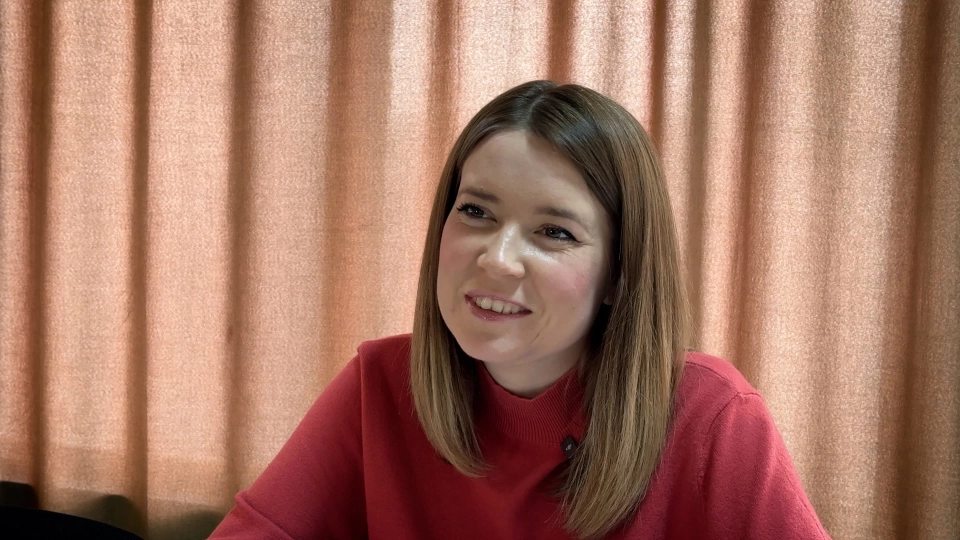
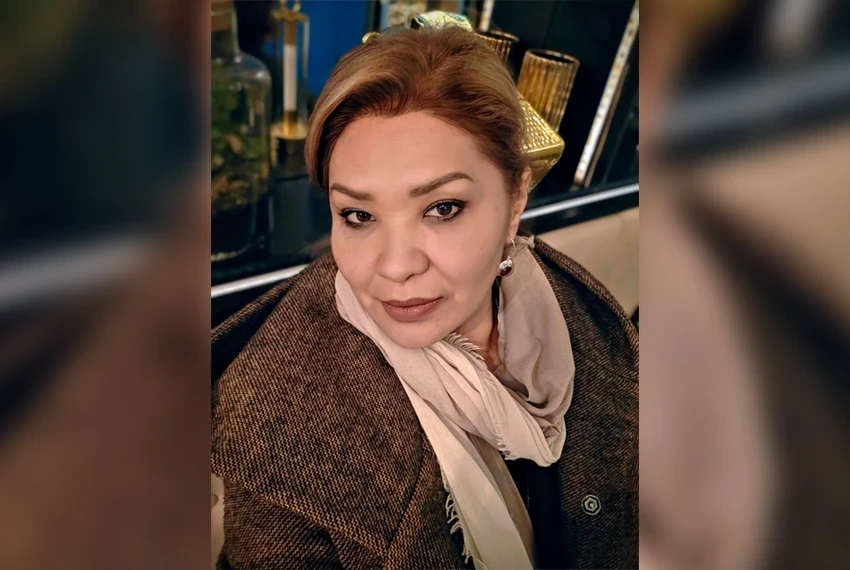
Aigul Batyrbekova was born on February 15, 2001, in Bazar-Korgon, located in the Jalal-Abad region. She currently lives in Moscow with her husband and younger daughter.
Batyrbekova completed her studies at a legal college; however, due to a number of circumstances, she was unable to realize herself in this field, focusing instead on handicrafts and sewing. At the moment, she is on maternity leave. "My husband, Elemann Talaibek uulu, was born on December 7, 1997, in the village of Ak-Suu, Issyk-Kul region. He works as a motorist in Moscow and is engaged in car repairs. I am sure he is a true hard worker with 'golden hands,'" she shares.
The story of our acquaintance is quite unusual. I studied at a legal college in Bishkek, having enrolled there right after the 9th grade. In the evenings, I often went to work with my mom and helped her with packaging. One day, noticing a new guy who was working with an iron, I was struck by his neatness. At that moment, I felt something special, but I didn’t pay much attention to it. He worked there for less than a week and soon left, so I quickly forgot about it.
When my sister and I were little, our father passed away from illness, and we were raised by our maternal grandmother. Later, my mom entrusted me to the care of my uncle and aunt when she went to work in Moscow while I was in my second year of college. She did everything possible to ensure we lacked nothing. One day, I received a message on social media, and I saw the name Elemann Talaibek uulu. I barely recognized him, but we exchanged messages and kept in touch—sometimes once a year," says Aigul.
When Aigul came to Moscow to see her mom, she learned that Elemann also lived there. "We met on March 8. He couldn’t come to me, so he invited me to his home. I agreed without hesitation. We chatted a bit, and I left. The next day he said, 'I will marry you.' He didn’t even ask if I agreed. I replied that I had just turned 18 and needed to build a career, flirting a little. But he didn’t back down and even wrote to my mom, convincing her too. In fact, I liked him as well. I might not have shown my feelings outwardly, but inside I was very happy. So, we met on March 8, and on March 24, we were already married.
The wedding was quite modest. My husband spent only 10,000 rubles on the bride's farewell, earrings, and a bouquet of flowers. He came for me with one friend and our 'ökül ata.' We also asked the mullah to determine the mahr, which amounted to 5,000 rubles in cash or gold. Thus began our family life. At first, everything went well, but over time misunderstandings arose. Once, I got upset, packed my things, and 'left.' When my husband returned from work and saw that I was gone, he found a note where I left a letter and took off the earrings he had given me. He started calling me, but I didn’t answer, being stubborn. In fact, I hadn’t gone far—I was just wandering around with a suitcase near the house.
Gallery: Aigul Batyrbekova.
Eventually, I answered the call. He asked in a trembling voice, 'Where are you?' Seeing the tears in his eyes, I felt my heart soften. I told him where I was. We searched for each other for about an hour and finally met.
At that moment, out of anger, my husband broke a glass tile near the bus stop. People called the police, and they took him away. I cried and said that I was pregnant, but they didn’t listen to us. I called our ökül ata, and we started looking for the police station. Later, they called themselves and informed us where he was. Ökül ata took me home and went to get my husband. After that day, I promised myself: no matter what happens, I will never say 'I’m leaving' again. Since then, we try to understand and support each other," shared Batyrbekova.
The two older daughters live in Issyk-Kul with their grandparents, growing up under their care. "When I first went to my husband’s relatives, I got to know their traditions. The customs were not difficult for me, but the ritual of 'жүгүнүү' (zhugunuu) was new to me, and I was amazed. My father-in-law immediately said, 'In our house, no one bows every day, don’t bow to anyone.' Therefore, when we lived together, I didn’t do that. But when I come back after a long absence, out of respect for the elders, I bow. My husband and I have three daughters: the eldest is 6 years old, the middle one is 3 years old, and the youngest will soon turn 1 year old. My husband always dreamed of having daughters and prayed to God for them. Thank God, his dream came true—our home is filled with the laughter of girls. Currently, I dedicate all my free time to my family, cooking and doing household chores," Aigul said.
In the future, Aigul and her husband plan to return to Kyrgyzstan, build a house in their homeland, and open a small business. "Life has many difficulties, but the most important thing is to understand each other, support one another, and move forward together," concluded Aigul Batyrbekova.