Early Years and Moving to Turkey
Aigerim shared that her parents, Ilyas and Meerim, are originally from Karakol, located in the Issyk-Kul region. Aigerim herself was raised in Bishkek, where she also has a younger sister who is now 13 years old.
Aigerim first came to Turkey in 2015, landing in Van, where she worked for two months. She then moved to Istanbul, getting a job at a hotel.
She and her husband have managed to visit many cities in Turkey, but they have not traveled abroad yet. Their dream is to travel and explore other countries. At the moment, Aigerim is focused on raising her children and managing household chores. She believes that housework can sometimes be even more exhausting than office work. Despite the challenges, the family is satisfied with their life. Her husband works hard to provide for the family, and two years ago they bought their own house—a significant achievement for them. Van is a provincial city where people strictly adhere to traditions, making it completely different from Istanbul or Antalya. The first time Aigerim found herself here, she swore to herself that she would never return, but fate had other plans.
In Van, there are many women who pray and wear hijabs. Unlike Antalya, religion holds a more important place here. Traditions also differ: respect for elders, strong family ties, and close relationships between brothers and sisters are the foundation of local life," she noted.
The Story of Meeting Her Husband
Aigerim recounted how she met her future husband:
"Our meeting took place in the only large shopping center in the city. My husband was visiting the gym, and I just came to eat chocolate. At that time, my Turkish was poor. I am sure he noticed me from the first minutes. When he asked for my phone number, I refused. But soon he found it through mutual acquaintances and messaged me. At that time, I had no idea I would marry him. After moving to Istanbul, our relationship began to strengthen.
At our first meeting, he said, 'You will be my wife.' I didn't take it seriously. He introduced me to his friends and older sister, sometimes coming over just for a couple of hours to wait for me after work. I noticed that he always keeps his word.
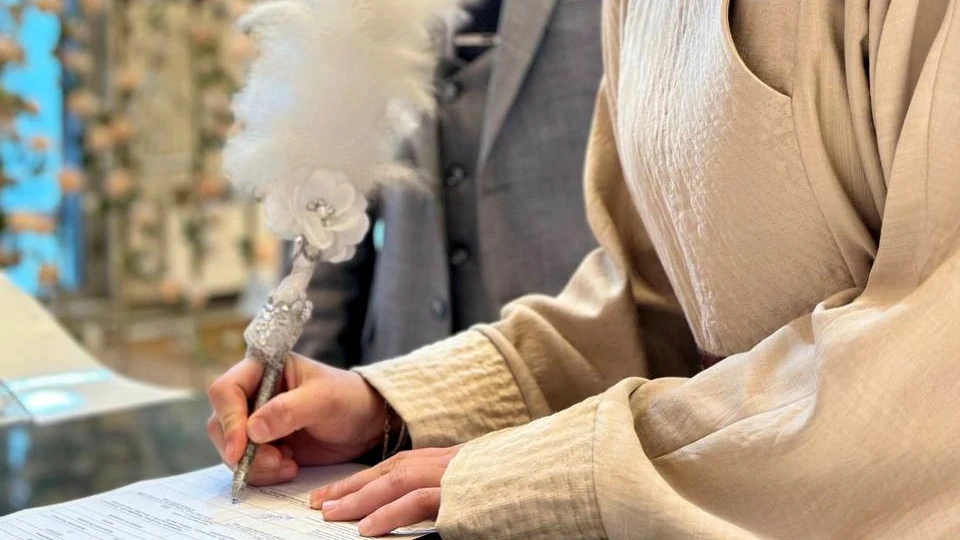
When his family learned about our relationship, they wanted to marry him off to another girl, but he firmly refused and left home. He came to Istanbul, and we decided to get married. A month later, his family accepted our love and agreed to the wedding.
I learned that Kurds usually marry girls of their nationality or from familiar families. But now they accept me as their own daughter. My in-laws are wonderful people, and they often say they are happy that their son found me," she shared.
A Funny Incident from the Early Days of Marriage
Aigerim recalled a humorous incident:
"When I first got married, my mother-in-law spoke Turkish poorly, just like me, as she is Kurdish. One day she asked me to bring something from the pantry. I searched everywhere and returned with the answer: 'It's not there.' In reality, I just didn't know what it was and was too shy to admit it. Such situations happened several times.
One day I told my husband: 'I don't understand what mom is asking for, explain it to her.' When he explained to my mother-in-law, she laughed and said: 'Daughter, I thought you probably can't see well.' Since then, she brings everything herself and no longer asks me."
- In Van, there are Kyrgyz people who once migrated from Afghanistan (Pamir). The Van Kyrgyz have managed to preserve their traditions. According to various estimates, their number is about 4,000. Some have moved to other cities in Turkey, but most remain in Van.
In 2018, Razak uulu Dastan, a native of Kyrgyzstan who studied in Izmir for a PhD in history, shared knowledge about the migration of Van Kyrgyz.
According to him, in 1978, ethnic Kyrgyz living in Afghanistan migrated to Pakistan, and in 1982, the Turkish government resettled them across its regions.
"In 1987, a settlement called Great Pamir was built for the compact living of Kyrgyz in the Erciş district of Van province. At that time, about 300 families lived in the village, but over time their number increased, and they began to settle in cities like Istanbul, Ankara, and Van. The municipality of Yenifaklı in the Yozgat region built houses for the Van Kyrgyz on vacant lands, where about 100 families were resettled. However, many refused to move, and now about 10 families remain in the settlement. Every year, the Yenifaklı municipality organizes a summer festival, which attracts residents from nearby areas. Since the festival takes place near the settlement of ethnic Kyrgyz, the organizers invited students from Kyrgyzstan studying in Turkey to present the culture and traditions of the Kyrgyz people. The girls played the komuz, sang songs, and performed national dances. I recited a passage from the epic 'Manas.' Despite their knowledge of how to set up yurts and prepare traditional dishes, Kyrgyz emigrants are not familiar with playing the komuz and national melodies. Therefore, we were invited to participate in the festival. We strive to show that our people have a unique culture and traditions," he recalled.
Before going to Turkey, Dastan studied in the master's program at the Kyrgyz State University named after I. Arabaev, majoring in "history," and his dissertation was dedicated to "Van and Pamir Kyrgyz."
He noted that about 3,000 people live in the Great Pamir village, which consists of approximately 300 households. Most residents engage in livestock farming, as there are no other sources of income. They raise small and large cattle, as well as horses. "Cattle are not grazed on the jailoo due to a lack of pastures. Kumys is not produced here. Currently, it is haymaking season. They do not engage in crop farming. According to local residents, they were allocated 2.5 hectares of irrigated land, but the Kyrgyz of Pamir have no knowledge of agriculture. However, one resident built a greenhouse and successfully grows cucumbers and tomatoes, as well as potatoes, beans, and peppers. The village has security to protect the population from attacks by terrorist groups. By our standards, the guards earn 25-30 thousand soms a month. Women handle household chores. One of the locals organized a workshop for sewing national clothing and producing weapons, where 7-8 girls work. This year, the owner of the workshop plans to set up a yurt to receive foreign tourists," added D. Razak uulu.