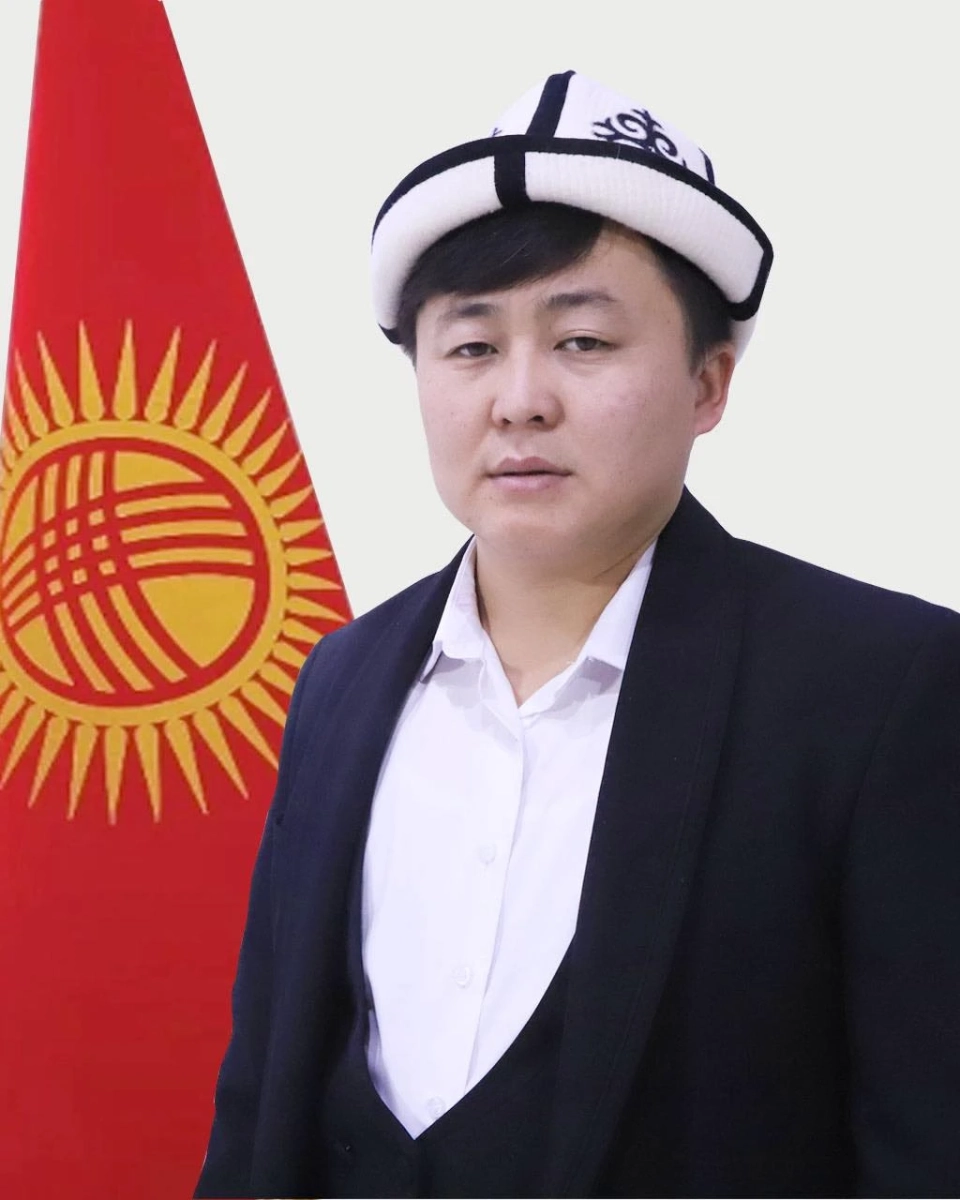
Sultanmurat was born in 2002 in the village of Saruu.
“I am originally from Saruu, but my roots are from Talas. Currently, I live in Belek, in the Antalya province of Turkey — a tourist city on the Mediterranean coast. I work here as a waiter in a five-star hotel.
I graduated from the Kyrgyz-Turkish University "Manas," earning a degree in economics and accounting. In 2024, I will be one of the 874 graduates of "Manas." My profession is an accountant. At the moment, I am studying at the Kyrgyz National University named after J. Balasagyn, majoring in public and municipal administration. In the future, I dream of getting into politics and contributing to the development of my country.
I first visited Belek in 2023 while studying at "Manas" to work during the three-month summer break. This year, I returned again, contacting one of the agencies that deal with employment in Turkish hotels, and received a work visa.
My older sister Lira (also a graduate of "Manas," but with a degree in tourism and recognized as the "best graduate" in 2020) advised me: “Go work during the holidays — it will benefit you: you will earn money for accommodation, travel, and food.” I also wanted to help my parents and finish building our house.
I spent the summer of 2023 here, and this year I returned at the end of May and have been working for three months now. I have a contract for 6 months (until the beginning of November), but if I perform well, management may offer me to stay for a year. However, regardless, after a year, I will still have to return to Kyrgyzstan to extend my visa,” Sultanmurat shared.
He shared his impressions and compared Kyrgyzstan with Turkey:
“They say there are no bad nations, only bad people. Here, there are both good and bad, but unfortunately, there are fewer good ones. Turks are not as hospitable and generous as Kyrgyz people. The youth are distanced from religion, and respect for elders is not as widespread. Turkey is not like it is in the series. At the same time, I try to adopt their positive qualities: love for the homeland and laws, attention to the collective. I really appreciate that the working conditions here are top-notch — in Kyrgyzstan, it’s not so good: employers do not always provide changing rooms, cafeterias, or toilets. Here, everything is strictly on schedule; tardiness is unacceptable.
Turkey is a strong country playing an important role in the Turkic and Islamic world. The laws work. However, there are downsides — high taxes, expensive and quickly depleting internet. For example, we bought a SIM card for communication, pay for the internet, and a separate tax is charged for using these services. This is not only expensive, but the internet runs out quickly. In fact, you feel the value of your homeland especially acutely when you are abroad. In Kyrgyzstan, the internet is of good quality and inexpensive, while tariffs for electricity and communication are among the lowest in Central Asia. Our banking system is also more convenient than in Turkey. Due to our proximity to China, we have many goods, while here it is difficult to find something you need, and if you do find it, it will be expensive. These are my observations.”
Sultanmurat is confident that in the future, Kyrgyzstan could become even stronger than Turkey, as he knows many educated, strong, and determined young people.
“Here, people are treated according to their behavior. If you are not independent and persistent, you will be used, treated rudely, and forced to do things you are not obligated to do. In general, Turkic peoples have a hot temper. If you are a man, sooner or later you will have to quarrel or fight at least once. If you show yourself properly, there will be no further claims against you; they will leave you alone.
I was surprised that here, girls and boys are treated equally. For example, at work, we perform the same tasks — both heavy and light. I would like to take this opportunity to address Kyrgyz guys in Turkey: help Kyrgyz girls with difficult tasks at work, and if Turkish guys harass them — protect them. This will not diminish your honor. As Maksat Azhy Toktomushev (a former mufti) said: “Cowardice does not prolong life, while bravery does not shorten it!” — he emphasized.
Sultanmurat communicates with tourists in several languages: Turkish, Russian, English, and sometimes in Kyrgyz if he meets fellow countrymen.
“Once my boss came up to me and said: ‘Explain to the Russian guests that there is no baby food, but it will arrive today.’ I explained this to them in Turkish, and then returned to my boss and reported in Russian. Such situations happen,” he added.
The Kyrgyz noted that Turks show interest in his name.
“My full name is Sultanmurat. In Kyrgyzstan, I am mostly called Sultan, while here I become Murat. Thus, it’s as if I have two names, and both are used. In the history of the Ottoman Empire, there were five sultans named Murad — Murad I, II, III, IV, and V. My colleagues and bosses joke: ‘Which number Sultan Murad are you?’ I reply: ‘The fifth,’ who is remembered for banning smoking during his reign.”
Sultanmurat also noted that there are many Kyrgyz in Turkey, particularly in Belek. Sometimes he gathers with his compatriots, plays football with them, or just spends time at the table. There are even cafes opened by Kyrgyzstanis. When they want to eat Kyrgyz cuisine, they gather at this cafe.
“In the future, I want to be one of those who makes a significant contribution to the development of my country. I don’t want to live my life thinking only of myself. I intend to defend the interests of Kyrgyz people on the international stage,” he concluded.
Sultanmurat comes from a simple family. His father, Mamytov Akylbek (known as Ako in the village), worked for 25 years at a sawmill in Saruu, and now he is engaged in livestock farming. His mother, Dzheenalieva Toluosh, has worked for many years as a nurse in the children's department of the Jeti-Oguz district hospital.
“We are six children, and I am the fifth: four older sisters and one younger. We all studied well. The youngest sister is currently studying at the I. Akhunbaev Kyrgyz State Medical Academy, dreaming of becoming a doctor. Our parents did not spoil us but provided us with a good upbringing. My father always said: ‘Son, you must have a profession.’ My mother said: ‘Son, don’t be an animal, be a human.’ I used to think that it was enough just to be born a human. But then I realized that this is not enough — you need to constantly work on yourself,” he summarized.
Gallery: Sultanmurat Dyushebekov.