Stefan Ziegler, a recognized director and university lecturer, visited Bishkek to showcase his film "Mandate — For Whom International Law Matters" at the "Bir Duyno" human rights film festival in early December. His work was awarded a prize presented by the festival organizer Tolekan Ismailova and the chairman of the Union of Cinematographers of Kyrgyzstan Talaybek Kulmendeev.
Ziegler attracted attention due to his unique combination of creativity and human rights issues; his films have significantly influenced documentary cinema. At the meeting, he said: "You know, I am not a tourist in your country, but I am here to discover it for myself anyway."
- How did you start your journey in cinema, and what inspired you to work in this field? Which films or directors have influenced you the most? You also work in international law; how do you combine cinema and law?
- In fact, I am not a professional filmmaker and did not study film at university. I don't have time to watch films, but I have always felt like a creative person. Art has been an integral part of my life, and I see myself more as an educator and advocate for humanitarian interests than as an ambitious "filmmaker."
I perceive filmmaking as a means of conveying important information. Having worked in the humanitarian field for 25 years and being in conflict zones, I realized that cinema can be a powerful tool. When I founded my film company Advocacy Productions, it reflected my mission. It may sound strange, but I draw my greatest inspiration from two sources.
The first is the works of German playwright Bertolt Brecht, who emphasizes the importance of critical thinking. His approach taught me to use narrative to tell stories in a way that allows viewers to focus on the essence of what is happening. In the film "Mandate," I even played the role of the main character, and this technique turned out to be interesting for the audience.
The second source of inspiration is the PAR (Participative Action Research) methodology, which places the people we work with at the center of the research. We learn from them and adapt our films according to their opinions, which allows us to "give voice to the voiceless." This applies not only to cinema but also to the academic community as a whole. In the academic environment, people are often viewed rather than understood, which allows for the creation of films for youth that take their perspectives into account.
That is why the film "Broken" has been viewed by over 3 million people, including thousands of teenagers over the age of 14. They understand what is happening better than we can imagine. I plan to create the next documentary about international law for young people.
- Can you draw parallels between your films "Broken" and "The Mandate" and the issues that exist, for example, in Kyrgyzstan, in our society?
- Both films and other educational materials of mine are dedicated to international law, which is relevant for all countries. It is not just an intellectual concept but also an ethical question. We intuitively understand what can and cannot be done.
For example, we all agree that killing an unarmed civilian is unacceptable. We understand the importance of protecting those who are not involved in the conflict for establishing peace after the war.
These ideas are based on the Geneva Conventions and international humanitarian law, which, together with human rights and refugee rights, make up what we call international law, recognized by the community of states.
In my films, I strive to convey to viewers the idea of how we understand the law in conflict situations, as this can happen to any of us at any moment. If we can appeal to a common understanding of laws that are difficult to apply in practice, we can use that same understanding for peaceful living.
This logic has been well received by audiences in your country. I am glad that young people in universities and at the film festival actively discuss these issues and are ready to engage in discussions.
Kyrgyzstan can be proud of its active youth, who critically reflect on what is happening.
- What brought you to Kyrgyzstan? How did you first learn about Kyrgyz cinema and the culture of this country?
- I had the honor of being invited by the embassies of Switzerland in Kazakhstan, Kyrgyzstan, and Uzbekistan. They organized a two-week tour for me with film screenings and lectures.
Switzerland is known for its neutrality and for upholding the Geneva Conventions, which form the basis of modern international humanitarian law.
The government of my country supports the opportunity to show and discuss my films in Kyrgyzstan and many other places where this may be difficult.
During the two weeks, I gave lectures three to four times a day, followed by interesting discussions, half of which took place in universities, a quarter with media representatives, including filmmakers and artists, and the remaining time I spent with civil society organizations. Although my stay was short, interacting with many people gave me insight into the authentic culture.
- What are your goals regarding international law during your visit here? What is the main objective of your tour?
- My goal is to show my film at the "Bir Duyno" festival. The audience's reaction to the film helps me better understand what needs to be done. A month ago, when I was here, I noticed how open people are to new ideas and how they react to my film.
I was invited to gain a deeper understanding of their views and interpretations of international law. This willingness to learn inspires me as a filmmaker and educator.
At one of the meetings, I was surprised when asked if I wanted to show the film at the festival. This highlights the directness of the Kyrgyz people and surprised me.
I am convinced that the five Central Asian countries can significantly strengthen their positions if they work together in a spirit of solidarity. International law can become one of those unifying forces.
This requires the exchange of ideas and experiences, and if we can do this through cinema, engaging both academic circles and ordinary people, we can formulate a common viewpoint. I would like to help create a discursive educational center based on reflections on international law through the lens of cinema.
If my experience inspires more active engagement based on participation and learning, it can lead to positive changes in society.
- You talk about alliances. Are there like-minded individuals in Central Asia working in the field of international law and cinema who are interested in something more than just being viewers?
- Yes, but it is not easy. There are few filmmakers among them; rather, they are intellectuals and advocates for those whose voices are less heard.
It is important not only to have directors but also people with good hearts who can convey important messages through films or educational processes. I cannot do this alone — an alliance of those who care about youth and share my vision is necessary.
These joint efforts represent a true mission that needs to be communicated to people from within, rather than from academic circles meant only for the elite.
- Tell us about your upcoming project that you mentioned earlier. What message do you want to convey, and what details can you reveal?
- The film I am preparing will be called "Curious," and its duration will be about five and a half hours. It is an educational material for teachers that can be used in full or in parts. It will be adapted to various geographical regions, and people will be able to choose what suits them.
The material is suitable for use in different settings — it can be applied throughout the semester or in weekend seminars.
If someone works at a university, for example, with architects, they will be able to select specific sections that are appropriate for their discipline.
It took eight years to create the material. We had many teachers from 20 countries who engaged youth and asked for their opinions on what they understood or did not understand.
Young people from these countries shared their reflections on international law, representing a microcosm of various ideas.
The film "Curious" is planned to be released in the next six months.
The International Court of Justice and the International Criminal Court are located in The Hague, and we hope that the Dutch government will allocate funds to support the rule of law to make the film available for free to everyone, especially teachers.
In the first phase, we will translate subtitles into Kyrgyz, Russian, and over 30 other languages to make them accessible to a wide audience.
- You primarily deal with international law. How was the process of filming and editing your documentary? Did you discover anything new while working on it?
- When we were working on our first film "BROKEN — A Palestinian Journey Through International Law," we changed the title to make it more appealing. It is now called "BROKEN PROMISES — Israel, Palestine, and Justice: Arguments for International Law."
This reflects our desire to reach as many people as possible with the film.
We did not plan to make other films, but I became interested in the candid testimonies of judges from the International Court about their work and memories. We used archival materials that had not been used in cinema before.
I felt the need to complete what I had started, and six years later, I released the film "Mandate," which was shown here a few days ago. Our films are very different from each other; they are genuine documentary works that are part of the educational process and transcend temporal boundaries.
Our films interest a wide range of people: from lawyers to youth and ordinary citizens.
Four weeks after the release of "Mandate," we received a request from the library of the International Court for digital copies of our film. How they found out about us remains a mystery, but it was pleasant.
At one of the meetings with the former president of the court, I handed her a copy of "Broken," and she replied that they use our film for their training.
This was a great surprise for me.
- Do you have any plans for the future or film projects that you are looking forward to?
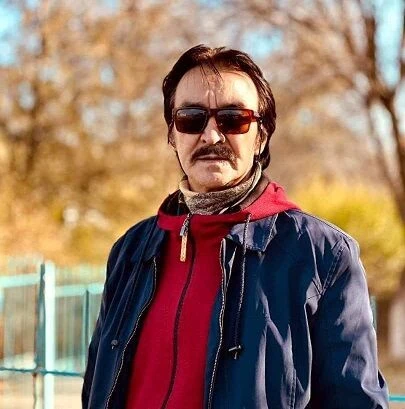
- Tomorrow, I have a meeting with a local artist whose works have been exhibited abroad and who speaks in a unique way. I saw a film about him and could only read the subtitles in Kyrgyz.
I thought it was impossible for the subtitles to be created by an ordinary translator — it was too poetic. I am going to confirm this with the well-known translator Zina Karayeva. If my suspicions are confirmed, we will shoot a documentary featuring this artist titled "Poetry and International Law – An Artistic Understanding of Conflict Law."
I have about 12 projects in the archive waiting to be realized. I am inspired by the Kyrgyz people and strive to return to this amazing land once again.