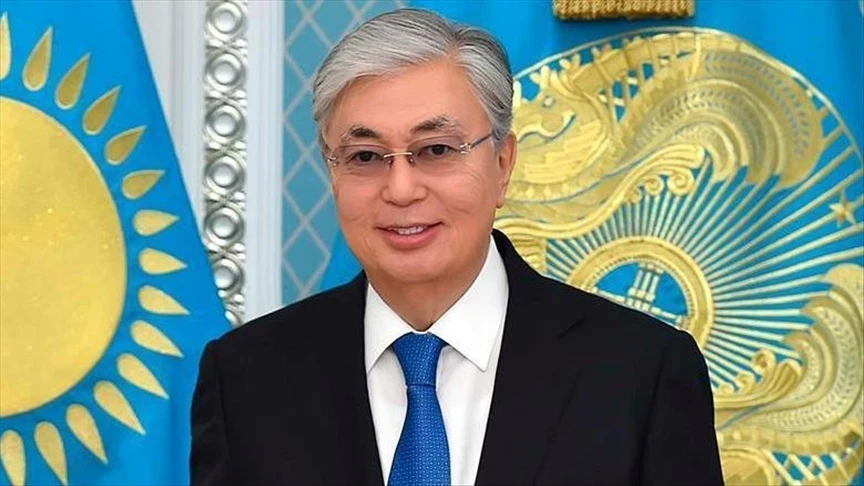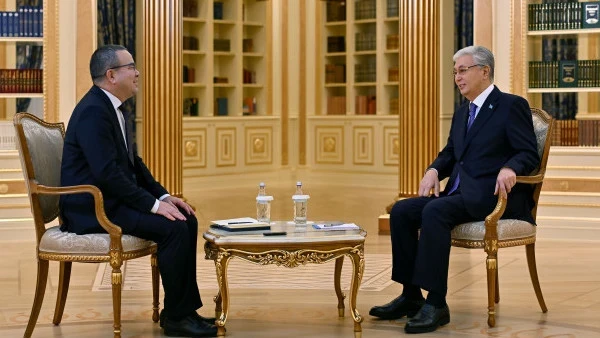
President Kassym-Jomart Tokaev shared his views on current challenges and achievements in his interview for Turkistan. The full text of the interview:
“– Dear Kassym-Jomart Kemelovich, your annual interviews for print media have become a new political tradition. Thank you for the opportunity to communicate with the newspaper 'Turkistan'.”
– The newspaper 'Turkistan' has been in the information market for over 30 years and is one of the leading publications in Kazakhstan. The name speaks for itself. Journalists cover not only current events but also important aspects of Turkic culture, which is nice to see.
I read with interest articles about Kazakhs living abroad and have recognized three of them for their contributions to the development of cooperation with Kazakhstan.
Print media is experiencing a "renaissance" as social networks harm people's cognitive abilities. We observe cases where adults have an education level comparable to that of teenagers.
I have always loved reading and still prefer periodicals. In modern conditions, print media find their niche by focusing on analytics and educational functions. Professional journalists help preserve traditional values and inform about outstanding individuals working for the benefit of the country, unlike TikTok and Instagram, which are often detached from the real interests of workers.
I want society to value not only sensational news but also substantive information. It is encouraging that young people strive for knowledge rather than illusions that can lead to life difficulties. I am confident that countries with a high reading culture will lead in global progress.
– Let’s discuss the results of the past year. What important events do you think can be highlighted as the main ones?
– Indeed, many significant events have occurred. For example, the economy of our state grew by more than 6%, GDP reached 300 billion dollars, and per capita income exceeded 15 thousand dollars, which are records for our region. While this is satisfying, I remind all civil servants that we cannot relax. Eastern wisdom says: “In the most favorable situation, danger lurks.” We need to continue working, as there are still many unresolved issues.
A high level of inflation, for example, undermines efforts to improve citizens' welfare. This year, the government and akims have a lot of work to do to improve the socio-economic situation.
Nevertheless, the main outcome of the year has been progress in the area of reforms. Kazakhstan has made significant strides in modernization, becoming a more civilized state. Society has strengthened its understanding of the importance of large-scale transformations for the well-being of future generations.
In the context of global changes, such as President Trump's strategy, we also strive to create a society of justice, legality, and order, which is critically important for the future of our country. In the new year, this work will continue with renewed vigor.
– Last year, there was much discussion about the new Tax Code. Is there a balance that will allow for necessary economic reforms without worsening the situation for citizens?
– Tax reform is indeed relevant, and discussions on this issue are justified, but we should not create panic. Such reforms are being carried out in many countries. For example, in Russia, VAT was recently increased to 22 percent.
Our reform is not an ordinary "fiscal campaign," but a reboot of the tax system aimed at sustainable economic growth. I have instructed the government to prepare a clear and transparent Tax Code, the results of which we will see this year.
The previous government proposed raising VAT to 20%, but I insisted on reducing this figure by four points.
The new Tax Code shifts the focus from control to partnership between the state, business, and citizens, which should ensure mutually beneficial conditions. Taxes should be perceived as a contribution to receiving services and infrastructure. This is a tool for fair distribution of the burden, helping to support the weak and strengthen the middle class.
The effectiveness of fiscal policy depends on the quality of administration and the level of tax literacy among the population. We must cultivate a culture of tax payment as a modern form of patriotism, which will help in the fight against corruption.
– Economic reforms raise concerns among citizens, as they may affect prices and tariffs. You instructed the government to present an action plan to address this issue. How will this affect the quality of the reforms?
– Global practice shows that reforms often face misunderstanding and resistance from society. Therefore, the role of a leader willing to take responsibility cannot be overstated. As the Head of State, I take this responsibility and am ready to do so in the future. The people working with me know this. I realize that this path is not easy and that there are many obstacles.
To protect citizens, the increase in tariffs has been temporarily suspended during the winter period; however, the government has been tasked with rational budget use. We cannot give the economy more money, provoking inflation. Strict budget discipline is necessary. In November of last year, we launched a three-year program aimed at reducing inflation and improving citizens' welfare.
Some experts believe that Kazakhstan has fallen into the "middle-income trap." This is not just an abstraction but a reality that many citizens face daily. People have incomes, but they dissolve in inflation and obligations. Any unforeseen circumstance can undermine stability.
Earlier, I made a decision to allow the use of pension savings for housing and medical needs. Many took advantage of this opportunity, but unfortunately, there were also fraudsters who stole more than 200 billion tenge from the pension fund. Services are working on these cases.
Business creates jobs and pays taxes, but high loans and a lack of working capital hinder its development.
The economic structure is changing, but in my opinion, slowly. The country appears prosperous, but within the economy, there are still imbalances that need urgent correction. We see these problems and do not intend to hide them. This is a common problem for many countries, and we will definitely cope with it.
– Kazakhstan has launched the largest reform of the energy and utilities sectors in the history of Independence. Will this help solve the problems of infrastructure wear and tear?
– Yes, the government has begun a major modernization of energy and utility facilities. Hundreds of kilometers of engineering networks are planned to be built, and power lines will be updated. A financial model for this project is currently being developed.
The number of CHP plants in the danger zone has decreased from 19 to 10, which has reduced the risk of accidents.
However, restoring infrastructure requires not only modernization but also a change in operational principles. We strive to improve the investment attractiveness of the industry and create modern market mechanisms.
Emergency measures by the government are necessary, as energy and utilities are the foundation of the country's livelihood. If this foundation collapses, everything else will fall apart.
For a long time, economic problems went unnoticed, and infrastructure fell into disrepair, so the accumulated issues created a "Gordian knot" of problems.
Meanwhile, it was not beneficial for governments to solve these problems, as the hard work would not bring them glory. It was easier to report on the preparation of programs without real implementation. The pursuit of short-term results has cost our state dearly.
If I were concerned about my personal rating, I would leave these problems to the next generation. However, practical results are important to me, even if they require a departure from conventional methods.
Who benefited from cheap electricity? Not large families, but large enterprises.
Who benefited from cheap gasoline? Not students and pensioners, but businessmen close to power.
Who benefited from low utility tariffs? Not conscientious citizens, but intermediaries profiting from the "utility swamp."
Kazakhstan has the lowest prices and tariffs in the post-Soviet space and has become a shadow supplier of cheap fuel to neighboring countries.
It is time to debunk the myth of the benefits of low tariffs. This is a hidden subsidy for the wealthy.
To restore social justice, it is necessary to change the approach to solving the problem. The state should support those who truly need it through targeted payments. Therefore, raising tariffs is a step towards a fair economy, where everyone pays according to their consumption. I have set the task of achieving fairness in tariffs: "the more you consume, the more you pay." We have already achieved initial results by implementing payment differentiation and "social consumption norms."
I am confident this will help in the fair distribution of resources so that they work for all citizens, not just the chosen few. This is the only way to create modern infrastructure and effective energy, which will give impetus to quality growth.
– You emphasize the importance of transit and logistics for Kazakhstan. What measures have been taken to develop this area?
– Strengthening Kazakhstan's transit and logistics potential is of strategic importance. Our country, without access to the sea, is located in the center of Eurasia and intersects many transit routes. This is an advantage that we must utilize.
We aim to turn Kazakhstan into a transport hub of Eurasia. A key step was the opening of the new railway line "Dostyk – Moyynty," which will increase the volume of cargo transportation between China and Europe fivefold. We plan to build and modernize 5,000 kilometers of railways by 2030.
The construction of the "Center – West" highway will also reduce the distance from the capital to the western regions by more than 500 kilometers.
Kazakhstan has created a broad transport system that extends beyond national borders. We have a network of cargo terminals from the Black Sea to the Yellow Sea. Twelve international transport corridors pass through our transit, accounting for up to 85% of cargo transportation between China and Europe.
Competition in this area is increasing, as transport and logistics become important elements of geopolitics. This topic is actively discussed at the highest level. Kazakhstan participates in megaprojects such as "One Belt – One Road," "North – South," and the Trans-Caspian route.
The potential in this area is vast, affecting almost all sectors of our economy. Therefore, the government has been tasked with building transport and logistics hubs with modern infrastructure and creating an effective digital ecosystem.
– Agriculture is also an important sector. What are the plans for its development?
– Kazakhstan allocates significant funds for the development of agriculture. In 2024, 580 billion tenge has been allocated for preferential lending to farmers. Over the past ten years, support for farmers has increased tenfold. However, effectiveness remains in question.
In recent years, there has been growth in crop production, and exports of grain and flour have increased. Now it is necessary to strengthen efforts in livestock farming, as global consumption of "red meat" will grow by 2035. Kazakhstan can become a major supplier of meat to Asian countries.
We need to improve the efficiency of investments in agriculture. We are considering the possibility of returning to cooperatives, which will help increase productivity and establish long-term relationships with consumers.
– Tourism has also become an important topic. Are the resorts ready for an influx of tourists?
– Yes, last year Kazakhstan became one of the best countries for travel. However, developing tourism requires a lot of effort. It is a complex field that requires professionalism and patriotism. We need to actively attract private investments and develop ecotourism, which has great potential.
Some "eco-activists" hinder development by protesting against projects that could attract tourists. It is also necessary to update the infrastructure of popular resorts.
The staffing issue is also relevant. An International University of Tourism and Hospitality has been established in Turkestan, where specialists will be trained. However, this is not enough, and additional steps are needed to address staffing issues.
Despite the difficulties, Kazakhstan is attracting the attention of the world media. Almaty was named the "new capital of style" in Central Asia in 2025. I instructed the akimat to make the city round-the-clock, like New York or Paris.
– Artificial intelligence is becoming an important direction. What are the plans for its implementation in Kazakhstan?
– Kazakhstan must become a digital power. This is a matter of survival in the new technological era. We see successes in the digitalization of public services and fintech. We have created an ecosystem to support IT startups, and Astana Hub is actively working.
In May of last year, the Council for the Development of Artificial Intelligence was established, and in November, the Law on "Artificial Intelligence" was signed. We launched two supercomputers and are creating a specialized AI university.
Kazakhstan must be part of the future, and I have declared digitalization and artificial intelligence a priority for the country's development.
– What is the role of nuclear energy in Kazakhstan's strategic plans?
– Without reliable energy generation, Kazakhstan cannot transition to a new economic model. Building nuclear power plants is not only correcting a historical injustice but also a necessity for preparing a new class of specialists.
Rare earth metals are also becoming important. Kazakhstan can take leading positions in their reserves, and we are starting cooperation with the USA, China, Russia, and other countries.
– How do you assess the life of large businessmen in Kazakhstan? When will they start caring about the needs of society?
– Business is the foundation of the economy. We have come a long way in understanding the role of private property. However, large businessmen must recognize their responsibility to society.
I urge them to engage in philanthropy and constructive patriotism. They must understand that caring for society is not an obligation but an honorable task.
– What is the situation regarding the legal proceedings related to the events of January? What is the current situation?
– The investigation is ongoing. The participants in the events have been objectively assessed thanks to the work of public commissions. Some legal proceedings are still underway, and the search for weapons lost during those days continues.
Discussions about the events often delve into details that do not reflect the full depth of the crisis. We must remember that the riots affected several cities and led to the seizure of administrative buildings.
– What is the fate of illegally acquired assets and the fight against oligopolies?
– Work is ongoing. The Committee for the Return of Illegal Assets has recovered more than 1.3 trillion tenge. These funds are directed to social projects, including water supply and the construction of medical facilities.
We operate within the framework of international law, and our position remains unchanged. Kazakhstan will continue to strengthen its status as an attractive investment jurisdiction.
– How do you assess the fight against corruption in Kazakhstan?
– This issue remains a priority of state policy. We will focus on the accountability of those organizing corrupt schemes and will continue preventive work.
It is necessary to cultivate a culture of zero tolerance for corruption from a young age. Services must work on solving this problem, not just punishing.
– Kazakhstan is celebrating the 35th anniversary of Independence. What path has Kazakhstan traveled, and where is it heading next?
– Kazakhstan has come a long way, and despite mistakes, we have become a successful state. Now it is important to continue working to adapt to new challenges.
I believe in our youth, who have the hopes and energy to overcome difficulties. Their opinions matter, and we must take their aspirations into account.
In 2026, we will begin a new stage of reforms aimed at digitalization and the implementation of artificial intelligence. This is a chance for the entire country. The 35th anniversary of Independence should become a symbol of Kazakhstan's progress.
I will actively participate in the "Taza Kazakhstan" campaign, which emphasizes the importance of cleanliness and responsibility. This movement should become the foundation of our mentality.
– Your personal life remains in the shadows. What kind of person are you?
– I have been in public service for 50 years and prefer not to showcase my personal life. I am attentive to the written word and strive to maintain a high level of quality.
My life is connected with public service, which requires self-discipline and responsibility. I consider myself a statesman.
– How do you assess your health?
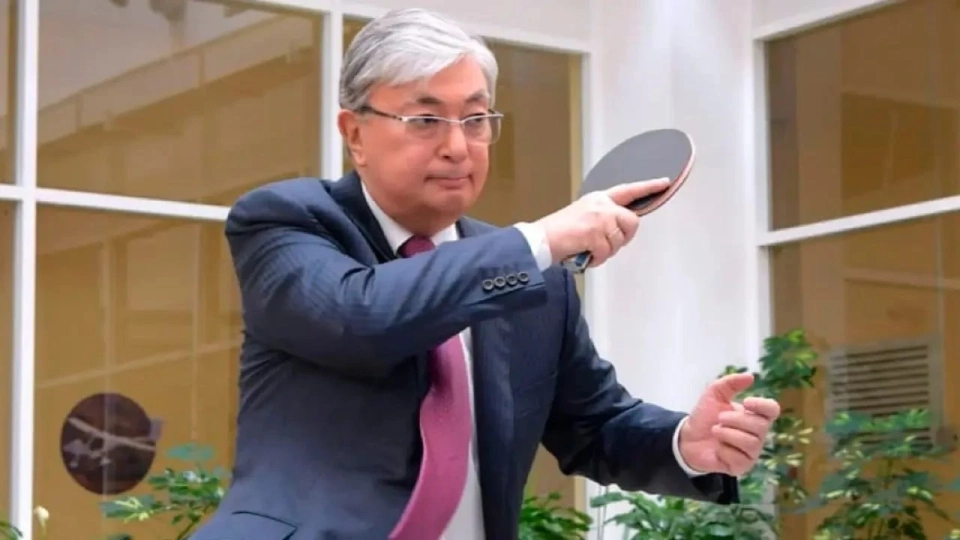
– I do not complain about my health; I lead an active lifestyle and engage in sports. I have lost nine kilograms, which has positively affected my well-being.
– Thank you for the candid conversation and answers to the questions.
– I am always ready to communicate with citizens and share plans. We must work together to achieve high goals in the interests of the people.
I wish your publication success! Please send my greetings to the team.
– I will definitely pass it on!”