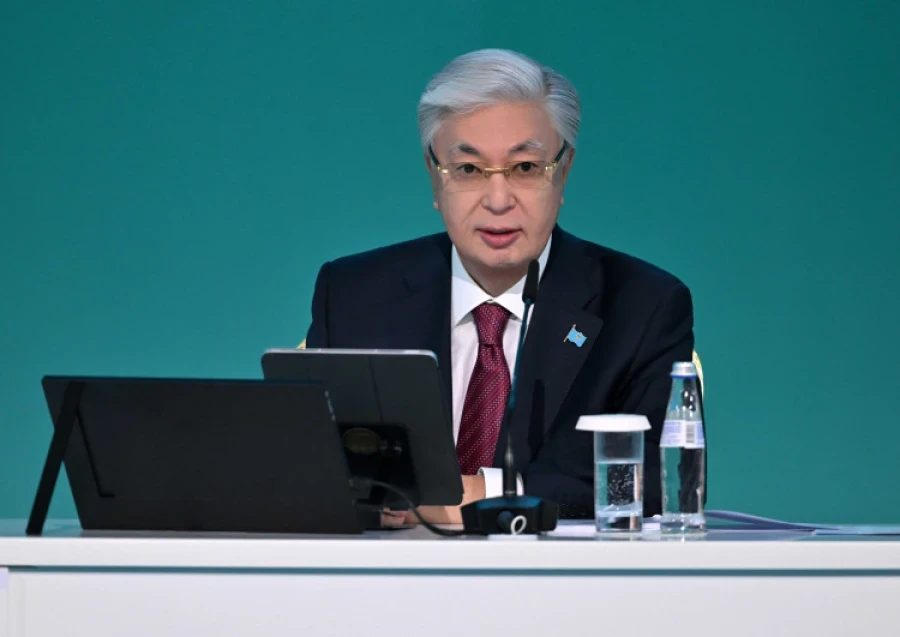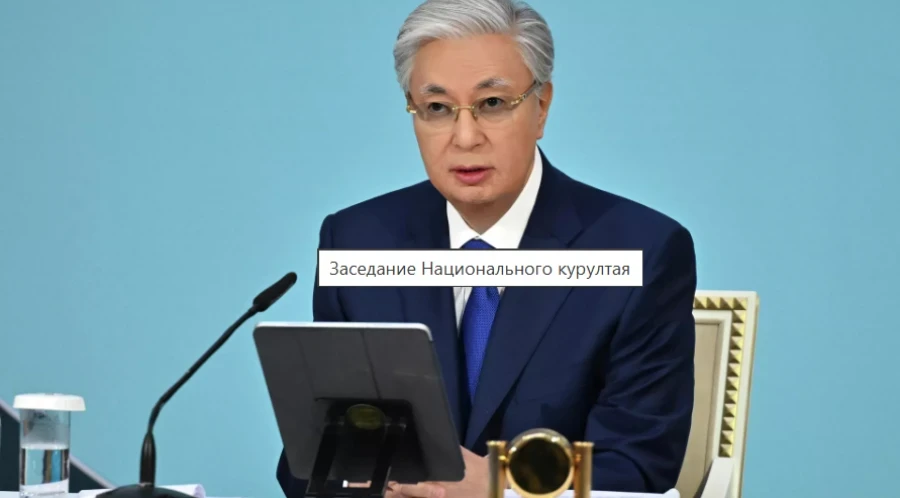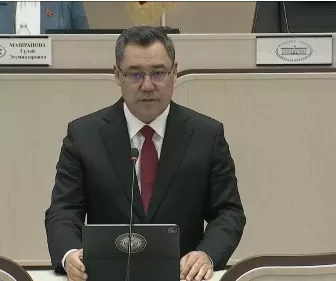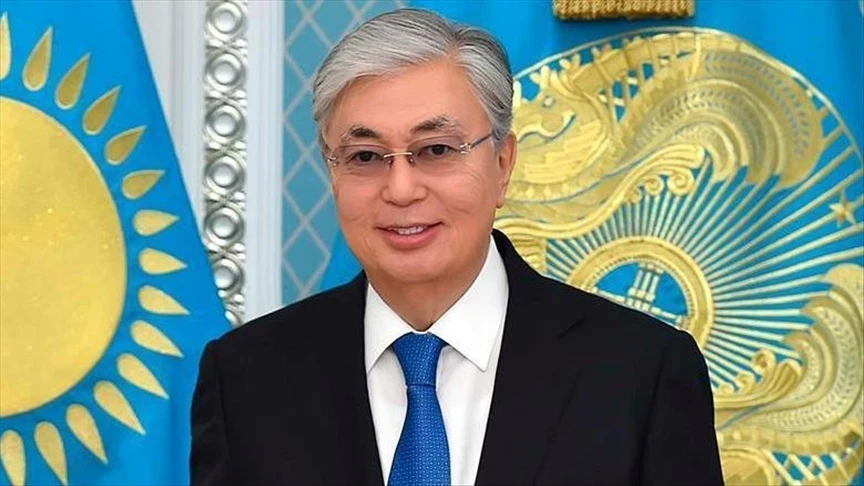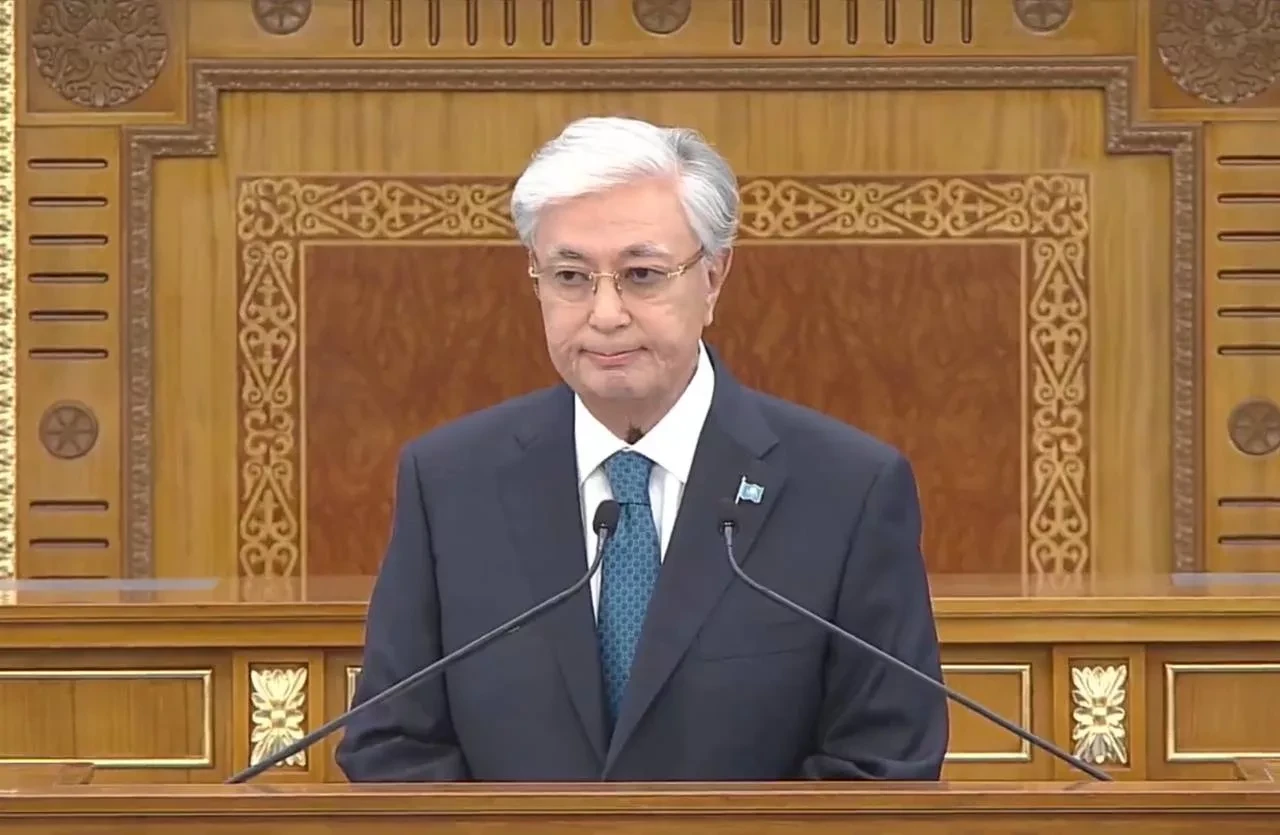
Kazakhstan has already had experience with the vice-presidency, but soon abandoned it for certain political reasons. Kassym-Jomart Tokayev proposes to restore this position in a modified format. Nevertheless, the person who held this position alone 25 years ago explained why the very idea turned out to be impractical in the conditions of the emerging power, as mentioned in the article by exclusive.kz.
The vice-presidency was first established in Kazakhstan in the early 1990s when the Supreme Council announced the creation of the presidential post. Soon after, the position of vice-president was introduced into the structure of government bodies.
This model borrowed elements from the American system, where the vice-president serves as the second person in the state and can become the successor to the president, which contributes to political continuity and stability.
Sergey Tereshchenko became the first vice-president of the Kazakh SSR, but in December 1991, after the first presidential elections, he was replaced by Yeryk Asanbayev, who was actively involved in parliamentary and governmental activities at that time. Tereshchenko, in turn, became the prime minister.
Since then, the republic gained independence, and the vice-presidency was integrated into a new constitutional structure designed for an orderly transition from the Soviet system to presidential governance.
The 1993 Constitution granted the vice-president certain powers, including performing the functions of the head of state on behalf of the president and substituting for him if necessary. The position was initially perceived as a mechanism for continuity and a means of protection against possible political crises, allowing for the avoidance of management disruptions during the transitional period.
In practice, however, the vice-president never became a significant force in the political structure of early Kazakhstan. This role quickly turned out to be mostly nominal, and its existence was seen as a threat to the formation of strong presidential power. The title and essence of the position increasingly hinted at the possibility of an alternative to the president, which called into question absolute power.
The constitutional reform of the mid-1990s led to the abolition of the vice-presidency and the exclusion of the Constitutional Court, which became part of the restructuring of power that strengthened presidential powers and created a new architecture of governance.
The first and only vice-president, shortly before his death, explained in detail why this position was conceived and why it turned out to be inappropriate in the post-Soviet power system.
“One of the obstacles to the regime of personal power”
In 2000, the project “Witnesses” published an extensive interview with Yeryk Asanbayev, which was reposted on the Exclusive.kz website in 2009. Today, years later, this conversation is perceived as the political testament of a man who deeply understood the mechanisms of power and knew how the new governance system was formed in post-Soviet Kazakhstan.
In response to a question about the reasons for the abolition of the vice-presidency and the possibilities for its restoration, Asanbayev began by explaining the very idea of this position and its original meaning. In his opinion, the vice-presidency was not supposed to be an auxiliary or ceremonial position, but to play an important role in the political architecture.
“The institution of the vice-presidency was conceived to facilitate the transition of power and as one of the obstacles to the emergence of a regime of personal power or dictatorship. It can be successful in a civilized country with a high political culture and honest relationships among people,” he noted.
Thus, the vice-president was originally intended not as an assistant to the president and not as a decorative figure, but as an element of a system of checks and balances. His task was to ensure the transition of power and prevent its concentration in one person, which could lead to a personalized regime.
However, Asanbayev also emphasized that such a model requires an appropriate political environment, which was lacking in post-Soviet countries. This, in his opinion, was the reason for the failure of the vice-presidency idea.
“In the post-Soviet space, the triangle of ‘president – vice-president – prime minister’ turned out to be unworkable. But at the same time, it seems to me that real power is practically concentrated in the hands of the prime minister, and his integrity is of immense importance for society,” Asanbayev added.
This formula became a kind of diagnosis for the entire system of early post-Soviet governance. There were several formal centers of power, among which there were no clear boundaries and mechanisms for delineating powers, which inevitably led to competition, conflicts, and struggles for influence.
Asanbayev emphasized that despite the formal significance of the vice-presidency, it had no real power. He pointed out the main drawback of the position – the uncertainty of its powers and the lack of real mechanisms for their implementation.
“The powers of the vice-president in our Constitution, borrowed from the American system, turned out to be not very clear and, moreover, without mechanisms for their implementation…”
Thus, in 2000, the first vice-president of Kazakhstan effectively acknowledged: the very idea was correct, but the political system was not ready for it.
“First, the desire to enter history, then the use of opportunities”
Discussing the transformation of post-Soviet elites, Asanbayev described a mechanism that became characteristic of many countries in the region. He emphasized that the main problem lies in the systemic temptation of power, which destroys any institutional constraints.
“It cannot be asserted that the violation of moral principles began with the first steps. At first, many experienced a conflict of goals: on the one hand, the desire to become a famous reformer, on the other – the desire to use the opened opportunities for quick illegal enrichment. Everything depended on what won in each person…”
It is important to note that Asanbayev did not reduce the problem to the personal qualities of individual leaders. He spoke of the deformation of the power system itself, where reformist rhetoric gradually gives way to the logic of personal enrichment and control retention.
The first and so far the only vice-president of Kazakhstan firmly rejected the widespread opinion that politics is inevitably a dirty business.
“I do not agree that politics is necessarily a dirty business. This is imposed by those who want to justify their dubious actions. Politics is a high profession of serving one’s people. And at all times, open politics has commanded respect from partners and associates…”
Nevertheless, Asanbayev believed that precisely because politics is a “high profession,” it particularly needs institutions of checks and balances. He considered the absence of such institutions to be the main problem of post-Soviet regimes. In this logic, the vice-presidency was not just a position, but part of a structure that was supposed to prevent the concentration of power in one person. This is why this structure turned out to be incompatible with the emerging presidential vertical.
Reasons for abandoning this position
Officially, the institution of the vice-presidency was abolished during the constitutional reform necessary for “optimization.” However, subsequent events showed that the reasons for the decision were significantly more political than procedural.
In the article “Yeryk Asanbayev: the one who brought Nazarbayev to power while remaining in his shadow,” Exclusive.kz explained in detail why his figure gradually came to be perceived as a potential threat. The title and essence of the vice-presidency reminded that the president is not without alternatives, and power can have institutional mechanisms for succession.
In the early 2000s, Nazarbayev needed not just strong presidential power, but unilateral power. In this model, any formal “steps” to the presidential chair became a potential threat, even if their holder did not show ambitions. The existence of an institutional substitute was perceived as a limitation for the emerging vertical.
Thus, the vice-presidency began to be viewed as a legal and political alternative, symbolizing the possibility of transferring power not only through elections but also through embedded institutional mechanisms. This is why two potential limitations of the presidential vertical were eliminated – the vice-presidential post and the Constitutional Court. The formal explanation of power optimization concealed the real goal – the elimination of the possibility of institutional competition.
After the abolition of the position, Asanbayev found himself in diplomatic “exile” and returned to the country only in 2000, already retired, and died four years later.
How Tokayev's vice-president differs from Nazarbayev's vice-president
The main difference in the current discussion is that the institution being restored is not the one Asanbayev spoke of, but a completely different version of it.
In the 1990s, the vice-president was an elected figure, viewed as a formal successor and an element of the power transition, as well as a safeguard against its personalization. It was in this capacity that he became politically inconvenient for a system oriented towards unilateral presidential power.
In the new model, the vice-president is intended to be an appointed position, with powers defined by the president himself.
In essence, he is not seen as a potential successor and is not integrated into the power transition system, but becomes part of the presidential administration and a continuation of the existing vertical. This is not a return of the old institution, but the creation of a completely new position – an administrative deputy to the head of state, integrated into the already existing governance system.
Thus, the story, while returning, does so in a distorted form. The institution of checks and balances that Asanbayev spoke of is not being revived, but rather a functionally altered version of it, embedded in the vertical and stripped of the role for which this position was created. The vice-president no longer serves as a limitation on personal power but becomes yet another level of the existing presidential structure.
Perhaps this is why it is worth revisiting the words of the person who best understood why this institution was needed: not for the convenience of the apparatus and not for the strengthening of the vertical, but as a protection against the personalization of power and as a mechanism to prevent the system from closing in on one person.
In one of the last fragments of the interview published on the Exclusive.kz website, Yeryk Asanbayev uttered an almost prophetic phrase: “A country without conscience is a country without a soul, and a country without a soul is a country doomed not to survive.”
In his understanding, the “conscience” of the state is not an abstract morality, but the ability of power to limit itself through institutions, not to substitute rules for personal will, and not to destroy mechanisms of succession for the sake of tactical convenience. This is the meaning that was embedded in the idea of the vice-presidency, and now it is being lost behind the externally familiar title of the returning position.