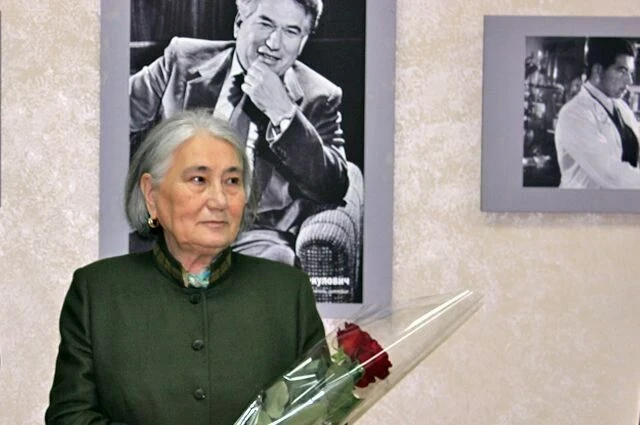
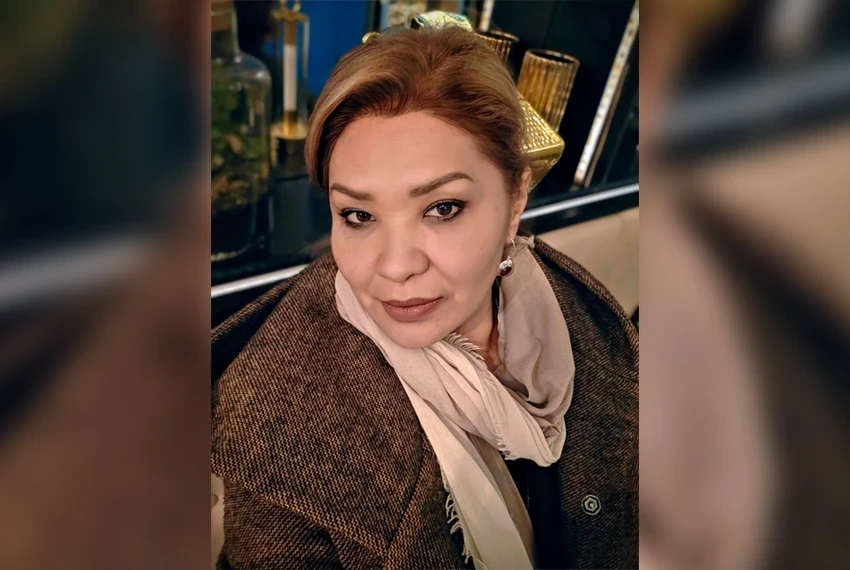
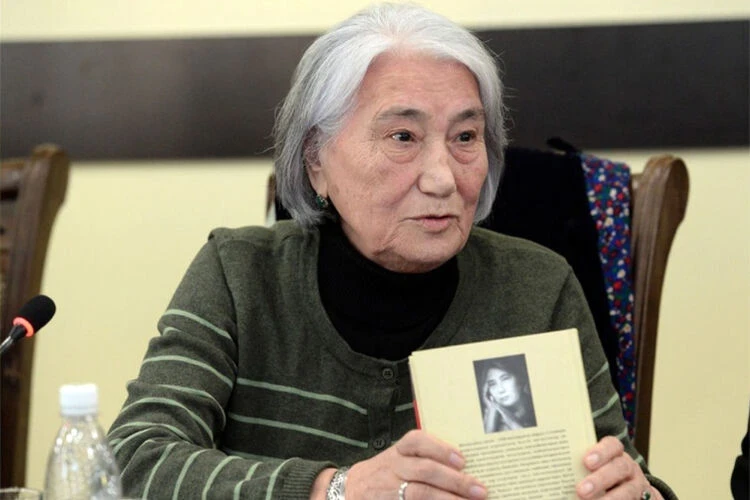
As Roza noted, she has been ill in recent days and could not respond immediately to what was happening, which greatly saddens her.
“Some people spread rumors and slander about Chingiz, even though it has been 17 years since his death. People continue to discuss him as if he were their friend or colleague. There is a saying: ‘Of the dead, either good or nothing,’ but some still disturb his soul. I wonder: ‘Is this being done intentionally to sow discord among the people?’” she wrote, adding that she holds no malice towards the accusers but warned them of the consequences.
“This year I will turn 89. I have experienced many difficult moments. My family and I endured hunger and poverty after the arrest and execution of my father. The Soviet authorities treated us harshly, calling us ‘children of the enemy of the people.’ I want to express my gratitude to my Kyrgyz people and everyone who supported us in difficult times,” Roza Aitmatova shared.
The writer's sister also expressed dissatisfaction that his name has become a symbol of accusations.
“If he could come now and explain that everything was not as they say, the gossipers would calm down. Chingiz introduced the Kyrgyz people to the world; he glorified our epic ‘Manas.’ He fought for many years for the opening of Kyrgyz schools in Bishkek, asserting that this is his native language, and as a result, opened two schools. It saddens me that his soul is not left in peace, being criticized and shamed before the whole world. Even yesterday, I received a call from Kazakhstan asking what was going on,” she noted.
“None of the rumors circulating on the internet are true. I am ready to prove it,” she added.Roza explained that one of the rumors claims that “Chingiz wrote in Russian because he did not know the Kyrgyz language.” “In fact, his works have been translated into 185 languages; he ranks third in the number of publications in the world after Shakespeare and Tolstoy. He stopped writing in Kyrgyz because in 1957 he was persecuted by some Kyrgyz officials who received orders from Moscow to get rid of him. After that, he was bedridden and ill for a long time. Only when my father was rehabilitated did he feel better,” the writer's sister recounted.
“My brother grew up in Sheker and knew his native language perfectly; his first books were written in Kyrgyz. He was always proud of his language and fought for it,” Roza added.
She also noted that some claim that Chingiz Aitmatov lived in Europe while Kyrgyz people suffered in the 1990s. “In reality, he was the ambassador of Kyrgyzstan in Europe and the first to establish contacts between Kyrgyzstan and the West, stating that our people live in Central Asia,” she explained.
Additionally, Roza spoke about Chingiz's trip to Uzbekistan during the conflicts in Osh: “He was in Moscow when he learned that Uzbek troops were preparing to invade. He immediately contacted the Minister of Defense of Uzbekistan and explained that this could lead to a great war. As a result, the President of Uzbekistan promised that his troops would not cross the border,” she recounted.
“Chingiz was elected by our parliament, but he did not run for office and did not come to Kyrgyzstan during the elections. He only suggested that the deputies pay attention to Akayev,” Roza added, urging not to tarnish the memory of Chingiz and to leave his soul in peace.
“I am sure there will be comments that the funds for the centenary of Aitmatov could have been spent on something else. I ask the government to direct these funds to improve the lives of ordinary people. This would be a true monument to Chingiz,” she concluded.
Roza also spoke about her mother Nagima, who knew the Arabic alphabet and taught children to read the Quran despite the prohibitions of the Soviet authorities. “My grandfather Hamza built mosques and madrasahs, and my great-grandfather was the mufti of Siberia and Kazakhstan. Chingiz always respected and observed Islamic rituals. No one can measure a person's inner faith,” she summarized.
“All the characters in his works have prototypes from our lives. Chingiz always wrote the truth. I urge our great people not to tarnish my brother's name and to respect their culture,” Roza Aitmatova concluded her address.
Recall that on January 16, a podcast by journalist Ernis Kyazov featuring Syimyk Japikeev took place on YouTube. During the discussion, the phenomenon of "mankurtism" and Aitmatov's works were discussed. The former head of the State Service for Combating Economic Crimes stated that Aitmatov's works are "five kopeck stories" that do not inspire.
These statements caused a wide resonance, and deputy Gulsharkan Kultaeva, as well as the Union of Writers of Kyrgyzstan, called on the relevant authorities to give a legal assessment of his words.