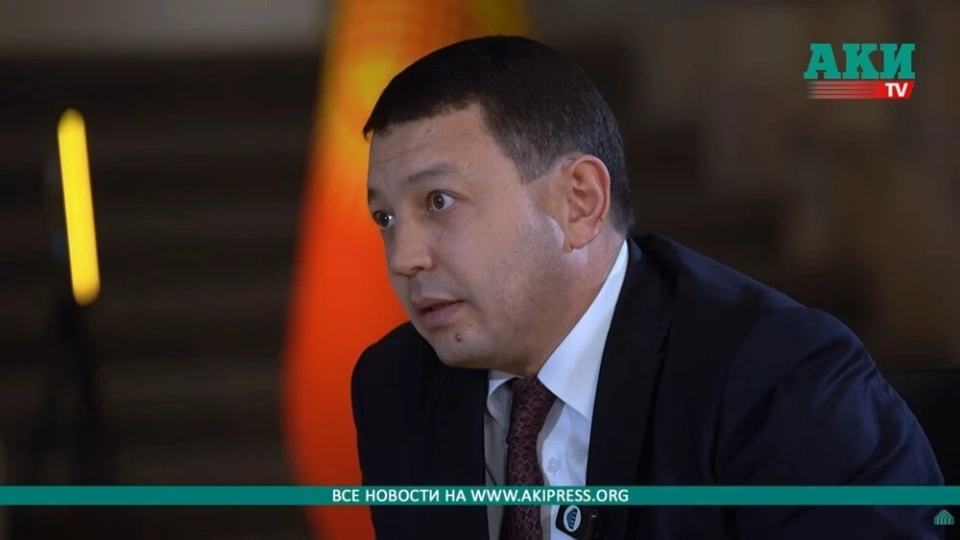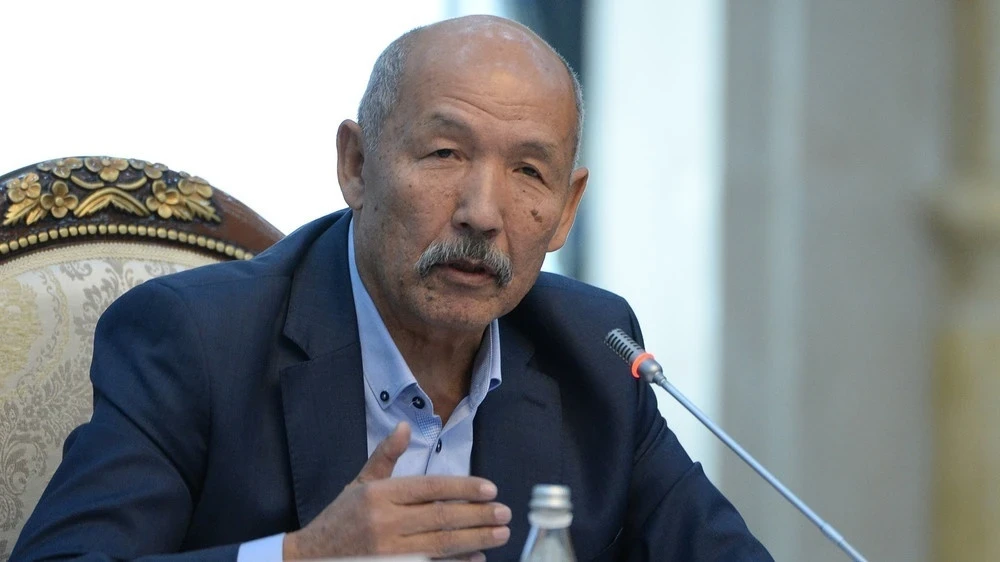
The honored architect of the Kyrgyz SSR and candidate of architecture Ishenbay Kadyrbekov recently shared his thoughts in an interview about the alarming situation concerning the historical and architectural heritage of Bishkek, as well as assessed the legality of excluding key objects from the list of cultural monuments.
- The creators of the master plan for Bishkek expressed concern about the loss of historical monuments. A number of objects have been excluded from the list of cultural monuments. Residents of St. Petersburg are worried, while the residents of Bishkek remain silent. What is really happening?
- It's hard to comment on this; emotions are overwhelming. In my previous interview, I partially touched on this topic. Cultural heritage is the soul of the nation, its spiritual support. The loss of cultural identity is akin to the loss of sovereignty. I do not want to believe that the demolition of monuments of history and culture is part of a deliberate strategy. After all, we are not mankurts.
Architecture is the material expression of the culture of the people, an art that reflects social values. When we travel abroad, we learn about a country through its architecture. It is an opportunity to immerse ourselves in the past, enjoy aesthetics, and gain emotional experiences.
The architectural heritage of Kyrgyzstan has deep historical roots. Examples include the Burana Tower, the 15th-century Tash-Rabat caravanserai, the minaret and three mausoleums in Uzgen, as well as the 14th-century Gumbaz Manas monument. These structures date back to the 11th to 15th centuries. Later, until the 20th century, there was a decline.
The revival of architecture began in the 1930s and continued in the 1950s. During this period, buildings emerged that truly deserve the status of works of art. Although there are few of them, they are valuable to the Kyrgyz people. This is the heritage of our ancestors, who not only founded an independent country but also left us the creations of the architects of their time. However, now, for the interests of investors, the authorities have decided to get rid of these monuments by excluding them from the list of cultural heritage objects. This is very sad.
- And how should we perceive the statements from the Ministry of Culture that there will be no demolition of the excluded objects?
- So why were they excluded from the list? There is a lot of hypocrisy in this.
- However, the Supreme Court building on Abdymomunov Street, which was excluded from the list, was not demolished but rather restored. Perhaps they changed their minds?
- What was done to this object is hard to call restoration. It is more of a "Kyrgyz know-how." The project authors did not preserve the original appearance and did not spend funds on real restoration. Perhaps this is a temporary measure to later demolish the building, which has lost its status as a cultural heritage site. Simple and "genius." No one in the world has yet thought of such "rationalization" in the field of cultural heritage protection.
Given that the architectural appearance of the surrounding buildings no longer corresponds to the new appearance of the Supreme Court, they could also be demolished. As happened with the square where the beloved fountain of the famous sculptor Olga Manuilova, built in 1953, was located. Furthermore, the square may be destroyed — it occupies too large an area, where profitable high-rises could be built.
- I understand your sarcasm, but defenders of historical and cultural heritage may perceive your words as support.
- They may, and that makes me sad. It is sad that this is happening to us while the whole world protects its heritage. I fear that the excluded objects will be demolished, and this will be an irreparable loss. I hope I am wrong.
The discussed Supreme Court building (formerly the building of the Supreme Soviet of the Kyrgyz SSR) was built according to the design of architect Yu. V. Dubov in 1936. It is not only a unique architectural object in the style of post-constructivism but also an important historical structure. The V Extraordinary Congress of Councils of the Kyrgyz SSR was held here, and in 1937, the first Constitution of the Kyrgyz SSR was adopted, which ensured our country's status as a sovereign state.
- In your last interview, you expressed concern about the bill proposed by the Cabinet of Ministers "On Amendments to Certain Legislative Acts (the laws "On the Protection and Use of Historical and Cultural Heritage" and "On Investments")." This project proposed to transfer heritage objects into private hands within the framework of investment agreements. What stage is the consideration of this project at?
- The mentioned bill was withdrawn by the initiator. Common sense prevailed.
- Why do you think the bill was withdrawn and at whose initiative?
- I think this happened for two reasons. First, serious disputes may have arisen during the discussion in the Jogorku Kenesh, which would resonate in society. Public opinion is a powerful force. It is dangerous for politicians when the people's opinion is discussed in an informal setting. Monuments are actively discussed in kitchens right now.
Secondly, it could have been a decision by the president of the country. As the head of state, he looks at issues considering the time aspect and future consequences. The question at stake is: what is more important — the "wants" of investors or the cultural heritage of the nation.
When a leader shows prudence and possesses political will, it is beneficial for the country. The return of Kumtor, the construction of the railway from China to Kyrgyzstan to Uzbekistan, the resolution of complex border issues — all of this speaks of the presence of will. I do not idealize the leadership, but if the president chose to protect the spiritual foundation of the nation in matters of cultural heritage and stopped this madness, it means he understands the value of history for the people.
- Let’s hope that the status of the remaining objects will be restored.
- I, like many other citizens, hope for the president. The exclusion of objects from the list occurred in violation of current legislation. The president has the authority to annul the Cabinet's decision by his decree.
According to the Law of the Kyrgyz Republic "On the Protection and Use of Historical and Cultural Heritage," the process of inclusion in the list is very complex. Each object undergoes scientific examination, and the commission created by the state body consists of scientists, cultural figures, and representatives of the public. Each monument has an individual passport.
As for changing the list, the law clearly states that the exclusion of objects of all categories is prohibited. Article 27 states: "The list of objects of historical and cultural heritage is supplemented... The exclusion of objects of all categories from the lists is prohibited." If a monument has lost its status or has been destroyed, a note "lost" is made. Thus, the addition of objects is possible, but their exclusion is not. This is in accordance with international practice and the norms of the Convention on World Heritage.
Nevertheless, the Cabinet of Ministers, citing Articles 27 and 36, began to make notes of "lost" for a number of objects, removing them from the list, even though these monuments had not been lost or destroyed. This would be funny if it weren't so sad.
The reference to Article 36 is also inappropriate. It allows for the demolition or alteration of objects only in the case of sudden destruction due to a natural disaster. The objects excluded from the list have not been subject to sudden destruction. The threat of loss is not yet a loss. In the case of a threat, according to Article 24, state bodies must take measures to save the monument, not demolish it.
Understanding the fragility of their arguments, the Cabinet created an interdepartmental commission for the inventory of buildings. However, Article 36 of the law prohibits demolition, alteration, and relocation of objects and is not related to the creation of such commissions. A legal collision has arisen. According to the legislation, in the case of a collision, it is necessary to be guided by the act with higher legal force — that is, the law. Therefore, the resolutions on the exclusion of monuments from the list are illegal.
In conclusion, I want to address the members of the interdepartmental commission. Dear experts, have you had time to familiarize yourselves with the documents of your predecessors? Do you have evidence of their scientific justifications? If so, they should be made public, as heritage is the property of the people. If there is no evidence, is it ethical to ignore the opinion of the expert community and the law? This especially concerns my colleagues from the Union of Architects who signed this conclusion.