Tsagaan Sar, known as the Mongolian New Year, will take place from February 18 to 20, 2026. This is reported by MiddleAsianNews.
This holiday, translated as "white month," is an important family event for Mongolians and is celebrated according to the lunar calendar. Due to the peculiarities of this calendar, the date of the celebration constantly changes, as it is determined by the first day of the first lunar month of spring. Modern celebrations of Tsagaan Sar last for three days, although some rituals may continue longer.
According to the Mongolian calendar Togss-Buyant, the date of the holiday varies from year to year, sometimes even falling in different months. Astrologers, using special algorithms, determine the first spring day or Tsagaan Sar day based on the moon's position in the zodiac.
As astrologers from the Gandantegchinlen Monastery assert, the most accurate astrology for Mongolia is Togss Buyant, created by outstanding lama-astrologers Sumbay Khamba Ishbalzhir and Luvsandanzanjantsan in the 18th century, taking into account the country's climatic conditions. Therefore, the Mongolian New Year does not always coincide with the Eastern New Year, as Chinese astrology is oriented towards a warmer climate where spring arrives earlier.
The ceremonies and rituals of Tsagaan Sar trace back to the times of the Hunnu-Mongols and have always been important for the people of Mongolia throughout the centuries. This holiday, despite its simplicity, was essentially the only nationwide celebration in the Mongolian calendar. In the 20th century, the celebration underwent changes related to the revolutions in Russia and Mongolia, which led to the suppression of religion and a decrease in Buddhist elements in traditions. In 1960, the holiday was officially restored, and by the end of the 60s and the beginning of the 70s, Tsagaan Sar became a purely folk holiday, honoring veterans and summarizing the year.
On the eve of Tsagaan Sar, a thorough cleaning takes place in homes. On New Year's Eve, families bid farewell to the past year in a ritual called "bituuleg." It is important to settle debts and reconcile with those with whom there were quarrels, using the exchange of "khöörög" (a snuff box with snuff) to mend relationships. Thus, entering the new year, it is necessary to leave all the bad behind.
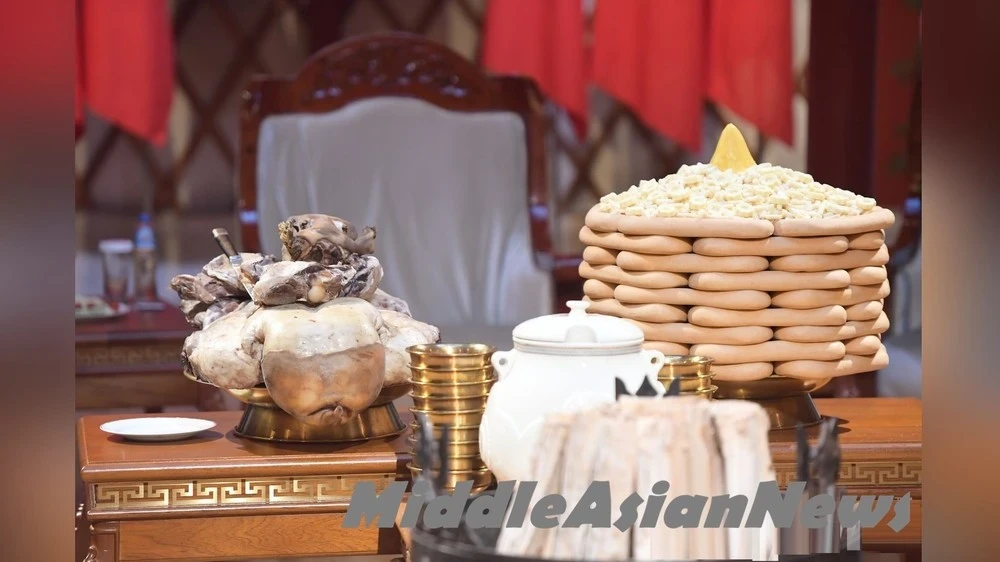
The celebration begins with the last day of the old year, called "bituün," which means "closed." On this day, Mongolians stay home, do not visit guests, and eat traditional dishes such as buuz and dumplings. It is believed that adults should not sleep on "bituün," as if this happens, the Buddhist goddess Lham may consider the sleeper dead. In the evening, on New Year's Eve, families gather to bid farewell to the departing year, where children gather at the parental hearth and participate in the festive feast. The table features traditional dishes, including a fatty sheep and dairy treats. The oral feast has its traditions, where elders occupy honored places, and men and women sit on opposite sides.
On "bituün," three transparent pieces of ice are placed above the door of the yurt for the divine patroness and thorns to ward off evil spirits. Many visit Buddhist monasteries to cleanse themselves of the sins of the past year, emphasizing the importance of the transition from one year to another as a sacred moment when the divide between good and evil occurs.
The New Year meeting begins at dawn on the first day of the new year, when family members dress in new clothes and greet the elders, and then the neighbors. Spouses, according to Mongolian custom, do not exchange greetings, as they are considered one whole.
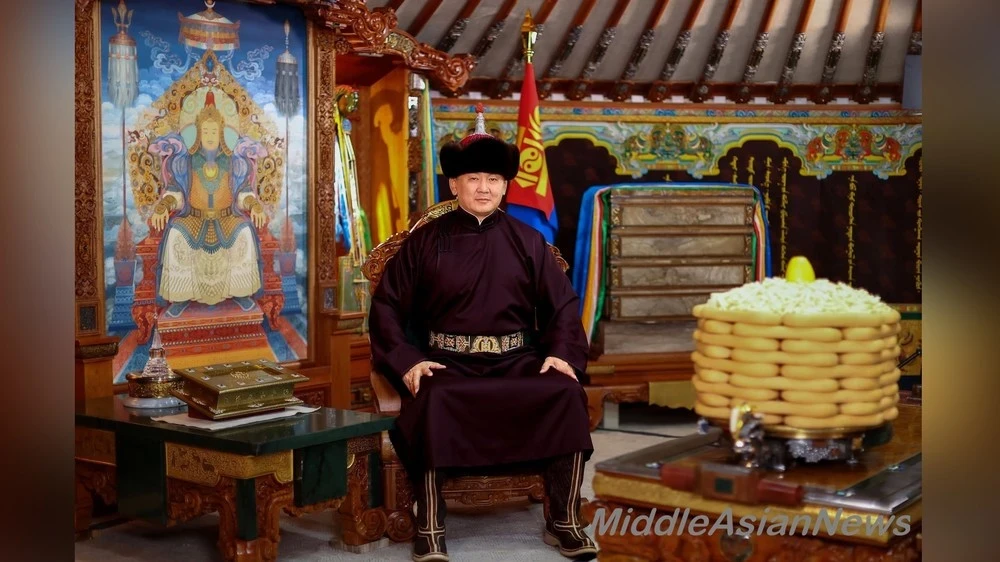
President of Mongolia Khurelsukh Ukhna congratulated the people on Tsagaan Sar.
In his congratulation, he noted:
“Dear fellow citizens,
My Mongolian brothers and sisters,
I congratulate you on Tsagaan Sar, the Year of the Fire Horse, which coincides with the XVII jaran in the Mongolian calendar.
Tsagaan Sar has a long history, starting from the Hunnu dynasty, and symbolizes our spiritual independence as well as our cultural heritage.
During this great holiday, we observe the tradition of praying to the heavens and the earth, respect our elders, know our roots, and adhere to etiquette, valuing good and tolerating evil.
Our pride and duty is to preserve and pass on our heritage and culture to future generations.
Genghis Khan is the supreme idol of our people.
It is our duty to honor and spread the legacy of the Great Khan.
In this regard, a decree was issued to restore the memory of Genghis Khan and to create a new history of Mongolia in 30 volumes.
The United Nations General Assembly supported the initiative to create a “World Horse Day,” which will allow us to celebrate our national holiday.
This day is now celebrated in many countries around the world.
The Year of the Fire Horse also marks the 820th anniversary of the founding of the Great Mongolian Empire by Genghis Khan.
This anniversary is associated with a decree to confer the title of “Genghis Khan” and the status of the Black Heart as a state sacred mountain.
We are also pleased to announce that Lake Khubsugul has been declared a state sacred site, which will help preserve the purity of the freshwater source in Central Asia.
Thus, Mongolia has received a sacred lake for the first time in its history.
The Year of the Horse is a time of blessing and strength for the Mongolian people.
In the Year of the Fire Horse, let us together develop our country and support peace and justice.
May the spirit of the Mongolian people shine like the flame of fire, and may our elders and youth be filled with energy and striving for the better.
With the new moon, I wish happiness to all Mongolians, blessed by the heavens and the sun.
May Mongolia thrive under the protection of the Eternal Blue Sky!”