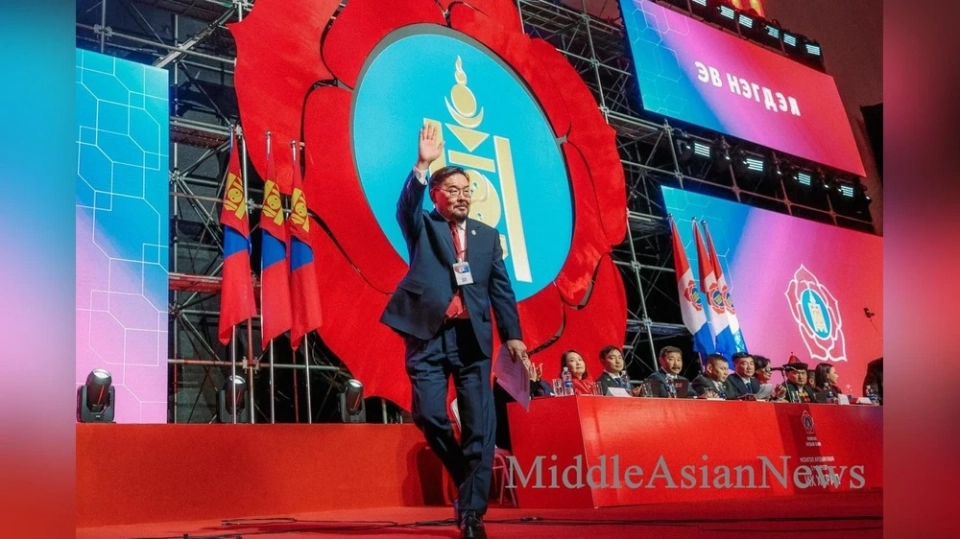
This article provides a detailed analysis of the corruption situation within the ruling Mongolian People's Party and examines the reasons for its decline. The author demonstrates how deeply entrenched this political force is in corruption.
In the past twelve months, Mongolia has found itself at the center of a political crisis, characterized by a tense standoff between the parliament and the president. This conflict indicates that both the state structure and the economic model do not allow the population to benefit from the country's mineral resource wealth.
Despite the Mongolian state demonstrating record export figures, rising budget revenues, and stable economic growth, the population does not feel this in their daily lives. Six years after the winter protests that united discontent over air pollution and corruption, this issue has only worsened.
Since then, dissatisfaction over the embezzlement of state resources in Mongolia has led to an open constitutional crisis. Last October, the parliament decided to suspend Prime Minister Zandanshatar Gombojav just four months after his appointment.
However, three days later, the president vetoed the parliament's decision, citing constitutional grounds. The Constitutional Court of Mongolia, "Tsets," confirmed the legality of the veto, noting that the parliament's decision to terminate the prime minister's powers violated several procedural and constitutional norms.
Western media often oversimplify such events. In early 2025, the British newspaper Times published an article about a president allegedly linked to Putin, who staged a coup against the reformist Prime Minister Oyun-Erdene Luvsannamsrai, educated in the USA. However, this piece lacked depth of analysis.
Mongolians, however, see the situation differently. They observe how prices for food, fuel, and rent are rising, while politicians flaunt new SUVs and expensive watches. They follow the "anti-corruption" hearings, which seem never to reach the real culprits.
If a coup did occur, it was a slow process, taking place through coal contracts, logistical schemes, and parliamentary manipulations.
From a Party-State System to a Financial Pyramid
In theory, Mongolia is a parliamentary democracy with a democratic constitution and separation of powers, which should be familiar to those acquainted with liberal concepts. In practice, however, politics has turned into a system that many call "nam-tör": a hybrid of party and state power, where the ruling party (MPP) controls key sectors.
"Dissatisfaction over the embezzlement of state resources in Mongolia has escalated into an open constitutional crisis."
Getting onto party lists or into key ministries is perceived as an investment.
You finance a campaign, demonstrate your loyalty, while in return you gain access to tenders, licenses, and stakes in major projects. Formal rules exist, but against this backdrop, there is an unwritten code of mutual obligations and secret agreements.
As a result, many Mongolians have stopped viewing corruption as a deviation from the norm. They see a system where the main principle is rent-seeking, and patron-client networks penetrate bureaucracy and party structures, undermining formal authority.
Cleaner Prices, Better Deals
A striking example of this is coal and related contracts. In a typical agreement, the buyer commits to purchasing a certain amount of coal before it is produced. These contracts are attractive for resource-rich countries like Mongolia, as they ensure stable income.
However, recent investigations have shown that millions of tons of coal were sold to Chinese companies through opaque deals made with Erdenes Tavan Tolgoi (ETT) and a narrow circle of trading firms. ETT is a state-owned enterprise managing one of the largest coal deposits in the world, which significantly impacts the country's economy.
After mass protests in the winter of 2022 related to "coal theft," the government took steps to improve the situation. The solution was to direct exports through an open auction platform on the Mongolian Stock Exchange (MSE) to ensure price transparency.
To some extent, this worked: prices on the exchange began to approach those paid by Chinese buyers at the border. A law on the mining product exchange was adopted, and officials took pride in this step as an achievement of transparency.
However, digging into the details, most coal is still exported under long-term contracts. MP Zoljargal reported that about 80% of coal continues to be exported outside of open auctions.
At MSE auctions, mainly low-quality leftovers with unpredictable volumes are sold. The public sees only the visible prices, while the real profit remains out of sight.
Aggregator as a Switchboard
Supply contracts, especially those related to infrastructure and prepayment, maintain strategic freedom of action. At the center of many such agreements is Bodi International. When examining recent contracts between Bodi and ETT, the picture becomes clearer.
Politicians and experts argue that deals through companies like Bodi allow coal to be sold at undervalued prices, while intermediaries profit from transportation and resale. Some contracts allow for the conversion of debt into equity.
If the state enterprise cannot fully deliver coal supplies, the creditor can exchange the debt for shares in the project company or infrastructure object, thereby obtaining a stake in the project.
"The public sees only the visible prices, while the real profit remains out of sight."
Other state enterprises and clientelist networks compete for the opportunity to export as much coal as possible. This competition has led one faction to lobby for railway construction, while another pushes for border ports, resulting in price fluctuations.
Considering barter financing of infrastructure projects paid for with coal, one can see the main features of the "coal mafia."
Clientelism as an Infrastructure Force
During the COVID-19 pandemic, coal exports sharply declined, and the time difference between shipment and cargo waiting meant real financial gains. The delivery priority granted by ETT effectively gave factions and clientelist networks leverage.
Determining which ton of coal would cross the border and when became a complex task. Reports indicate that border officials charged fees for their services, preferring their acquaintances. Transport companies linked to the political elite thrived, while ordinary drivers and businesses faced delays.
"The state does not disappear, but disintegrates. Power still exists, but in fragments that can be traded."
Sociologists like Michael Mann speak of the state's ability to intervene in everyday life through infrastructure. In Mongolia, this power has been divided and rented out, or in other words, captured.
Railways and border points become not just infrastructure objects but items of power struggle. Bargaining occurs over which faction will gain access to construction, which firms will receive priority, and which officials will issue permits.
As a result, the state does not disappear, but disintegrates, and power still exists, but in fragments that can be traded.
Two Budgets, One Shadow
To "achieve results," the Mongolian government uses about a hundred state enterprises, such as ETT, to bypass bureaucracy. Coal supply contracts guarantee future deliveries in exchange for prepayment. Infrastructure loans are secured not by general tax revenues but by specific streams of export earnings.
In other countries, there are escrow accounts where export revenues are held before being transferred to the state treasury. In oil-exporting countries, double tax systems are often observed, and Mongolia is no exception.
"Citizens feel the budget is growing, but essential services are still not provided."
From the perspective of public finances, this redistributes power, creating parallel fiscal structures. The official structure appears normal and regulated, while the informal one is flexible and politicized.
When global commodity prices rise sharply, alternative channels become particularly attractive. One can take a loan secured by future coal supplies to address current political tasks. One can finance the construction of a new railway or conduct cash transactions before elections, avoiding the complicated budget process.
Promises of long-term revenues secured in supply contracts may compel unaccountable governments to continue promising benefits to factions, expanding the state budget and effectively bribing voters. Citizens feel that the budget is growing, but vital services remain unavailable.
Each new scandal confirms the deteriorating state of affairs. Political scientists speak of the erosion of the legitimacy of state functioning, arising from the inability to solve collective problems. Citizens claim that the state has lost its moral authority.
Slow Violence, Not Sudden Collapse
The concept of slow violence, proposed by Rob Nixon, describes gradual, often unnoticed destructions arising from pollution, climate change, and resource depletion.
In Mongolia, the coal economy has led to such consequences: air pollution in border towns, destruction of ecosystems around mines, and human casualties from burning coal. According to Nixon, ecological disasters occur in "temporal scales exceeding human perception," making it difficult to combat long-term threats.
This violence has political, emotional, and ecological aspects. The state promises accessible education for all, but classes are overcrowded because raising teachers' salaries is not a priority. Anti-corruption hearings are held, but investigations stall when they involve high-ranking officials.
People lose hope for justice long before they stop voting. This is especially true for marginalized groups that have no influence in government.
"Laws change, the cabinet is reshuffled, new anti-corruption bodies emerge, but the core scheme remains unchanged."
On the ground, citizens perceive this not as a strengthening of democracy but as manipulation of public opinion. Everything is reformed and strengthened, but nothing changes. The essence remains the same: the weakening of presidential power and the strengthening of the prime ministerial system, as well as the desire to consolidate power within the ruling party.
Laws change, the cabinet is renewed, new anti-corruption structures are created, but the core scheme remains the same. "If justice were to be applied consistently tomorrow," citizens joke, "there would be no one left in politics."
Protests as a Memory of Democracy
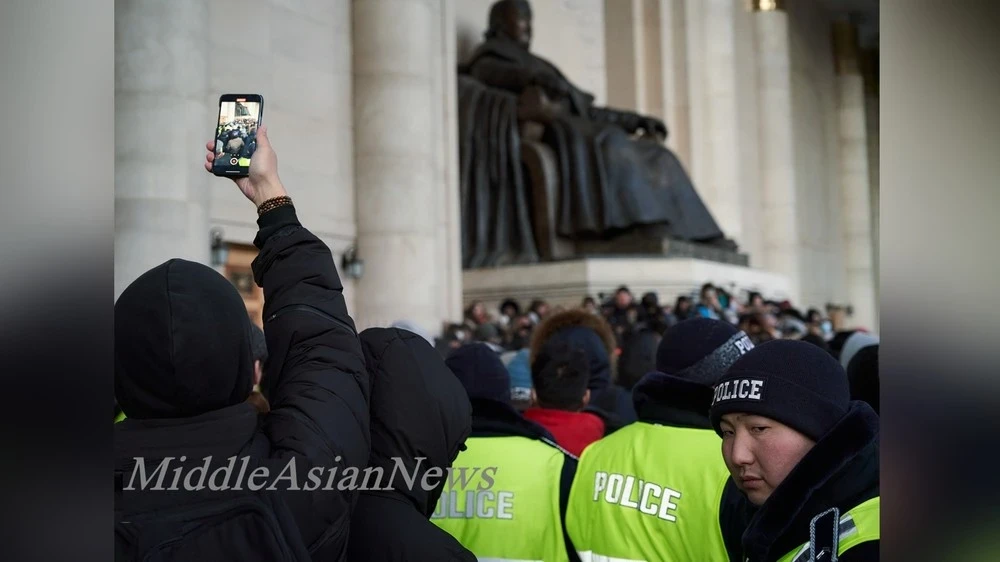
Despite all the difficulties, citizens do not remain silent. In 2019, winter protests took place in Ulaanbaatar, triggered by smog and corruption. In 2022, the youth took to the streets again, demanding answers regarding coal theft. Over the past two years, new protests have erupted due to government reshuffles and politicians' extravagant spending.
Critics often view these protests as a result of manipulations by competing factions or as naive actions of the youth. Both approaches overlook the fundamental function of protests.
Each protest, even if it does not lead to success or a change in power, serves as a reminder of democratic accountability. They demonstrate that the state must provide public goods and justice. This sustains hope for a better future and that institutions can be inclusive rather than exploitative.
Elite Brokerage Services in Conditions of Global Uncertainty
In such conditions, the political economy of Mongolia functions through elite mediation. It is a system where those in power act as a link between national wealth and global markets, profiting at every stage.
These brokerage services are not limited to coal. In the copper sector, the Erdenet mine has also been embroiled in scandals, where trading companies received lucrative contracts for copper concentrate supply, allowing profits to be redirected.
"The state acts as a brokerage firm, not as a regulatory body ensuring benefits for society."
Even at the largest copper-gold mine Oyu Tolgoi, owned by Rio Tinto, disputes over cost overruns have arisen, which, according to Mongolian observers, have benefited contractors linked to the elite. In these cases, the state behaves as a broker rather than a regulator, leading to the detriment of public interests.
This situation has serious implications for democracy and development in Mongolia. In the parliamentary elections in June 2024, the opposition significantly improved its position by leveraging dissatisfaction with corruption and the economic situation. Voter turnout reached nearly 70%, indicating that Mongolians have not lost interest in politics. Clearly, voters associate one-party rule, corruption, and the undermining of democratic accountability.
Devastation of Democracy
All these events point to a troubling trend that Peter Mayer identified over a decade ago: the weakening of democracy. This occurs not due to a complete abolition of elections but due to the gradual erosion of their essence.
The situation in Mongolia vividly illustrates what happens when a resource-rich economy is built on extraction without inclusive institutions. It is easy to talk about the need to strengthen institutions, but in practice, it is not so simple. It is important to understand which institutions need to be strengthened and against whom they should be directed.
However, pressure for reforms will only be effective when people see real changes. This is the cruel paradox of slow violence: it not only harms but also undermines patience. With each new scandal without consequences, apathy forms among the people.
In this vacuum, various problems arise: conspiracy theories, nationalist movements, politicization on the internet, and much more. Nevertheless, the current crisis provides citizens with a chance to fill the resulting vacuum and demand a new political voice. The success of Mongolians in this endeavor will determine their path to genuine accountability and democracy.
Author: Sanchir Jargalsaihan — Research Fellow at the University of Oxford.
Translation: Tatar S.Maidar
Source: MiddleAsiaNews