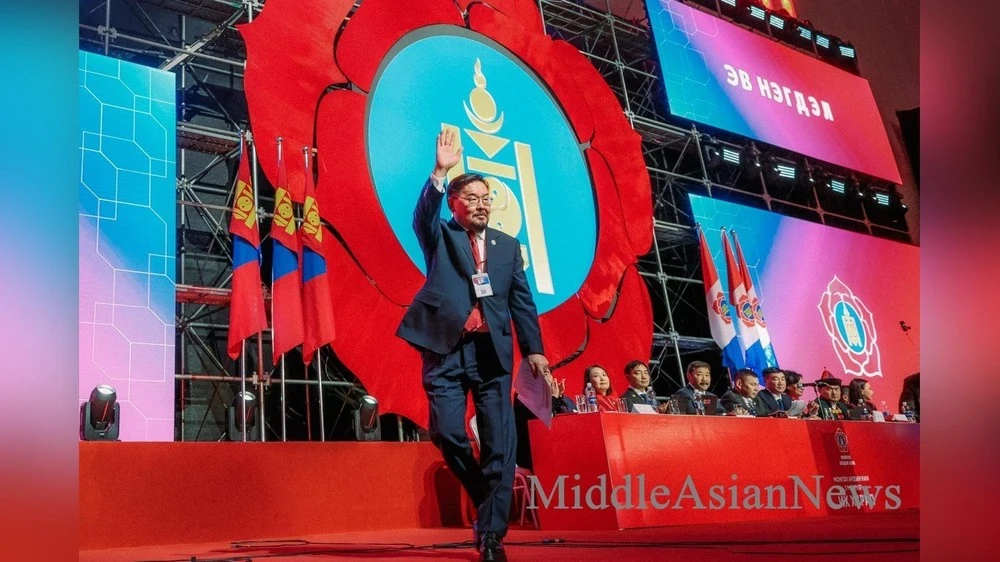
In 2026, Mongolia will face challenges that have arisen from the instability of 2025.
The political and economic sphere of Mongolia in 2025 was full of upheavals. Faced with regular protests in Ulaanbaatar, the country found itself in a state of political instability, corruption, and social conflicts. The problems that arose this year require effective solutions from the government to avoid hindering the further development of the country's economic potential.
Increasing Political Instability and Social Tension
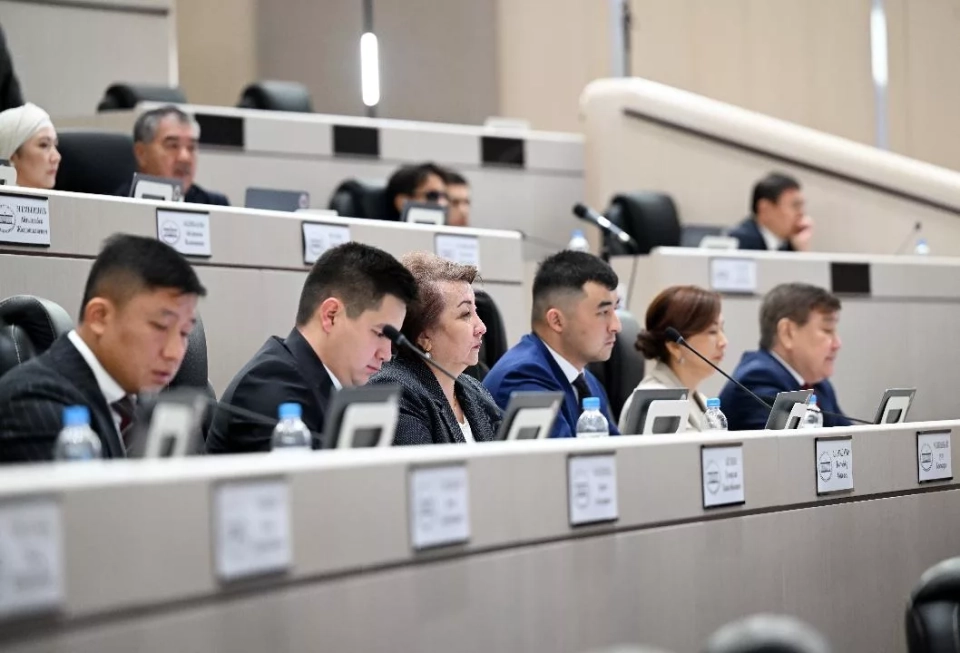
In 2025, Mongolia found itself among the countries experiencing political and social upheaval. As a result of mass youth protests in May, the coalition government led by Oyun-Erdene Luvsanamsrai was overthrown, accused of corruption and lack of transparency. This event exacerbated the political conflict within the Mongolian People's Party (MPP) and created a constitutional crisis.
After the fall of Oyun-Erdene's government, Prime Minister Zandanshatar Gombojav was also removed from office following a parliamentary vote. The new Great State Khural, consisting of 126 deputies, found itself in a situation requiring the resolution of the consequences of instability in the executive branch.
After several weeks of intrigue within the MPP, Zandanshatar's government was restored at the end of October. The Great State Khural began discussing new budget proposals and the appointment of new ministers. In mid-December, the Prime Minister announced the appointment of 16 new deputy ministers, which sparked protests from the Democratic Party (DP), demanding the cancellation of the appointments and threatening the government's resignation.
All these political events undermine the foundations of effective governance, stability, and socio-economic progress in Mongolia.
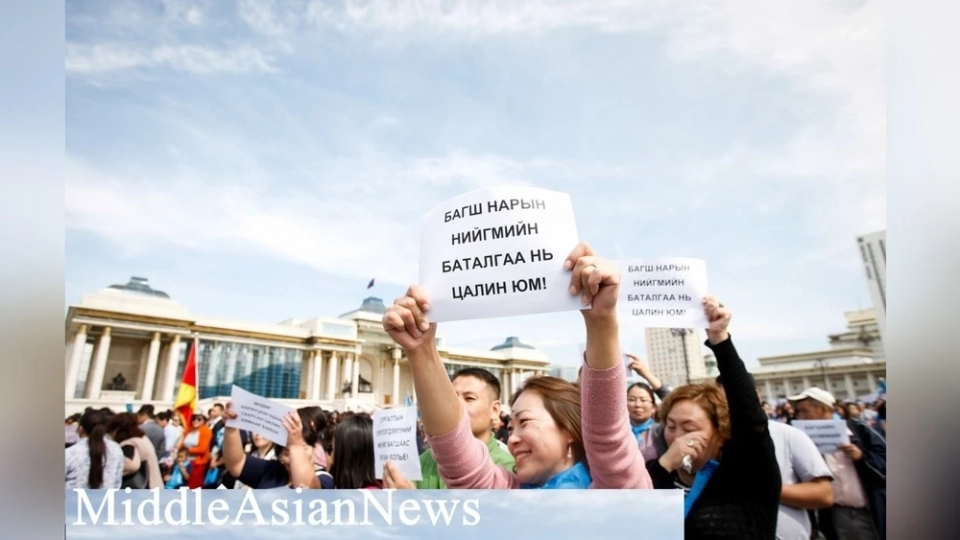
Since the beginning of autumn 2025, there has been a wave of strikes and protests in Mongolia. During this time, education and healthcare workers also held protests. From September to November, about 59,000 people took to the streets demanding solutions to various social issues.
Strikes and protests have become regular occurrences in Mongolia over the past ten years. This confirms the functioning of the democratic mechanism, but at the same time indicates that corruption, environmental pollution, and other social problems remain relevant for Mongolian society.
In November, the newly formed Zandanshatar government presented a five-year development plan for Mongolia for 2026-2030, aimed at economic growth, combating corruption, and improving the investment climate. Domestically, the government intends to focus on human capital development, education, science, and technology. Economic policy will be aligned with the long-term program "Vision 2050," developed by the previous administration.
On December 22, 2025, protests took place outside the parliament building as citizens of Mongolia demanded solutions to the fuel shortage and rising living costs. Reports emerged of residents from the Orkhon and Bulgan aimags traveling to Khövsgöl for fuel. The protests coincided with the appointment of new deputy ministers by the government, despite promises to cut expenses.
Strengthening Mongolia's International Ties
Despite internal problems, the Zandanshatar government seeks to establish economic ties with Russia and China, as well as attract investments from other countries.
In November, Zandanshatar, restored to office, participated in a meeting of the Council of Heads of Government of the Shanghai Cooperation Organization in Moscow.
Zandanshatar's participation in this meeting was an important step towards strengthening partnerships with neighbors. Ulaanbaatar is actively developing strategic cooperation with Beijing and Moscow, focusing on economic interaction and cooperation mechanisms with SCO members. The Prime Minister held bilateral meetings with Russian President Vladimir Putin and Chinese Premier Li Qiang.
During the meeting with Putin, issues of economic integration were discussed, including a free trade agreement between Mongolia and the Eurasian Economic Union (EAEU), which was ratified on December 19.
In the autumn of 2025, Mongolia faced a fuel shortage, despite government assurances of stable supplies from Russia. One of Zandanshatar's main tasks during negotiations with his Russian counterpart was to ensure uninterrupted supplies of diesel fuel. At the 27th meeting of the intergovernmental commission, both sides agreed to increase fuel supplies to Mongolia starting January 2026.
Despite a long history of energy relations, the ongoing fuel shortage represents a vulnerability for Mongolia and underscores the need to diversify sources. This is necessary to ensure stable supplies in case of necessity.
At the SCO meeting, Zandanshatar also discussed increasing coal exports to China, proposing to raise the volume to 100 million tons. In 2024, coal exports from Mongolia reached a record 83.7 million tons.
Since the beginning of Oyun-Erdene's administration, Mongolia has been applying a so-called parallel approach to development within the framework of the Chinese initiative "One Belt, One Road," focusing on mutually beneficial investments and trade.
Li Qiang noted during the meeting China's readiness to deepen cooperation, including in mineral and energy resources, as well as infrastructure projects.
Both sides emphasized the importance of joint projects, such as cross-border railways. In the future, there are plans to activate cooperation in the field of green energy and the digital economy.
Within the framework of the SCO and trilateral cooperation, the "Power of Siberia-2" project is being considered. At the November meeting, an Action Plan for 2026-2030, including this gas pipeline, was approved.
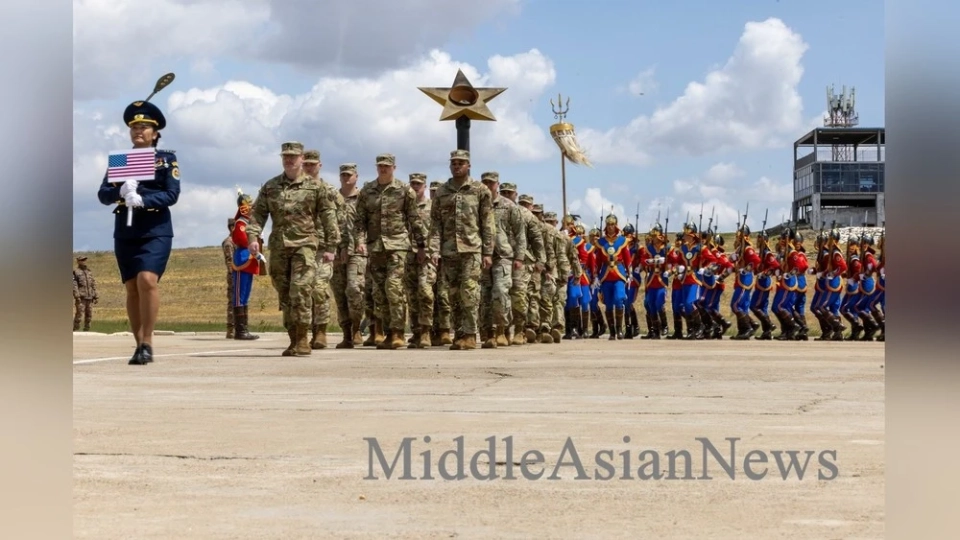
In addition to strengthening relations with neighbors, Mongolia seeks to develop partnerships with third countries. For the Zandanshatar government, it is important to strengthen these ties in the political, economic, and cultural spheres.
The prospects for cooperation with South Korea and Japan look promising in the coming years, especially in the field of rare earth resources.
The Zandanshatar government needs to pay attention to "third neighbors," such as Japan and South Korea, to diversify the energy sector and develop a "green" economy.
In 2025, Mongolia and South Korea held a strategic forum to expand cooperation in the field of minerals. On December 12, the Korean-Mongolian Cooperation Center for Rare Metals was opened in Ulaanbaatar.
Overcoming New Challenges: Mining Industry, Corruption, and Foreign Influence
In December 2025, the Mongolian parliament held public hearings on the Oyu Tolgoi case, the largest copper deposit in the country. These hearings, led by Deputy Batnairamdal Otgonshar, were the first of their kind.
The investigation concerned Mongolia's interests in transactions with the mining giant Rio Tinto. Issues of state ownership, licenses, and benefit distribution were discussed. Oyu Tolgoi, upon completion of construction in 2030, will become the fourth largest copper mine in the world.
A 2024 study showed that 26% of Mongolia's population faces multidimensional poverty, with the most frequently mentioned problems being sanitation and access to medical services.
The use of natural resources should help address these issues.
To attract foreign investments, the Zandanshatar government needs to combat corruption. The corruption perception index has not changed since 2019, and if serious steps are not taken, the independence of the judiciary may be at risk.
2026 will be an important milestone for Mongolia's international relations. Since the adoption of national security and foreign policy concepts in 2010 and 2011, respectively, the global situation has changed significantly, requiring a reassessment of approaches to addressing new challenges.
On December 18, 2025, a study on disinformation in Mongolia was published, showing that society has become a victim of manipulations in the digital space. The government needs to develop mechanisms to protect citizens' rights to free expression and counter foreign influence.
Author: Bolor Lkhaajav — a researcher specializing in Mongolia, China, Russia, Japan, East Asia, and America. She holds a master's degree in Asian-Pacific Studies from the University of San Francisco.
Translation: Tatar S.Maidar
Source: The Diplomat