The Situation Before February: Records in the Market
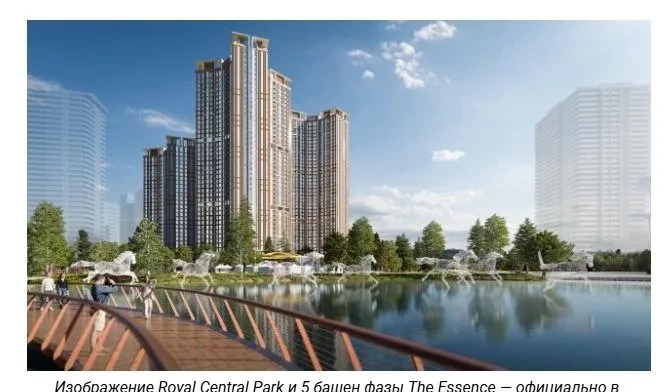
Before the events of February, the market was at a historical peak. According to the Dubai Land Department (DLD), the total transaction volume in 2025 amounted to $187 billion, comparable to nearly 20 annual budgets of Kyrgyzstan, with over 215,000 transactions registered.
In January 2026, the number of transactions reached 15,756 for a total of 55.18 billion dirhams, which is 43.9% more compared to January 2025. Most transactions concerned off-plan housing, where buyers make a partial payment upfront, and the remaining amount is paid as construction progresses.
The average cost per square meter in the market was about $5,000, while in Bishkek this figure ranged from $800 to $1,200, making housing in Dubai 4 to 6 times more expensive.
The annual price growth was about 20% as of January 2026.
Price ranges were diverse: from $2,200 per sq. m in remote areas to $13,000 per sq. m on the coast, depending on location and housing class.
The Current Situation: Slowdown, but No Collapse
Experts unanimously assess the situation: the market has taken a pause, but there is no talk of mass sell-offs or price drops.
“The market is experiencing a short-term pause. Long-term investors are not panicking, and there is no price collapse. However, transactions from foreign investors have been temporarily suspended,” comments Eliza Abdieva, a real estate expert working in the UAE and Qatar.
According to her information, property prices have remained stable, but rents have significantly decreased — landlords renting out apartments have started earning less:
- Rent for hotel apartments (apartments rented out as hotel rooms) has decreased by 40%
- Rent for regular apartments (long-term) has fallen by 15–20%
This trend is also confirmed by international analysts. The agency Allsopp & Allsopp reports a 25% drop in rental rates in several areas of Dubai over the year. The areas most affected are JVC, Arjan, Dubai Silicon Oasis, and Discovery Gardens due to the influx of new residential stock.
The situation is exacerbated by a record volume of new construction: in 2026, 120,000 new apartments and houses will be commissioned in Dubai, which is double the usual figures. Thus, supply in the market is increasing while demand is slowing down, putting pressure on prices.
Buyers have felt the benefits of the current conditions. If previously there were queues for an apartment in Dubai and bargaining was impossible, now they can request and receive discounts of 2–7% off the initial price, which is a significant change for the market.
Nevertheless, luxury housing priced at $10 million and above, including villas and penthouses on the coast, continues to find its buyers. In January 2026, 990 transactions were concluded in this segment. Buyers in this category are wealthy individuals from around the world for whom the current situation is of less concern.
“Recent events have not affected property prices,” asserts Ermek Takyrbashev, a real estate specialist in Dubai, referring to DLD data on major transactions after the February events, such as the Lumena by Omniyat project in the Business Bay area ($13.6 million) and ICD Brookfield Place Tower in the DIFC financial center ($8.2 million).
He also adds that Dubai residents, in general, remain calm. “The UAE's air defense is very powerful. Panic was mainly created by tourists, while locals continued with their daily lives,” he summarizes.
At the same time, another real estate expert Valentina Salabay offers a more cautious assessment of the situation: “In conditions of regional tension, the primary concern is security, not whether the price per square meter has risen or fallen. At such times, most investors pause their transactions. Price changes can be short-term and emotional.”
Analysts' Forecasts
Major international consulting firms provide cautious forecasts for 2026:
| Knight Frank | +3% (luxury real estate), +1% (mass segment) |
| Cushman & Wakefield Core | +5–8% on average across the market |
| Fitch | Possible downward correction due to excess new housing |
For comparison: in 2025, price growth was 20%. Thus, the market is not collapsing, but its dynamics are slowing down — from rapid growth to more cautious expectations.
Comparison of Qatar and the Emirates: Reasons for Market Differences
Eliza Abdieva points out the fundamental differences between the two Gulf markets:
| Qatar | ||
| Who buys | 80% — foreigners | 80–85% — locals |
| Number of brokerage firms | over 6,000 | 50–60 |
| Tax on purchase | 4% | 2% |
| Reaction to external events | Strong — foreigners leave the market first | Weak — locals stay put |
“The Emirates market is much more sensitive to external events. The Qatari market is more stable as it is less dependent on foreign investors,” Abdieva concludes.
The logic is simple: when 80% of buyers are foreigners, any negative news prompts them to pause their investments. In contrast, in a market where 80% are locals, they remain, which supports stability.
Who is buying real estate in Dubai?
According to DLD data, in 2025, the five countries with the highest number of foreign buyers were as follows:
India — 22%
United Kingdom — 17%
China — 14%
Saudi Arabia — 11%
Russia — 9%
It is important to note that Russia, with a population of over 140 million, does not make it into the top 30 by the number of transactions per capita. Kyrgyz citizens are not represented in this statistics — their share is too small for separate accounting.
“The number of Kyrgyz citizens buying real estate in the Emirates is extremely small,” confirms Abdieva.
How does the process of buying housing in Dubai work?
For those considering purchasing property, Ermek Takyrbashev outlines the main steps:
- Documents: only a passport, email, and phone number are required — no additional income statements.
- Down payment: ranges from 14–24% of the apartment's cost.
- The remaining amount: is paid in installments to an escrow account, which is a special protected bank account from which the developer receives funds only as construction milestones are met. Thus, the buyer does not transfer money directly to the developer — it remains "frozen" until conditions are fulfilled.
- Buyer protection: the developer is required to deposit their own amount into a state fund before construction begins. If the building is not completed, the state does not return either the developer's deposit or the buyers' money.
“Thus, all initiated projects are completed 100%,” emphasizes Takyrbashev.
For comparison: in Kyrgyzstan, such an escrow system has not yet been implemented, and cases of unfinished construction with the loss of funds for investors occur quite frequently.
Should Kyrgyz citizens invest in Dubai?
Experts' opinions on this issue are divided.
Skeptical views:
Elena Ganonova, a real estate expert, states: “The average annual growth of real estate investments in Dubai is 4%, while in Bishkek it often reaches 7%. I see no point in investing in Dubai — neither in the current situation nor overall. The conditions are very complicated, there are many hidden nuances, and those who could earn are actually very few.”
In other words: buying an apartment in Bishkek can yield a higher income than a similar investment in Dubai, with significantly lower risks and investments.
Positive views (with caveats):
Eliza Abdieva highlights three main reasons why people choose to invest in Gulf real estate: safety (in peaceful times), absence of annual property tax, and rental income. However, she also emphasizes the need to develop the domestic market: “We need to open doors for foreign investors by enshrining guarantees in laws — residency, discounts on education and healthcare. With our nature and stability, we could attract many foreign buyers.”
She cites Qatar as an example, where investments starting from $200,000 provide a residency visa with free healthcare, and from $1 million — permanent residency with free education for children. According to Abdieva, Kyrgyzstan could also offer similar incentives.
Main Conclusions
- The Dubai market is paused but not in crisis. Purchase prices remain stable, while rents are decreasing, especially in the short-term rental segment.
- The main risk for 2026 lies in the combination of two factors: regional uncertainty and a sharp increase in the supply of new housing.
- For Kyrgyz citizens, Dubai still remains a market with a high entry threshold (a minimum of $100–150 thousand for the down payment), with unclear costs and returns lower than in Bishkek.
- An alternative approach: instead of exporting capital abroad, experts suggest developing legislation to attract foreign buyers to the Kyrgyz real estate market so that money remains in the country.