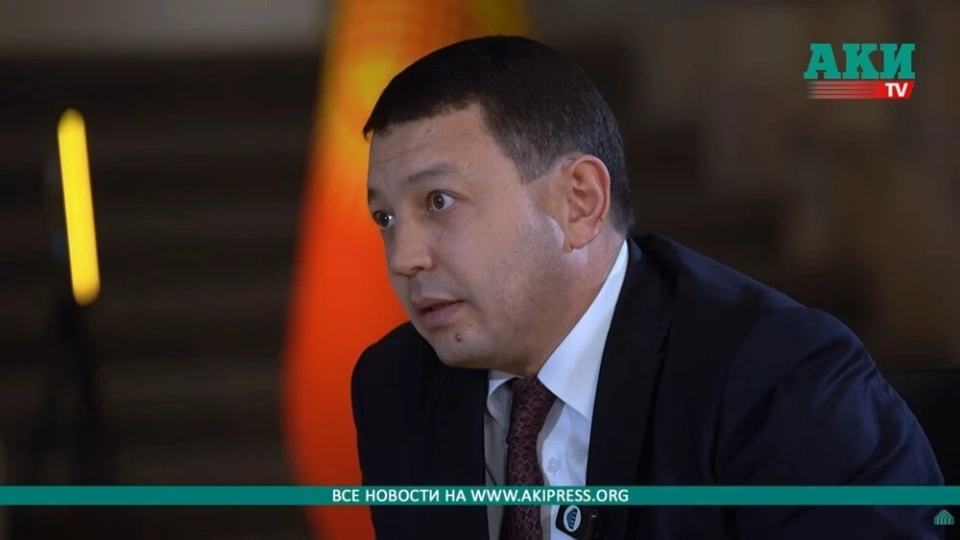
In this interview with the rector of Osh State University, Kudayberdi Kozhobekov, we discuss key aspects of the Kyrgyz higher education system. The focus is on the peculiarities of our education, ranging from comparisons with the systems of neighboring countries such as Uzbekistan and China, to issues of reforms, credit models, and the significance of diplomas for graduates. Special attention is given to the development of the university: autonomy, scientific activity, partnerships with business, the export of educational services, and its role as a flagship of the southern region of Kyrgyzstan in international educational rankings.
What are the strengths and weaknesses of the Kyrgyz model of higher education compared to its neighbors and Russia?
- The Kyrgyz model of higher education has both strengths and weaknesses, as well as unique features compared to other countries, including Uzbekistan, China, and Russia.
Strengths include the flexibility and openness of the system. Kyrgyz universities respond quickly to changes in the labor market by implementing multi-level training (bachelor's, master's, doctoral), academic mobility, and joint programs with foreign universities. Multilingualism is another aspect that distinguishes our system: education is conducted in Kyrgyz, Russian, and partially in English, which enhances the competitiveness of graduates. Additionally, the accessibility of higher education for various segments of the population, especially in the regions, is an important advantage.
Among the weaknesses, one can highlight the limited financial and material-technical resources, which complicates the updating of infrastructure and the development of scientific research. Compared to Russia and especially China, funding for science and higher education is significantly lower, which affects the level of research activity and the competitiveness of universities on the international stage. There is also a problem of mismatch between theoretical training and practical skills of graduates.
When comparing with Uzbekistan, there is a more centralized policy aimed at modernizing higher education, while in China, there is strict strategic management with high state investments and an emphasis on world rankings and science. The Russian system, in turn, is known for its traditions and the integration of education with science.
The main task for the near future is to improve the quality of education and science, as well as to foster closer cooperation with the economy and develop regional universities as centers of socio-economic progress.
The importance of the university in employment: how does this reflect on the labor market in Kyrgyzstan?
- In Kyrgyzstan, the choice of university still matters for employment, but this is more of a reputational characteristic than a formally established one. There is a division between leading universities and regional universities, where the history of the university, the quality of education, the potential of the faculty, international connections, and the activity of graduates are important.
Leading universities are usually associated with a strong academic base, participation in international projects, and dual degree programs, which makes their graduates more competitive in the labor market. This is confirmed by the trust of employers and career advancement opportunities.
Regional universities, such as OshSU, also play an important role by preparing specialists oriented towards the practical needs of the economy and social sphere. We strive to maintain a connection with the labor market and make education accessible to the population, contributing to the development of the regions.
Thus, the prestige of a diploma is important, but increasingly, the decisive factor is the actual quality of the graduate's training and their ability for professional development.
What recent reforms have had the greatest impact on OshSU and the higher education system as a whole?
- In recent years, one of the most significant reforms affecting higher education in Kyrgyzstan and OshSU was the granting of special status to several universities.
This status increased the academic, financial, and managerial autonomy of universities, allowing them to independently develop educational programs, enhance scientific activity and international cooperation, as well as attract extrabudgetary resources. For OshSU, this became a stimulus for growth in institutional potential and an improvement in the quality of training.
This reform laid the foundations for the formation of strong universities as centers of education and science, contributing to the socio-economic development of the regions and the integration of Kyrgyz universities into the global educational space.
How does the credit system of education function in Kyrgyzstan?
- In Kyrgyzstan, the credit system of education has been implemented in accordance with international standards and is aimed at increasing the flexibility and quality of higher education. Education is based on educational credits that take into account the workload of disciplines and include both classroom and independent student work.
The credit system allows students to form individual educational trajectories, choose elective disciplines, and accumulate credits during academic mobility between universities in the country and abroad. This is an important tool for enhancing the competitiveness of graduates and integrating OshSU into the international educational space.
We have been applying this system for several years, and it contributes to a results-oriented approach, students' responsibility for their own education, and the comparability of Kyrgyz diplomas at the international level.
What are the current positions of OshSU in the higher education system of Kyrgyzstan?
- Today, OshSU is one of the key flagships of higher education in Kyrgyzstan and has a special status. It is the largest multidisciplinary university in the southern region, fulfilling a strategic mission of training personnel and developing science.
OshSU serves as a model platform for implementing educational and managerial innovations, including new forms of academic and financial autonomy, modern educational programs, and international projects. The university's experience is used in other universities of the republic to replicate successful practices, such as the integration of science, education, and commercialization.
Today, OshSU is a modern and open university that combines fundamental education, applied science, and active international cooperation, focused on quality and sustainable development.
How is OshSU transforming into a research and innovation university of global standards?
- The transformation of OshSU is a systemic process that we view as a long-term strategy.
The first stage involves creating an institutional foundation: obtaining special status, expanding autonomy, and updating the university's strategy. This allows for a shift from inertial development to targeted management of results.
The second stage is related to strengthening research potential: creating scientific laboratories, involving students in research, and developing master's and doctoral programs.
The third stage is the innovative transformation, which includes developing a knowledge commercialization ecosystem and partnerships with business. Examples of such initiatives include a robotics center and environmental projects.
The final stage is internationalization, which includes dual degree programs and active participation in international rankings. As a result, more than 10,000 foreign students study at OshSU, and we attract faculty from different countries.
Publication activity is also increasing, as evidenced by the rise in the number of articles in indexed publications. Thus, OshSU is consistently moving towards the status of a research and innovation university.
How does OshSU integrate into the international educational space?
- OshSU is actively working on integration into the global educational context through international cooperation, academic mobility programs, and joint projects.
We have over 300 agreements with foreign universities, allowing students and faculty to participate in exchange programs and internships. This contributes to improving the quality of education in line with international standards.
The university's goals are to ensure the competitiveness of graduates in the global labor market and strengthen scientific potential to become a noticeable participant in the international educational space.
We strive for concrete results: growth in international programs, increased publication activity, and expanded partnerships with leading universities worldwide.
Which Russian universities does OshSU collaborate with?
- OshSU actively develops cooperation with Russian universities through joint educational projects and dual degree programs. We work with over 100 universities in Russia, including Lomonosov Moscow State University and RUDN University.
Every year, about 100 students and faculty participate in summer and winter schools and conferences in Russia. These joint projects allow us to exchange experiences and strengthen academic training.
Cooperation with Russian universities enriches our scientific and educational programs, contributing to the training of highly qualified specialists.
What drives science in Kyrgyzstan today?
- Science in Kyrgyzstan today is driven by several factors, including the national idea "national spirit - world heights," which emphasizes research in priority areas.
Scientific research is focused on solving practical problems of the economy and society, such as ecology and digitalization. International cooperation and grant programs also play a key role in stimulating the quality of research.
The active role of universities in integrating science and education fosters a culture of research and innovation in the country.
How does OshSU address socio-economic problems in the region?
- OshSU actively participates in addressing socio-economic problems by training personnel for key sectors of the economy, as well as through scientific research and applied projects.
We implement initiatives to enhance qualifications, teach modern skills, and engage youth in social projects, such as centers for advanced training and a legal clinic.
Thus, OshSU acts as a center that combines education, science, and practical influence on the development of the region.
How does OshSU interact with business?
- OshSU actively develops cooperation with business through joint projects and practical training for students. We accept commercial orders for research and the implementation of innovative solutions.
Examples of successful projects include the establishment of nurseries and robotics centers with investment involvement. Business partners can influence the content of educational programs, allowing graduates to meet labor market demands.
This cooperation creates synergy between education and the economy, enhancing the competitiveness of both the university and its graduates.
What achievements does OshSU have in global rankings?
- OshSU has achieved significant success in international rankings, ranking 316th in QS Rankings Asia 2026. This opens new opportunities for the university and draws attention to its activities.
Entry into the top global rankings strengthens international authority and reputation, contributing to attracting foreign students and funding. It also stimulates the quality of education and scientific activity, enhancing the prestige of the diploma.
Participation in global rankings allows OshSU to open new horizons for education and international cooperation.