Central Asia, where the "One Belt, One Road" program was initiated for the first time, also serves as an example of successful joint construction within this initiative. Under the strategic leadership of the region's leaders, the cooperation mechanisms in the "China-Central Asia" format demonstrate stability and progress in trade and economic relations.
Kubata Umurzakov, a well-known Kyrgyz economist and former director of the Institute of Central Asian Regional Economic Cooperation, emphasized in an interview with vb.kg that the trade results from the past year confirm the strength and high potential for further development. For the first time in its history, China has become the main trading partner of all five Central Asian countries, marking a new stage in their economic ties.
Kubata Sadybakasovich, can we assert that trade is becoming mutually beneficial for the Central Asian states?
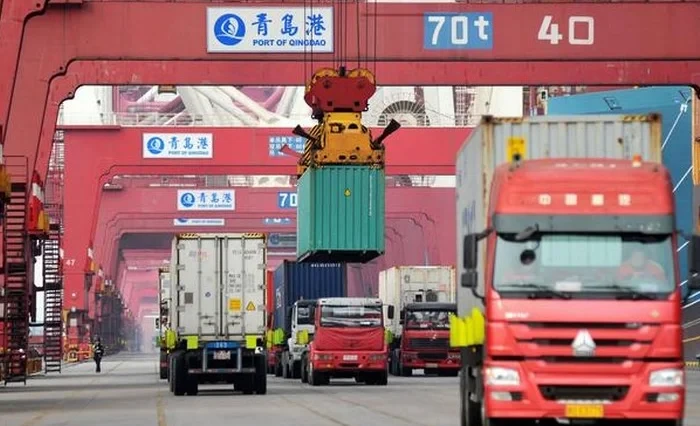
- From 2020 to 2025, trade turnover between the countries increased more than threefold, with a growth of 12% in 2025. This year, China has for the first time become the largest trading partner for all Central Asian countries, and its share in the region's foreign trade has risen to about 24% in 2024.
The main export goods from China include mechanical and electrical equipment, as well as high-tech products. China is actively increasing supplies of machinery, electronics, and energy products, including electric vehicles and equipment.
As for imports from Central Asia, China is not limited to just raw materials and energy resources such as oil and gas, but is also increasing the volumes of diverse products, including agricultural goods and industrial materials. This indicates a more balanced and mutually beneficial trade, as imports are growing faster than exports, which increases the presence of products from the region's countries in the Chinese market.
What are the differences and similarities in the trade structures of the five Central Asian countries (Kazakhstan, Uzbekistan, Kyrgyzstan, Tajikistan, Turkmenistan) in the context of trade with China? Which countries could become the main drivers of economic growth? How does cooperation among Central Asian states affect their trade with the PRC?
- Kazakhstan and Uzbekistan are the leading exporters to China. According to Chinese customs data, Kazakhstan's exports to China from January to September 2025 amounted to about $13.5 billion, which is 9.9% more compared to the same period in 2024. The main goods are oil, petroleum products, copper ores, and natural gas.
Uzbekistan's exports to China have also increased: as of January-October 2025, they reached $13.1 billion, which is 28.4% more compared to the same period in 2024. Uzbekistan supplies natural gas, gold, non-ferrous metals, and products from the textile and food industries to China.
Turkmenistan, known as a major supplier of gas and energy resources, maintains a positive trade balance with China, as 62% of its exports consist of such resources. In 2025, China imported Turkmen natural gas worth $8.4 billion.
Kyrgyzstan's exports include mineral ores, metals, cotton, wool, and agricultural products. In 2024, they amounted to $2.04 billion, which is significantly higher than the previous year's figures.
What new aspects have emerged in cooperation between China and Central Asia in production chains due to the "Belt and Road" initiative and the "China-Central Asia" mechanism? What are the prospects for joint work in the field of mining and processing of minerals?
- It should be noted that the rapid development of trade between the region's countries and China occurs against the backdrop of weak dynamics in global trade. The main factor behind this growth is the deepening of cooperation between China and Central Asian countries.
At the Second "China-Central Asia" summit, held in Astana on June 17, 2025, Chinese President Xi Jinping emphasized the importance of practical cooperation in the fields of economy, trade, investment, and security. The results of the past five years show that words and actions coincide.
Xi Jinping also declared 2025 and 2026 as the years of high-quality development of cooperation, focusing on the implementation of practical projects. The development of cooperation and the implementation of investment initiatives within the "One Belt, One Road" framework are becoming key factors for trade growth.
At the summit, an Action Plan was adopted aimed at the high-quality implementation of the "One Belt, One Road" initiative, which includes investments in industry, modernization of production, and development of logistics.
Some actively implemented investment projects demonstrate the shift of Chinese investments from raw material assets to high value-added manufacturing. For example, in Uzbekistan, a project is underway to build a gas chemical complex worth about $3.3 billion, which will allow for the processing of natural gas into important chemical products. Additionally, a Chinese holding is investing over $7 billion in large-scale polyethylene production in Kazakhstan.
An important project is the construction of the China-Kyrgyzstan-Uzbekistan railway, approximately 500 km long, which will provide access to the markets of Southeast and Western Asia, including Turkey and the Middle Eastern countries. This route will shorten the distance from China to the Middle East by 900 km and reduce cargo delivery time by 7-8 days, significantly enhancing the region's competitiveness on the international stage.
In conclusion, it can be said that the growth of trade with China and the influx of investments into key sectors of the economy contribute to the modernization of infrastructure and strengthening of economic integration with Central Asia. However, to ensure sustainable socio-economic growth, the countries of the region need to diversify their economies and ensure balanced development.