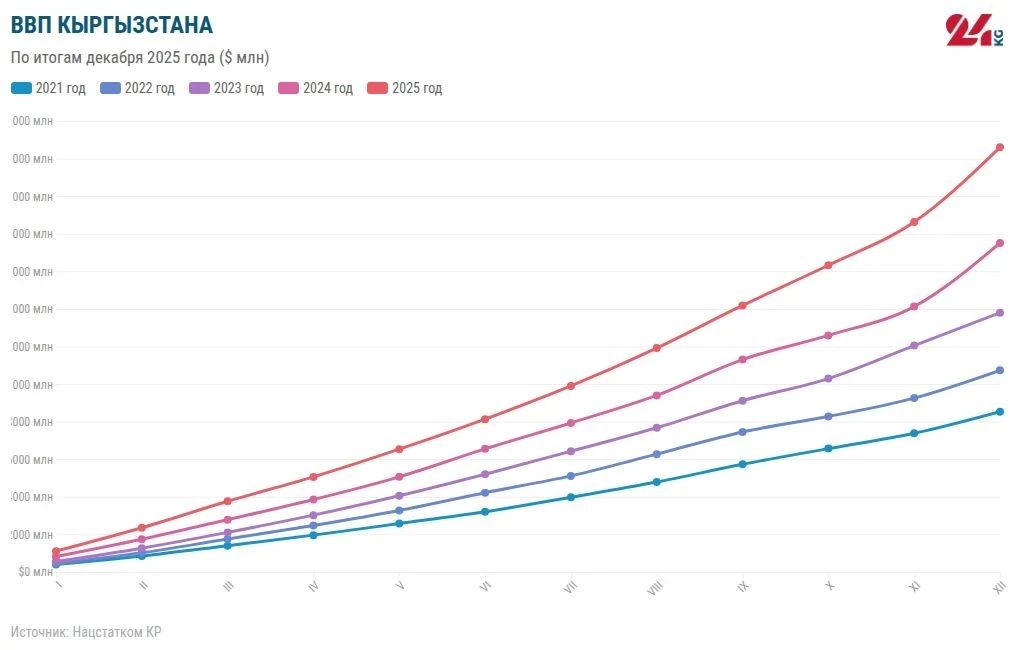
The main factors of growth were the sectors of commodity production, services, and net taxes on products.
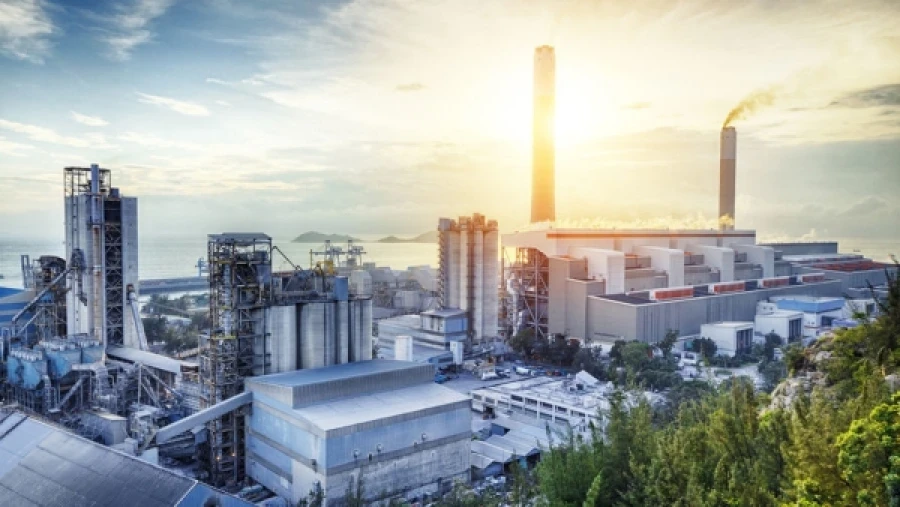
The most significant driver of economic growth was the increase in production in the pharmaceutical industry (by 1.7 times), as well as in the production of rubber and plastic products, construction materials (by 35.7 percent), and printing products (by 30.5 percent).
When analyzing GDP and its changes compared to the previous year, various factors are taken into account, such as prices, production volumes by sectors, budget revenues, and government expenditures. Kyrgyzstan, being an import-dependent country, faces the influence of the external economic situation on its indicators, although this report uses official data in soms.
The services sector accounted for 51.2 percent of the total GDP, while commodity production accounted for 34.4 percent and net taxes on products for 14.4 percent.
Industrial Sector
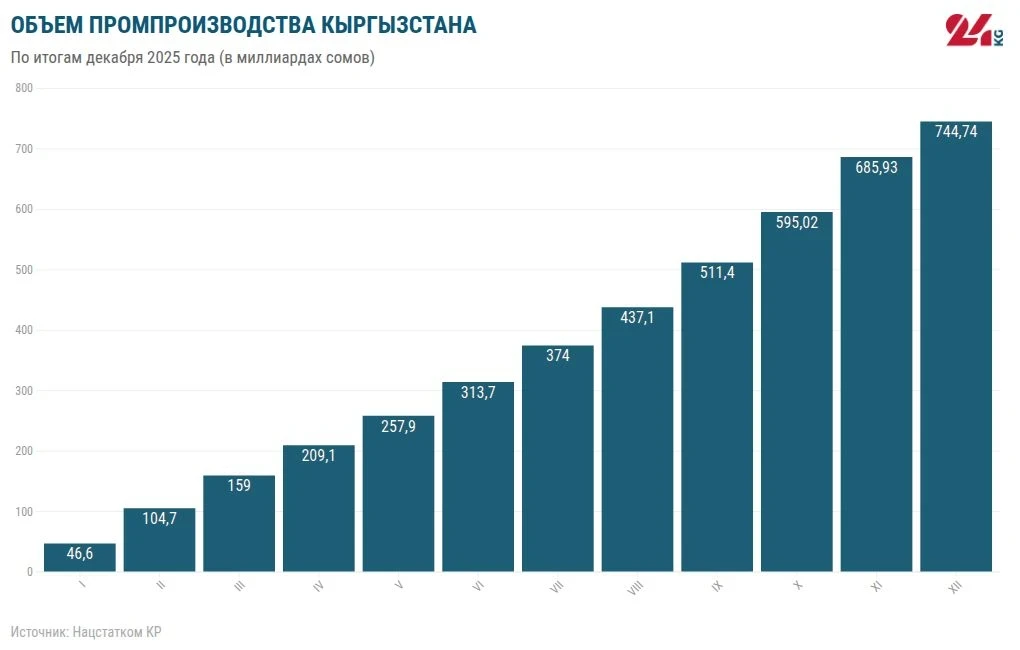
In 2025, the volume of industrial production reached 799 billion 740.6 million soms, which corresponds to a growth of 10.6 percent compared to the previous year. This was made possible by an increase in production volumes:
Positive dynamics were observed in construction, where production increased by 21.1 percent, in wholesale and retail trade – by 17.8 percent, in the hotel and restaurant business – by 14.3 percent, and in freight transport – by 12.2 percent.
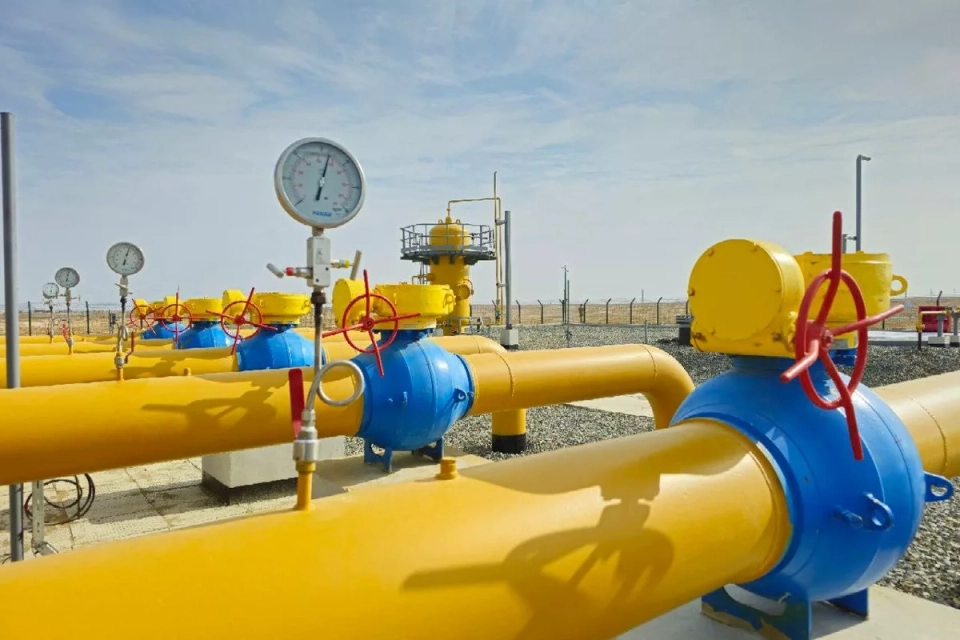
The electricity, gas, and steam supply sector demonstrated growth of 12 percent due to increased electricity production and improved transmission and distribution.
In the area of water supply and purification, as well as waste processing, the growth of 21.4 percent was associated with improvements in water collection and distribution.
Investments in Fixed Capital
In 2025, the volume of investments in fixed capital increased by 18.1 percent compared to 2024, driven by a 9 percent growth in domestic sources of financing. Foreign investments also rose by 3.8 percent, totaling 283 billion 246.1 million soms.
The majority of investments (about 85 percent of the total) were directed towards the construction of facilities in the fields of mineral extraction, education, housing construction, manufacturing, as well as transportation activities and electricity supply.
Economic Forecasts
According to analytical data from international financial organizations, the economy of Kyrgyzstan will continue to demonstrate resilience in 2026, although growth rates may stabilize after sharp jumps in previous years.
The International Monetary Fund expects real GDP growth to be around 4.5 percent, which aligns with medium-term forecasts for Central Asia. The main drivers of economic growth will remain the same: the services sector, construction, and industrial recovery.
According to forecasts from the Asian Development Bank, the inflation rate this year will be 6-7 percent, and its stabilization will be influenced by the strict monetary policy of the National Bank, as well as the normalization of supply chains.
Domestic consumer demand is expected to remain high due to a steady influx of remittances, which, according to World Bank forecasts, will continue to grow.
An important factor in 2026 will be the implementation of large infrastructure projects.
The launch of the construction of the China-Kyrgyzstan-Uzbekistan railway and the Kambar-Ata-1 hydropower plant will create a multiplicative effect for related industries.
These projects will not only attract foreign investments but also create a foundation for transforming the republic into a key transport and energy hub in the region.
The state budget this year will focus on social obligations and the digitalization of tax administration.
Further implementation of digital systems, such as the AIS "Unified Information System for Water," is planned to improve the efficiency of the agricultural sector.
The budget deficit, according to experts, will remain at about 3 percent of GDP, which will require the government to take a cautious approach to external borrowing.
However, risks remain, such as high dependence on the external economic situation of major trading partners, fluctuations in gold prices, and climate challenges affecting agriculture. To maintain stability, authorities need to continue structural reforms and improve the investment climate.