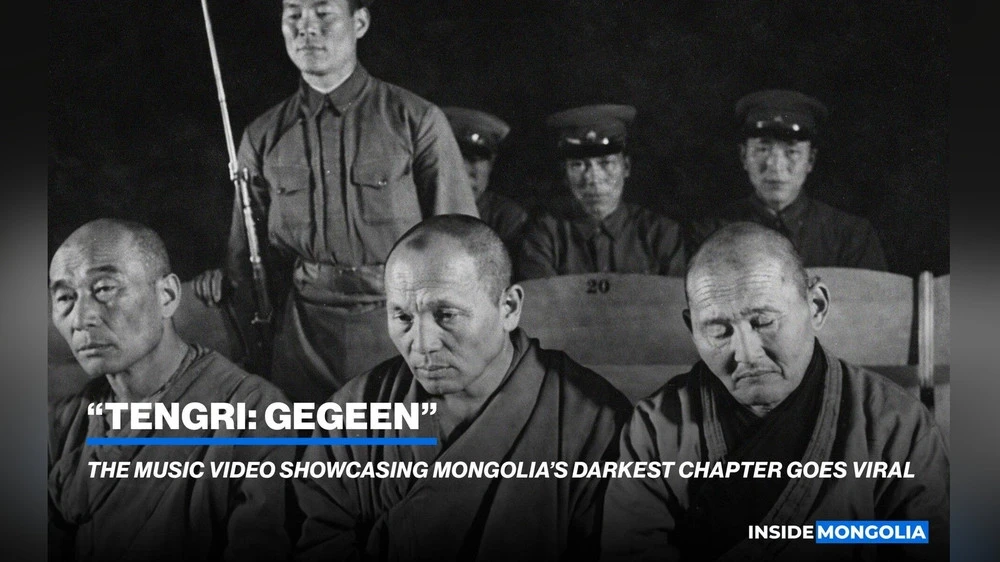
Persecution on political grounds did not cease throughout Soviet history, but the most massive repressions occurred during the Stalin era. "Cleansings" targeted party leaders, peasants, representatives of the intelligentsia, individuals captured during the war years, and members of national minorities.
In 1937, the first chairman of the Kochkor Aiyl Kenesh, Ybrai Konoев, was also executed.
In 1878, part of the Aryk tribe, which settled the Turgon area, Ak-Bulun near Lake Aksuu, relocated to the regions of Ottyk, Karashaar, Ak-Olon, Kara-Kungoy, and Sary-Chat. Along with them, the brothers Niyaz uulu Malay and Konoy moved. They came from a noble, wealthy family. Niyaz's father, Akbay, died in battle against the Kalmyks when they took his brother Mamat's horse. His sons, Namaz and Niyaz, were wealthy individuals. Niyaz's sons, Malay and Konoy, being affluent, grazed their livestock up to the pastures of Sary Jaz (the pastures of modern Kazakhstan), to the pastures of the Suusamyr and Chuy regions.
Malay had sons Chynybai and Derkenbai, while Konoy had Ybrai and Kydyraaly.
Ybrai Konoy uulu was born in 1889 in the village of Semizbel, Karakol County, in the Jetii-Oguz Province. He received his education in a rural mosque and later in a Russian native school. After marrying in 1914 at the age of 25, he had a son named Abdyldabek. He participated in the national liberation uprising of 1916, after which he fled to China. In this battle, Malay's son Chynybai was killed.
Later, with the establishment of Soviet power, Konoy voluntarily handed over his livestock, which led to the creation of the Kara-Kungoy collective farm. Ybrai Konoев was one of the first village councils to join the Bolshevik party.
He served as the chairman of the volrevkom (village revolutionary committees), then from 1930 to 1935, he was the chairman of the village council in Ketmen-Tobo, Toktogul. He then worked as the chairman of the Toguz-Bulak village council in the Kochkor district, and as the chairman of the Kosh-Dobon and Ak-Kiy village councils. This village council oversaw the Kara-Kungoy, Sary-Chat, Kosh-Bulun, Electric, Kara-Saz, Mai-Chybyr, Alkyim, Kara-Suy, and other collective farms. The management of these collective farms was subordinate to the village council, which held the right to appoint and dismiss them.
On October 20, 1937, Ybrai Konoев was arrested as an organizer of anti-Soviet activities. Upon learning of the charges against his brother, Kydyraaly stocked up on food and prepared two horses. When Ybrai was being escorted by police, the younger brother wanted to shoot and free him, but noticing this, Ybrai Konoев signaled to Kydyraaly not to do it. Later, the aksakal said that if he had saved his brother then, they could have fled to China, and Ybrai would have remained alive.
On November 21, 1937, by a decision of the Supreme Court of the USSR, he was sentenced to execution. On May 7, 1957, by a decision of the Supreme Court of the USSR, he was acquitted.
In the village of Kara-Kungoy, there were places named "Ybrai's pasture" and "Ybrai's grove," which were only recently renamed.
His younger brother Kydyraaly waited for his brother all his life, not destroying their ancestral home. Even at the elderly age of 90, when he fell ill, he remembered and asked about his brother.
Their house was destroyed in 1990.