In an interview with 24.kg, volunteers shared stories about the remarkable Barkhan, their missions in earthquake-stricken Turkey, as well as the searches for children and the difficulties they face, including the need to reach call locations by taxi.
Barkhan: the Founder of the Center and His Amazing Story
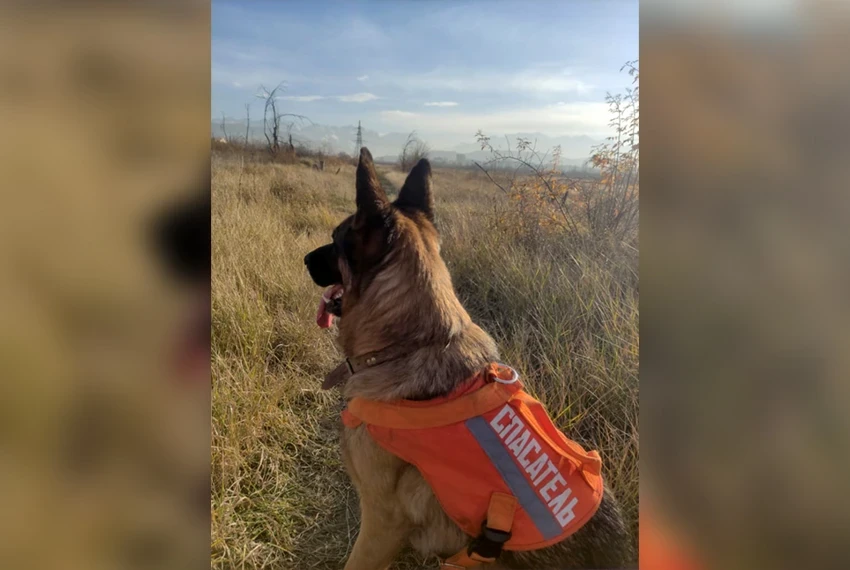
The canine center "Rescuer" was founded in 2019 thanks to a German shepherd named Barkhan. Elena Gatyzhskaya, the chairwoman of the center and a professional dog trainer, describes him as a true gifted tracker.
Barkhan exhibited an insatiable thirst for finding people—the search itself was a true pleasure for him.
The first major challenge for Barkhan was the task of finding an elderly woman who had gone missing in Bishkek, near the "Dordoy" market. After several days of fruitless searches, Elena and Barkhan were approached for help. The dog easily indicated places where the woman might be, but ultimately the trail went cold, and she was later found dead.
The next significant case was the search for a missing child, where Barkhan again demonstrated his outstanding abilities. This prompted the idea of creating a full-fledged canine center to utilize the dog's talents to their fullest potential.
LiSa: Barkhan's Heir and Her Abilities
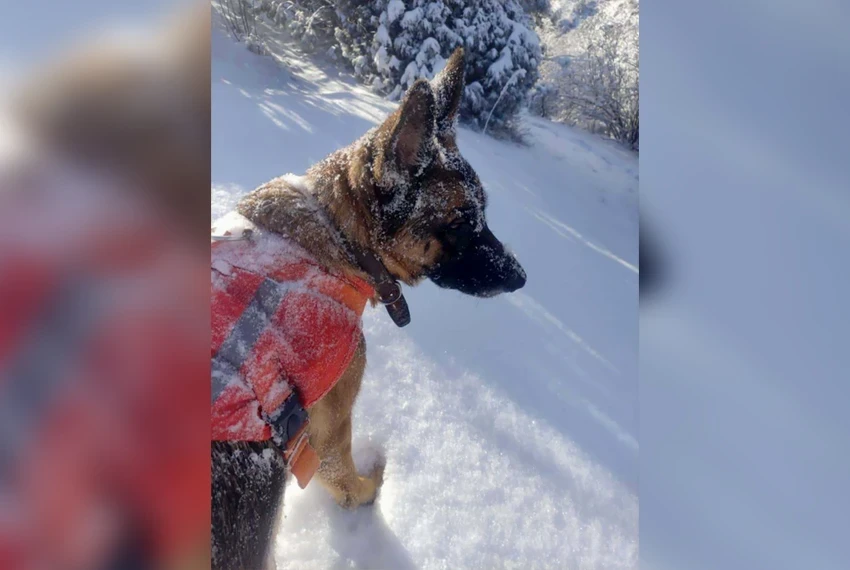
After some time, Barkhan had a daughter named LiSa, who inherited her father's talents but had a more independent character. While Barkhan primarily worked on trails, LiSa, affectionately called LiSunya by rescuers, became a versatile searcher, successfully working in water, under rubble, and even in avalanches, finding the bodies of the deceased.
Dog trainers explain that dogs search differently depending on the conditions. Immediately after a person goes missing, they can catch the faintest scent particles, but after a few days, trails, for example on asphalt, become difficult to access. Scents remain in stones, crevices, and vegetation, which can confuse untrained observers.
When searching in water bodies, the dog relies on the scent rising above the water. Even if a body ends up on the shore, the search continues from the boat, where the scent remains.
In real searches, dog trainers trust only the dogs, even if relatives point in one direction while the dog indicates another. The dog's nose remains largely unexplored, but over the years of work, it has never failed.
Difficult Searches in Kemin: Hope and Challenges
In September 2025, a child went missing in the Kemin district. Up to a thousand people were involved in the search, including volunteers from Kazakhstan.
During the work, the boy's slipper was found, which raised suspicions of abduction. Three days later, LiSa was brought in, who showed that the child's trail led into the river, necessitating continued searches in the water.
The search had already entered its seventh day. Hope faded with each passing day: crowds of people, vehicles, and dust significantly complicated the dog's work.
Relatives again approached the dog trainers, requesting another sweep with the shepherd, more for moral support. LiSa sniffed at all the child's belongings, but when one of the men brought out a bag with a baby blanket, the dog lunged at it and buried herself in the blanket. After that, LiSa headed towards the river.
This confirmed that the trail was found; a boat was needed. The organizers did not have their own boats, but two were sent from Kazakhstan. Within half an hour, the rescuers figured out the mechanism and set out on the water.
The child was found. He had drowned.
The Psychology of Search Dogs: How They Cope with Loss
The results of the work of search dogs do not always involve finding a living person. Even if the trail goes cold, the dog indicates a direction, helping rescuers adjust their tactics and check hospitals, shelters, and neighboring areas. Even discovering a body is a result, allowing relatives to bury their loved one.
However, such discoveries are difficult for the dogs. Frequent searches for the deceased reduce their motivation, and apathy can replace excitement. To avoid this, staged searches are conducted to create a situation where the dog finds a living person, which restores its desire to work. In this regard, they are no different from humans.
Onli: The Only Active Search Dog in the Country
Onli is the only search dog working in the country, which means that all the burden of searches falls on her. She has already found three living people.
Onli is an active German shepherd brought from Kazakhstan. Dog trainer Svetlana says that the now six-year-old dog is a full-fledged citizen of Kyrgyzstan and has a passport.
While we talk with the dog trainers, Onli eagerly awaits the start of work. She looks around cautiously and is ready to spring into action at any moment. Svetlana says that meeting Elena means the beginning of the search for Onli, and the dogs especially love this moment.
Only a few people work at the center: dog trainers Elena, Svetlana, and Dmitry, as well as senior coordinator Melina. This small team bears the entire responsibility for organizing searches and deployments.
Lack of Government Support
According to dog trainers, in Kyrgyzstan, rescuers and volunteers receive almost no support from the government. In other countries, there are presidential grants for such people, but in Kyrgyzstan, there is no such practice, despite their active work in cleaning Lake Issyk-Kul, protecting nature, and searching for missing people.
There is an acute need for training, but available training locations often prohibit work. The city has many abandoned buildings that could serve as excellent training grounds for preparing dogs for disaster response, but they cannot train in the same place.
All funds raised by volunteers go towards the care of the dogs: treatment, prevention, equipment, and training. This requires significant expenses, but for them, it is a way of life.
The center does not have its own vehicle, so they have to use taxis, and not all taxi drivers agree to transport dogs. Often, compassionate people come to the rescue.
New dog trainers do not come, equipment needs to be purchased at their own expense, and there are no conditions for training. The center is constantly looking for volunteers with dogs, requiring that the animals be between four months and five years old, without pronounced fears or health problems, and with necessary vaccinations. Any breeds are welcome, except for brachycephalics.
The "Golden Hour" Rule: The Importance of Quick Response
According to legislation, there is no mandatory rule stating that a report of a missing person can only be filed after three days. The police are obliged to accept it immediately.
Waiting time is unacceptable. The first hours are the most critical: cameras can be checked, witnesses interviewed, and searches initiated while the trail is still fresh. After contacting the police, canine trainers can be called immediately—without a report, they cannot start work. They are often approached by employees of the Ministry of Internal Affairs and the Ministry of Emergency Situations, with whom the center has a memorandum of cooperation.
Mission in Turkey: Support for Four-Legged Heroes
After the devastating earthquake in Turkey, the center independently offered its assistance. There was no space on the Ministry of Emergency Situations' flight, so they organized the trip themselves. One compassionate person bought the necessary equipment for the rescuers.
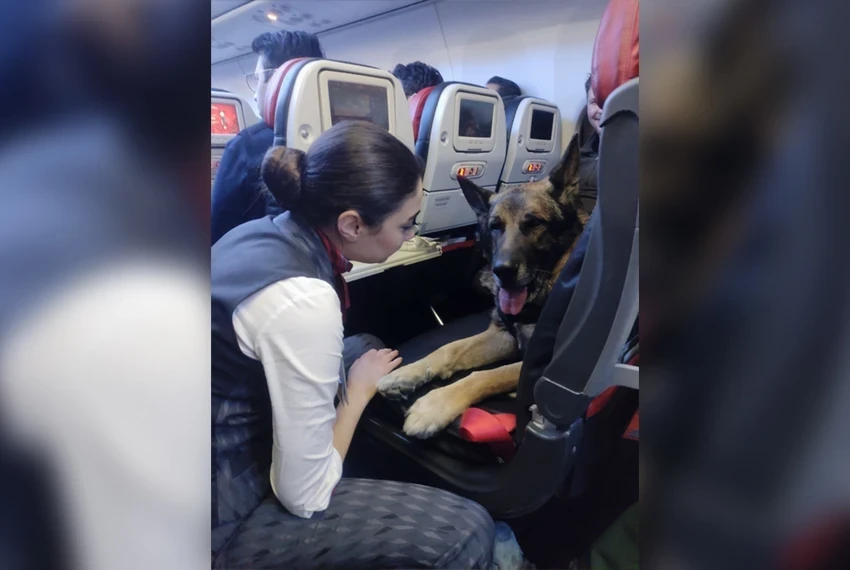
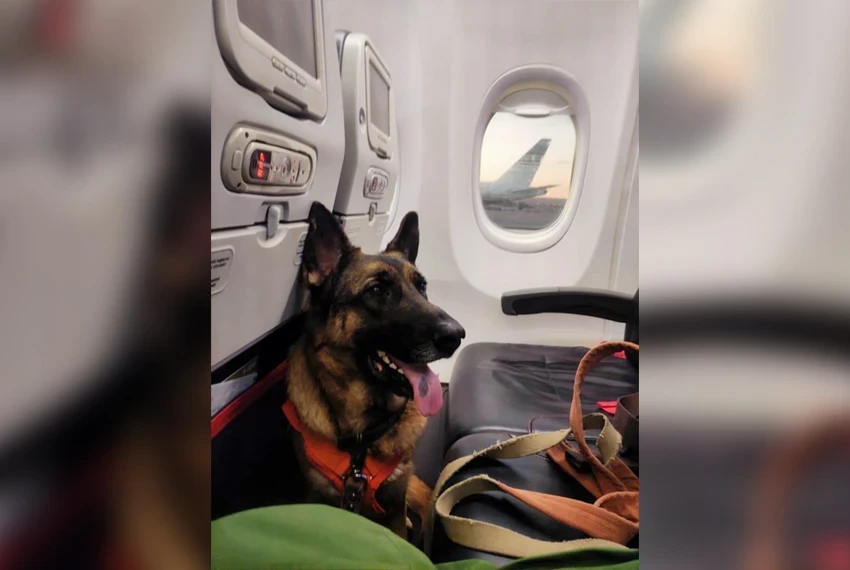
Turkish Airlines allocated seats, but the dogs flew on laps: LiSa was with Elena, Bernese mountain dog Teya was with rescuer Ani, and Barkhan had a whole seat. At the airports, passengers and crews asked to remove the dogs' muzzles, which indicated the special attitude of the Turks towards them.
The journey consisted of three flights. At the airports, the team was provided with separate rooms, and the staff supported the rescuers and thanked the dogs.
At the disaster site, they were directed to three locations for body searches. The dogs had a very hard time. Barkhan caught a cold in his shoulder and injured his paw, so he returned home on painkillers.
During the flight, the medication stopped working, and he began to moan. A tearful flight attendant hugged him, expressing gratitude for his help. It was very touching.
For the return flight, Turkish Airlines provided the rescuers with seats in business class.
The Departure of Legends: The Absence of New Dogs in the Center
As of today, Elena Gatyzhskaya does not have her own dog. There are two reasons for this: the first is psychological, as Barkhan and LiSa fell ill and passed away one after the other. Barkhan lived for 11.5 years, while LiSa was 6. They were family members, and the loss was too heavy. The wounds from the loss have not yet healed, so Elena is not ready to start all over again.
The second reason is financial. Search dogs are expensive, and their care, training, and veterinary services require constant investment. At the moment, such an opportunity is not available.
Why specifically a working-line German shepherd? This is Elena's passion, her love of a lifetime. Some prefer Labradors or spaniels, but for Elena, it's shepherds.
Nevertheless, she continues to work, train, share experiences, and participate in searches. Even without her dog, she remains the soul of the canine center.