- Iran announced plans to completely close the Strait of Hormuz and begin retaliatory strikes on energy and water infrastructure if the U.S. attacks its power plants.
- Israeli forces destroyed the Qasimiya Bridge in southern Lebanon, to which President Joseph Aoun reacted by calling it "a prelude to a ground invasion."
The Islamic Revolutionary Guard Corps claims that the warning about strikes on power plants is aimed at deterring the U.S.
The IRGC denied U.S. information that Tehran plans to attack oil facilities in the Persian Gulf.
“We have clearly stated that if you attack our power plants, we will respond with strikes on the power plants of Israel and other countries in the region that supply energy to American bases, as well as on the economic and energy infrastructure in which Americans are involved,” the official statement said.
“You attacked our hospitals and schools — we did not do that. But if you cut off the electricity, we will do the same,” they added.
The IRGC emphasized that they will respond to threats in a similar manner to prevent possible attacks.
“We are determined to respond to any threat with the same level of deterrence it creates, and we have capabilities that America is not yet aware of,” they added.
Amid threats from Trump and Iranian leaders, Asian stock markets plummeted, fearing a prolonged war and the closure of the Strait of Hormuz, through which one-fifth of the world's oil supplies pass.
The Hang Seng Index in Hong Kong fell by 3.3 percent, the Shanghai Composite Index decreased by 2.3 percent, and the Straits Times Index in Singapore dropped by 2.1 percent, reaching 4884.710 points on Monday morning. The Philippine Stock Exchange saw a decline of 3.17 percent, while Thailand's fell by 2.15 percent.
Earlier, it was reported that the Nikkei Index in Tokyo decreased by 3.4–3.5 percentage points, reaching 51,582.23.
According to CBS News, NATO is exploring the possibility of Iranian attacks on European cities.
NATO Secretary General Mark Rutte confirmed that the alliance is "studying" whether Iran has missiles capable of hitting cities like Berlin, Paris, and Rome.
“We are confident that they are close to having such capabilities,” Rutte stated in an interview with CBS News.
He also noted that European countries are currently "cooperating" to ensure the security of the Strait of Hormuz.
Donald Trump previously expressed in the Financial Times that NATO expects "very bad" consequences if U.S. allies do not help open vital shipping routes.
Rutte added that the U.S. failed to discuss the details of its operation with European allies in advance, which required "several weeks for coordination."
Concerns are growing in Israel over Iranian missile strikes on Arad and Dimona.
Author: Rob McBride
Reporting from Amman, Jordan.
Israeli authorities have launched an investigation into the missile strikes that occurred on Sunday.
They note that even the most advanced defense systems may not intercept all missiles. Despite a multi-layered missile defense system, Israel is facing difficulties.
Israeli officials report that they manage to intercept over 90 percent of missiles, but some, especially in Dimona, pose a serious threat.
The Iranians perceive these strikes as a success and use them in their propaganda, emphasizing that this is a harbinger of something greater and that they have managed to bypass the Israeli air defense system.
In Israel, this is met with skepticism.
Nevertheless, Iran has changed its tactics, using cluster munitions that are harder to intercept and launching waves of smaller missiles at high frequency, causing panic and forcing people to seek shelter.
Senator Tim Kaine of Virginia accused Trump of "sending our sons and daughters to war," unable to accept defeat in the 2020 elections.
Kaine referred to an article from Just The News claiming that Iran interfered in the 2020 and 2024 elections, attempting to hinder Trump.
“Are Republicans in Congress okay with this?” he asked.
Kaine also warned against deploying ground forces in Iran, noting that it could make "Trump's unnecessary war even more catastrophic."
Kaine is a prominent member of the Senate Foreign Relations Committee, which oversees U.S. foreign policy and military operations. He was the Democratic vice-presidential candidate in 2016 alongside Hillary Clinton.
U.S. Ambassador to the UN Mike Waltz supported Trump's threat to attack Iran's energy infrastructure — NYT.
In interviews with Fox News and CBS News, he stated that Iranian gas power plants are legitimate targets, claiming that most of the country's energy facilities are controlled by the IRGC.
“The president is not joking,” Waltz stated on Fox. “He is defending his red lines and will not allow a genocidal regime to hold the world's energy supplies and economy hostage.”
Swedish Prime Minister Ulf Kristersson on rising energy prices and dependence on gas in Europe:
Unlike Sweden, the rest of Europe has long used gas for electricity generation. The sharp rise in gas prices immediately reflects on electricity costs.
Since this is the most expensive electricity in the system, it raises prices, especially in countries where gas is the main raw material, such as Italy. Prices are also rising for those forced to use gas turbines in cold weather.
In Sweden, we use less gas than many other countries and generate electricity from hydro, nuclear, and wind energy. But when it is cold and windless in southern Sweden, we are forced to import electricity from Germany and Poland, which makes it expensive.
We must make Sweden independent of gas prices and ensure our own electricity production without fossil resources. This will not only ensure resilience but also become a competitive advantage for the country in the future.
Since this is the most expensive electricity in the system, it raises prices, especially in countries where gas is the main raw material, such as Italy. Prices are also rising for those forced to use gas turbines in cold weather.
In Sweden, we use less gas than many other countries and generate electricity from hydro, nuclear, and wind energy. But when it is cold and windless in southern Sweden, we are forced to import electricity from Germany and Poland, which makes it expensive.
We must make Sweden independent of gas prices and ensure our own electricity production without fossil resources. This will not only ensure resilience but also become a competitive advantage for the country in the future.
The head of the IEA stated there is a "serious threat" to the global economy.
Fatih Birol, director of the International Energy Agency (IEA), shared his views on the current energy crisis, comparing it to the crises of the 1970s and the consequences of Russia's invasion of Ukraine in 2022.
“This crisis is simultaneously two oil crises and one gas market crash,” Birol noted.
“Today, the global economy faces a serious threat, and I hope this issue will be resolved as quickly as possible… No country will be spared the consequences if the crisis continues,” he added.
Birol also reported that the conflict has damaged at least 40 energy facilities in the region, and the IEA is negotiating with the governments of Asian and European countries about the possibility of releasing additional oil reserves.
Earlier, IEA member countries agreed to release a record 400 million barrels of oil from strategic reserves to combat the sharp rise in prices.
Arab countries of the Persian Gulf warn the U.S. about the risks of attacking Iranian power plants — WSJ.
According to sources, U.S. allies in the Middle East are confident that Iranian retaliatory measures could threaten their energy and water facilities, as well as the global economy.
Some Arab diplomats have already expressed dissatisfaction that they have no influence over the actions of the U.S. administration.
Saudi Arabia intercepted a ballistic missile aimed at Riyadh.
Saudi air defense systems successfully intercepted one missile, while another fell in an open area.
A drone was also intercepted in the Eastern Province.
Tehran seeks to monetize control over the Strait of Hormuz — CNN.
Iranian sources report Tehran's intention to move towards monetizing control over the Strait of Hormuz by setting conditions for the passage of vessels.
Speaker of the Iranian Parliament Ghalibaf threatens strikes not only on U.S. bases but also on financial centers:
“Military targets include not only bases but also financial structures financing the U.S. defense budget. U.S. bonds are soaked in the blood of Iranians. If you buy them, you will expose your assets to attack,” he stated.
“Hey, Trump, you're fired! Does that sound familiar? Thanks for your attention,” added IRGC representative Zolfaghari.
Influential Democrat calls for an end to the war against Iran.
Chuck Schumer, the Senate Minority Leader, called for an end to military operations against Iran.
“Enough! Stop this war!” Schumer wrote in a statement on X.
“Some Republicans in Congress also acknowledge that they do not understand the administration's goals in the Middle East,” he added.
Earlier, Schumer expressed the opinion that tens of billions of dollars are wasted on waging war against Iran, resulting in gasoline prices reaching “an average of $3.94 per gallon.”
Iranian filmmaker condemned the silence of Islamic scholars.
Majid Majidi, an Oscar-nominated Iranian director, sharply criticized Islamic scholars, especially from Al-Azhar University in Egypt, for their “silence” regarding Israeli-American aggression against Iran.
According to him, scholars neglect their duty to protect Muslims suffering persecution from Gaza to Iran.
Majidi expressed disappointment and anger towards the scholars and professors from Al-Azhar, an institution that was once considered an important center of Sunni Islam.
“How is it possible that they observe the aggression of the Israeli regime and remain silent?” the director questioned.
He also noted how they can remain indifferent to the mass killings of defenseless people, including children, while sitting idly by.
Majidi is the director of the film “Children of Heaven,” which was nominated for an Oscar.
Al-Azhar is considered one of the most authoritative institutions in the Sunni Islamic world.
Intensive missile strikes from Iran raise alarm in Israel.
Author: Rob McBride
Reporting from Amman, Jordan.
Reports have emerged that Israel is undergoing intensive missile attacks, presumably from Iran.
Warnings mainly concern Jerusalem, central, and southern parts of the country, where people are urged to take shelter as Iranian missiles are expected.
There are reports of explosions, and it is assumed that some of the munitions are cluster munitions that disperse smaller bombs.
At least eight settlements have reportedly been affected by falling debris or explosions. Social media posts are appearing about the destruction.
Earlier, alarms were also sounded in several northern areas of the country but were later canceled, informing people that it was safe to leave their shelters again.
These events confirm the pattern observed on Sunday: numerous warnings of threats, especially in the north, where simultaneous missile strikes from Iran and attacks by Hezbollah from abroad are occurring.
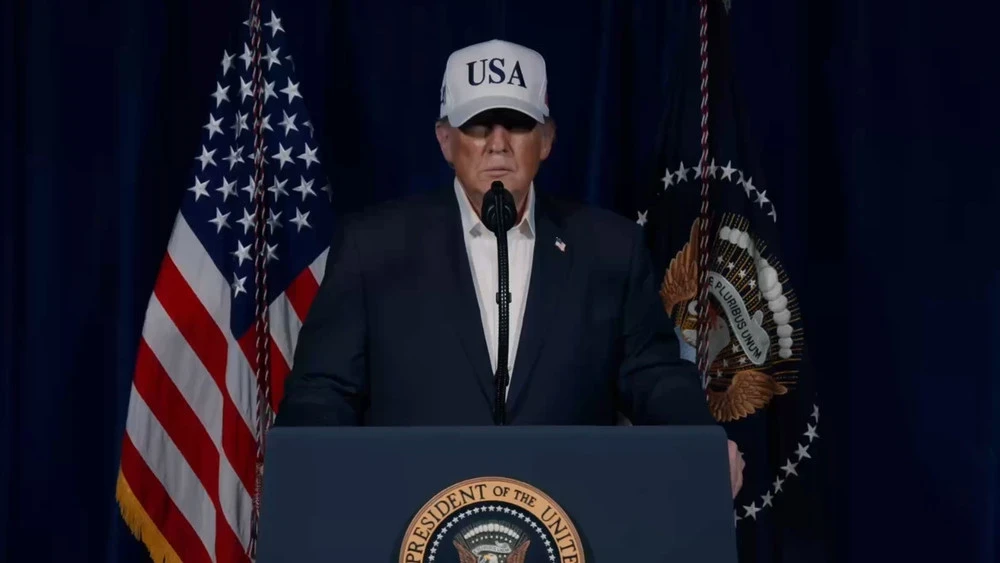
U.S. President Donald Trump and Defense Secretary Pete Hegset announced U.S. plans for war with Iran.
On Friday, Trump outlined the goals of the war in the Middle East on his Truth Social page, stating that the U.S. is considering “rolling back” its military efforts.
He added that the U.S. is close to “completely eliminating” Iran's missile capabilities and destroying its defense industry.
Trump also noted that Iran should not approach nuclear capability and that the U.S. will protect its Middle Eastern allies “at the highest level.”
Defense Secretary Pete Hegset confirmed that U.S. objectives remain unchanged since the first strikes on Iran on February 28.
He told reporters that the goals are to destroy Iranian missile installations, defense industry, and navy, as well as to prevent Iran from obtaining nuclear weapons.
Can Iranian missiles reach London?
Anna Lamche,
BBC News
In the evening, the Israel Defense Forces reported that Iran has “missiles capable of reaching London, Paris, or Berlin.”
This statement came after reports of failed missile attacks on the U.S.-British military base Diego Garcia, located about 2,350 miles from the southern coast of Iran.
To reach London, a missile would need to travel about 2,700 miles.
Today, Housing Minister Steve Reed stated that “there are no specific assessments” confirming that Iran is targeting the UK.
Dr. Siddharth Kaushal, a senior research fellow at the Royal United Services Institute, told the BBC: “The range of a missile is an elastic quantity, as you can increase its range by fitting a lighter warhead.”
He stated that while the claim of Iran having missiles capable of reaching the UK is “likely true,” it is “not the most pressing threat,” as this weapon is inaccurate at long distances and must pass through well-defended airspace.
“The main question is: so what? If you can launch a small number of ballistic missiles with conventional warheads through well-defended airspace… and they are quite inaccurate at long ranges… what are the Iranians trying to achieve?”
Iran has promised to “completely close” the Strait of Hormuz if Donald Trump carries out his threat to destroy its power plants. Here are the latest news on the war in the Middle East:
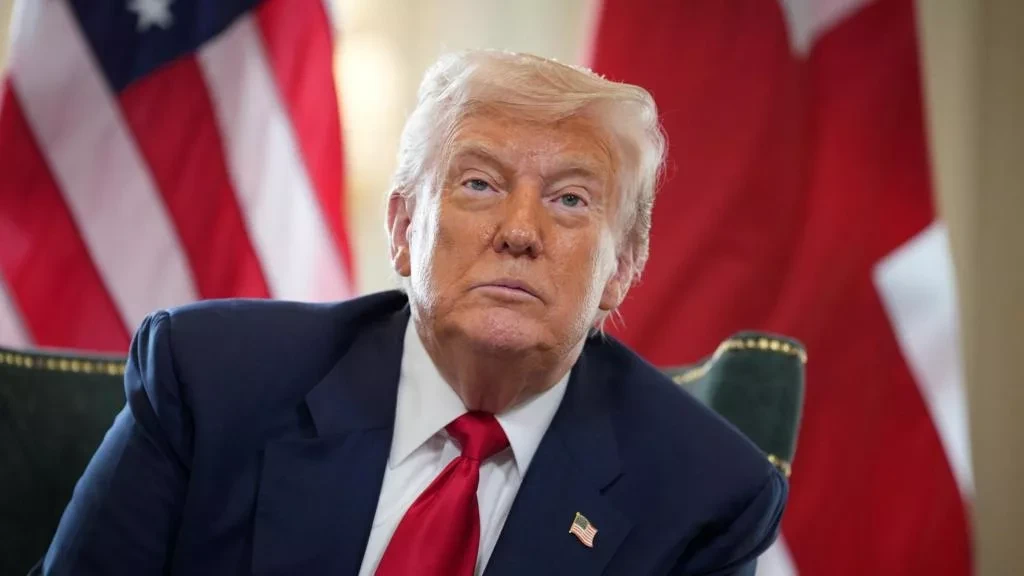
- Trump gave Iran 48 hours to resume operations in the Strait of Hormuz, otherwise he threatened to destroy its power plants, “STARTING WITH THE LARGEST!”
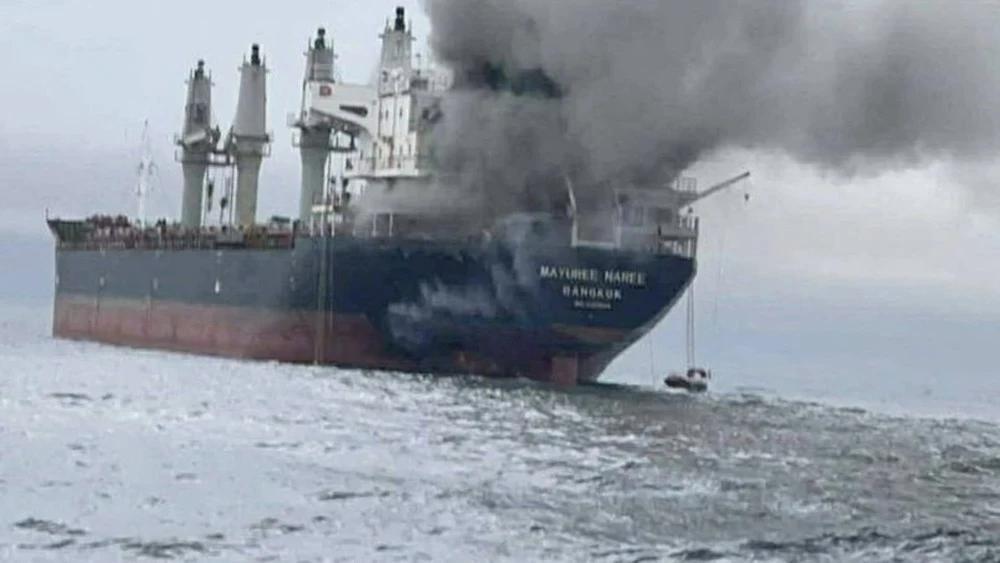
- An Iranian official stated that this vital waterway remains open to all vessels except those associated with “Iran's enemies.” An explosion occurred near a cargo ship at night.
- The IRGC stated that if the U.S. strikes, the strait will not be reopened “until the destroyed power plants are restored.”
- Removing the effective blockade of the Strait of Hormuz would mean Iran giving up its main lever of influence in this war, writes our South Asia correspondent.
- In other areas of Israel, more than 175 people have been injured as a result of strikes. According to emergency services, 84 people are being treated in Arad, and another 78 in Dimona, after ballistic missiles hit these cities located near a nuclear facility on Saturday evening.
- The Israeli ambulance service “Magen David Adom” reports that another 15 people were injured as a result of new strikes this morning.
The record NATO analyzes the threat of Iranian attacks on European cities. What else has happened? was published on K-News.