Combat operations continue in Iran.
American media report that the Pentagon has estimated the costs for the first six days of the conflict at over $11.3 billion.
This information, conveyed to lawmakers during a closed briefing on Tuesday, was published by The New York Times and NBC News, citing unnamed sources.
It is important to note that this amount does not include additional costs related to troop and equipment increases before the attacks began, implying that actual expenses could be significantly higher.
What else has happened?
An attack occurred on two foreign oil tankers in the Iraqi port of Al-Faw, while Kuwait, Qatar, the UAE, and Saudi Arabia successfully intercepted Iranian missiles and drones.
Iranian President Masoud Pezeshkian has set three demands for the cessation of hostilities: recognition of Iran's legitimate rights, payment of reparations, and provision of reliable international guarantees against future attacks.
Concerns are growing in the Gulf countries regarding the increase in Iranian attacks on the region's energy infrastructure.
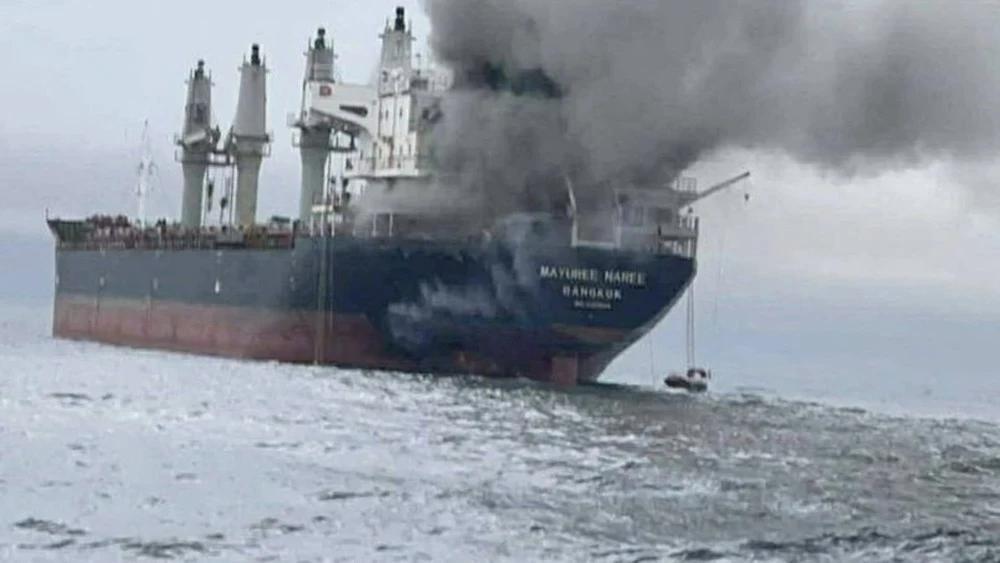
In the last few hours, an attack on fuel tanks occurred in Bahrain, and on Wednesday, drones attacked tanks in the port city of Salalah in Oman. Also on Wednesday, Iranian forces attacked a cargo ship in the Strait of Hormuz, resulting in three sailors missing and 20 rescued by the Omani coast guard.
These events came shortly after Trump's warning to Iran about the inadmissibility of attacks on ships in the strait or laying mines.
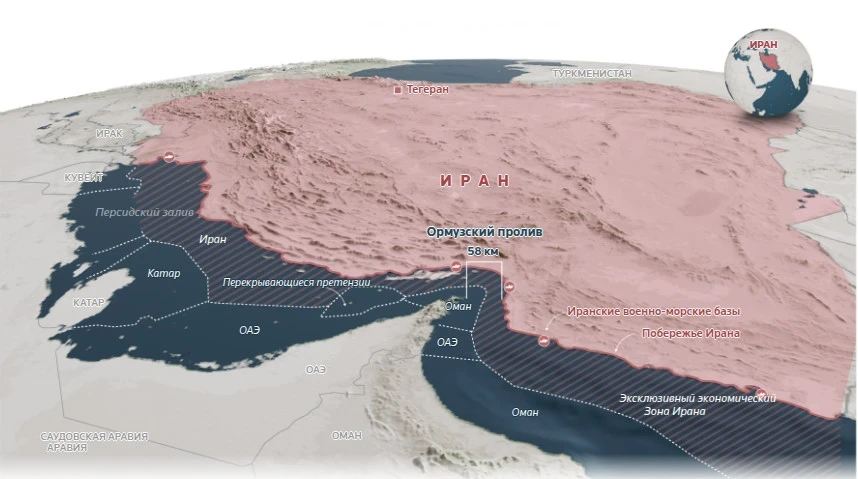
Iranian authorities stated that they attacked a Thai-flagged vessel because it did not comply with their orders, emphasizing that all vessels are required to obtain permission to pass through this narrow waterway, through which 20% of the world's oil supplies flow.
Brief Overview of Events:
- U.S. President Donald Trump stated that American forces have "overthrown" the Iranian leadership "twice" and destroyed the Iranian navy, without providing details.
- Iranian President Masoud Pezeshkian emphasized that Tehran still seeks regional peace but insists that the war can only end with the recognition of its "legitimate rights."
- A representative of the Iranian Revolutionary Guard Corps stated that attacks on U.S. military bases in the Middle East will continue.
- The UN Security Council adopted a resolution proposed by the Gulf Cooperation Council, demanding that Iran cease aggressive actions against countries in the region.
- Israel continues to carry out airstrikes on Beirut and other regions of Lebanon, resulting in over 800,000 people becoming refugees due to the conflict.
- Kuwait, Qatar, and Saudi Arabia reported intercepting incoming projectiles.
- The International Energy Agency (IEA) decided to release strategic oil reserves to cope with the sharp rise in energy prices.
Despite the IEA's measures, oil prices continue to rise.
Brent crude oil futures, which serve as the international benchmark, have risen nearly 20%, as plans to release 400 million barrels failed to offset concerns about prolonged shipping disruptions in the Strait of Hormuz.
As of 14:00 GMT, the price of Brent crude was around $101 per barrel, more than 38% higher than pre-conflict levels.
Iraq Temporarily Halts Operations at Oil Port After Tanker Attacks.
Farhan al-Fartusi, head of the Iraqi General Ports Company, reported that all operations at oil terminals have been suspended, although commercial ports continue to operate as usual.
This statement followed attacks on two oil tankers that were loading crude oil at the Umm Qasr port in Basra province.
Four Arrested in Bahrain on Charges of Spying for Iran.
The Bahraini Ministry of Interior reported the detention of four citizens for "espionage activities in cooperation with the Iranian Revolutionary Guard Corps," including photographing various sites in the country.
The ages of the arrested range from 22 to 36 years, and a fifth participant, aged 25, "is abroad," the ministry's statement said.
"During the investigation, it was established that the first arrested, at the direction of the organization and with the help of others, used high-quality photographic equipment to shoot and record the coordinates of important sites in Bahrain," the statement read.
"This information was transmitted to the Revolutionary Guard Corps using encrypted software," the ministry added.
Al Jazeera Arabic reports that as a result of an airstrike on a Popular Mobilization Forces (PMF) military camp in the city of Al-Qaim, three people were killed and four others were injured.
The pro-Iranian "Popular Mobilization Forces," also known as "Hashd al-Shabi," are an alliance of predominantly Shiite armed groups, some of which emerged in response to the American occupation of Iraq.
The Death Toll from the Israeli Strike on Beirut Increases.
According to the Lebanese Ministry of Health, the death toll from the Israeli airstrike on the Ramlet al-Bayda area has risen to eight, with the number of injured reaching 31.
Trump Paints an Optimistic Picture of the War and Urges Oil Companies to Send Vessels Through the Strait of Hormuz.
John Holman
Reporting from Washington, USA.
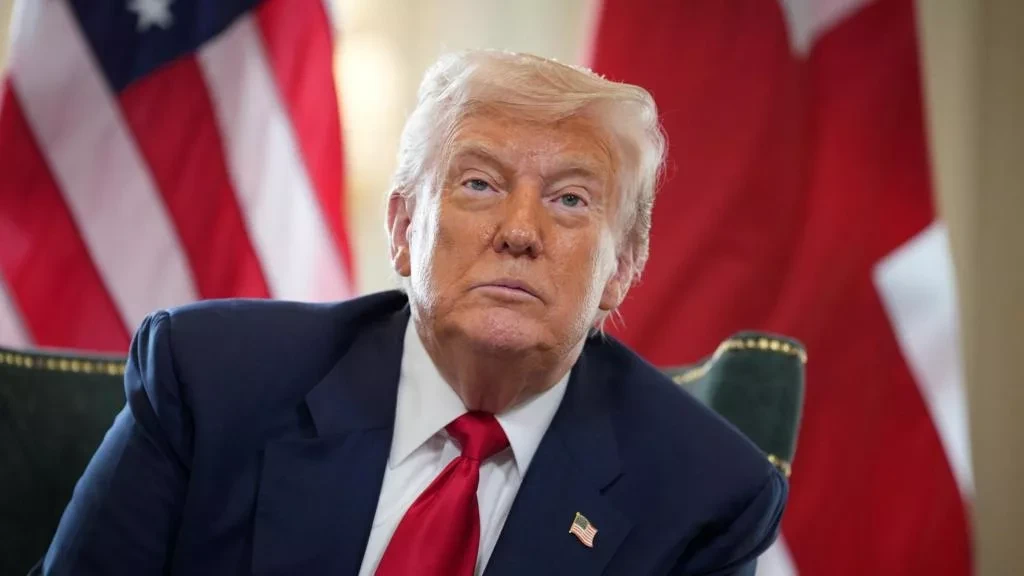
President Trump continues to assure that the war is nearing its end and that the U.S. is almost achieving complete success. Today, while in Washington, he addressed reporters, stating that the U.S. is destroying the Iranian navy and promised to "keep a close eye on the Strait of Hormuz."
He also held meetings with CEOs of oil companies, urging them to send tankers through the strait. However, these businessmen may be concerned about recent attacks on three vessels near the strait and assaults on two tankers carrying Iraqi oil. Trump assured that the U.S. has neutralized all mines in the Strait of Hormuz, although experts warn that mines are not the only threat to maritime transport.
Experts mentioned submarines and small explosive boats that were used in attacks in Iraq.
Thus, the U.S. president is creating an optimistic portrayal of the situation, suggesting that Iran is on the verge of defeat, while other analysts note that Tehran is likely preparing for further actions.
Trump also stated that, in his opinion, the U.S. could disable Iran's power grid in one hour but added, "We really don't want to do that." It is unclear whether this is a serious warning or just words. But we will be monitoring the situation closely.
The U.S. president spoke to reporters in Maryland, discussing the war in Iran.
Here are his words:
- "We have very good news on the front. Iran is completely collapsing. They are virtually exterminated."
- "Iran is on the brink. That doesn't mean we're going to end it immediately. But it is so. They have no navy, no air force, no air defense systems, nothing. We are operating freely on their territory."
- "Now we will closely examine the situation in the strait. It is in excellent condition."
- "The main thing is we must win. Win quickly, but win... Most are already saying that victory has been achieved. The only question is when — when do we stop? We don't want it to come back."
- "We can strike specific areas in Tehran and other places, but if we do that, it will be virtually impossible for them to rebuild their country. And we don't want that. But we can attack power grids; we can disable their energy capabilities in one hour, and it will take them 25 years to restore them. So ideally, we won't do that."
Iraq is becoming a secondary battleground in a broader conflict between Israel, the U.S., and Iran, according to Al Jazeera reports.
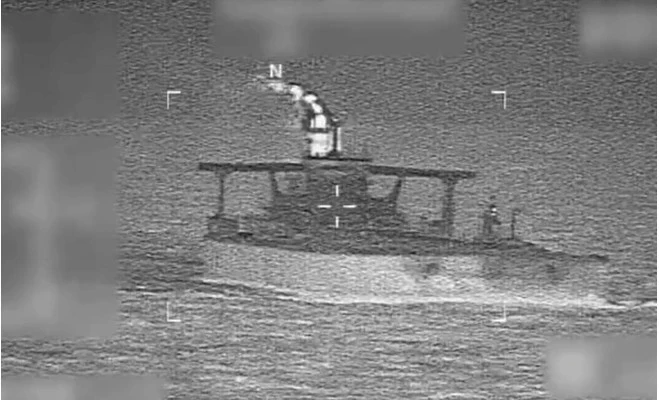
The two tankers that were attacked were loaded with crude oil and had departed from the Umm Qasr port in southern Iraq, in Basra province. Shortly after leaving the port, they were attacked by an explosive boat in Iraqi territorial waters.
Iraqi officials claim that this explosive-laden vessel was Iranian. This recalls earlier threats from Iran to attack any oil vessels attempting to pass through the Strait of Hormuz.
So far, 38 crew members have been rescued, and one person has been declared dead. However, there is no information on the number of missing crew members from both vessels.
Iraqi authorities report that these attacks are having a severe impact on the country's economy.
Since the start of the conflict, oil production has sharply decreased: from 3,300,000 barrels per day to less than one million barrels per day. With over 90% of Iraq's budget being formed from oil revenues, these attacks will have a significant impact on an already difficult financial situation in the country.
Iran-linked Hackers Attack Medical Giant Stryker in Retaliation for Cyberattack.
A major cyberattack paralyzed the global networks of Stryker, one of the leading manufacturers of medical equipment. The attack was claimed by a hacker group linked to Iran, which stated that it "marks the beginning of a new chapter in cyber warfare."
Handala, a hacker with documented ties to Tehran, stated that the attack was carried out in retaliation for the killing of over 170 people, most of whom were schoolgirls, as a result of a strike on an educational institution in the southern Iranian city of Minab on the first day of the U.S.-Israeli war against Iran.
The hacker group claims to have seized 50 terabytes of the company's data, which they say "is now in the hands of free people around the world."
More information can be found here.
Brief Overview of Recent Events
- An attack occurred on two foreign oil tankers in the Iraqi port of Al-Faw, just hours after a Thai vessel was hit in the Strait of Hormuz, and drones attacked fuel tanks in the port of Salalah in Oman.
- Iran and Hezbollah have begun joint attacks on Israel, while Israeli military forces continue large-scale operations in the Lebanese capital Beirut.
- U.S. President Donald Trump promises to protect oil tankers in the Strait of Hormuz, while Iran warns that the world should prepare for oil prices of $200 per barrel.
- The UN Security Council adopted a resolution condemning Iran's attacks on Gulf countries and Jordan.
- Iranian President Masoud Pezeshkian has set three conditions for ending the war: recognition of Tehran's legitimate rights, payment of reparations, and provision of firm international guarantees against future aggression.
- The International Energy Agency (IEA) agreed to release the largest volume of emergency oil reserves in its history, stating that it will provide 400 million barrels.
The record "The Iranian War Continues: Oil Tankers Attacked in Iraq, Tehran Sets 3 Conditions for Peace" first appeared on K-News.