According to political analyst and host of Jedaal TV Ali Alizadeh, Iran has resources for waging war that allow it to withstand the United States and Israel much longer than they might expect. He claims that time is on Iran's side.
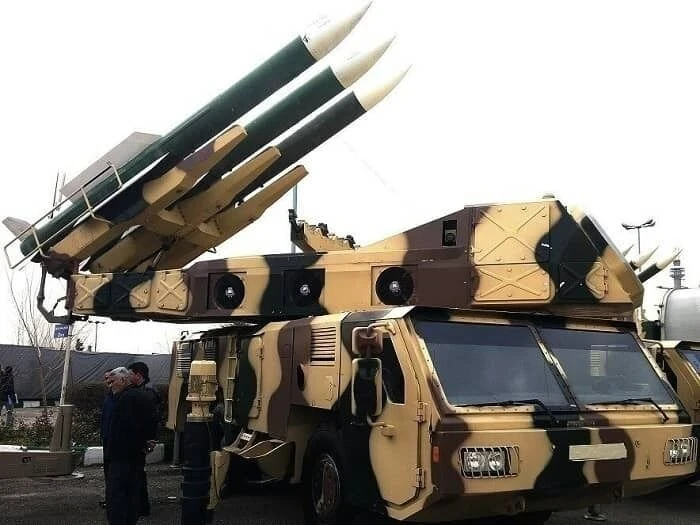
“Iran's defense strategy is based on creating its own low-cost missiles and drones, which are much cheaper than Western air defense systems,” Alizadeh noted while commenting on the situation from London.
He added that if the conflict drags on, it could be advantageous for Iran. Alizadeh also mentioned Donald Trump's statement that the war could last from four to five weeks, emphasizing that the recent 12-day conflict between Israel and the U.S. against Iran in June of last year showed that the situation is worsening for the Israeli people day by day.
“We need to understand whether Israel and the U.S. are ready to pay the price for a lack of protection when their anti-aircraft missiles and other means to secure their bases run out?” he questioned.
Alizadeh also supported the view that Trump was drawn into this conflict at Israel's initiative and did not realize how stable and resilient the Iranian government is. “The Iranian state is very flexible and adaptive. I think this is a joint war against Trump, and he is just beginning to realize how he has fallen into a trap,” he added.
Explosions continue in Iran, casualties are rising — reports Al Jazeera.
This is already the fourth night of attacks by the U.S. and Israel.
The targets of the strikes have included various regions of the country, including the capital Tehran. As in previous nights, sounds of explosions can be heard following intense bombardments that have affected security facilities, including a police station in Enghelab Square in central Tehran.
Cities such as Isfahan, Qom, and Urmia are also under bombardment.
The Islamic Revolutionary Guard Corps (IRGC) has promised retaliatory actions and announced the closure of the Strait of Hormuz, noting that more than 10 oil tankers attempting to approach the strait have become targets for attacks.
The total number of civilian casualties is causing growing concern. According to available data, about 800 people have died, and the number of injured continues to rise.
Lebanese TV channel Al-Mayadeen reports six casualties from an Israeli airstrike on the cities of Aramoun and Saadiyat.
The Lebanese Ministry of Health has confirmed this information.
According to Lebanese authorities, 50 people have fallen victim to Israeli “aggression,” and another 335 have been injured.
Saudi Arabia intercepted nine drones.
The Saudi Ministry of Defense reported the interception and destruction of nine drones that intruded into the country's airspace.
Saudi Arabia also intercepted two cruise missiles.
According to Reuters and AFP, two cruise missiles were intercepted south of Riyadh.
Saudi authorities did not specify where the missiles and drones were launched from.
Kuwait reports injuries and damage from shrapnel after intercepting projectiles.
The Kuwaiti Ministry of Defense reported the interception of several “hostile aerial targets” that entered the country's airspace early in the morning.
Shrapnel from intercepted projectiles fell on residential areas, leading to injuries and property damage. No further details were disclosed.
This statement followed reports that a girl had died from shrapnel wounds sustained this morning.
Airstrikes on pro-Iranian groups in Iraq.
According to Al Jazeera Arabic, airstrikes were carried out on a facility allegedly used by the “Kata'ib Hezbollah” group in the city of Al-Qaim in western Iraq.
The facility was damaged, but there is no information on casualties.
As a result of another strike in northeastern Iraq, a farm, allegedly used by the Iran-backed group “Asa'ib Ahl al-Haq” for storing weapons, was hit.
On Monday, a U.S. Central Intelligence Agency (CIA) outpost at the embassy in Saudi Arabia was attacked by a drone strike.
The U.S. and Saudi Arabia confirmed that two drones attacked the embassy complex in Riyadh, but did not specify whether the target of the strike was this intelligence facility, as reported by Reuters.
According to the State Department, the roof of the embassy “collapsed,” and the interior was “contaminated” with smoke as a result of the attack.
The report also noted that the embassy sustained “structural damage,” and staff were instructed to “shelter in place,” as stated in a publication by the Washington Post.
U.S. military reports strikes on nearly 2000 targets in Iran.
Admiral Brad Cooper, head of the U.S. Central Command (CENTCOM), reported that since the beginning of the attacks on Saturday, the U.S. has struck nearly 2000 targets in Iran and destroyed 17 Iranian ships, including a submarine.
“The operation involves more than 50,000 military personnel, 200 fighter jets, two aircraft carriers, and bombers from the U.S., and additional forces are expected to arrive in the coming days,” Cooper stated in a video address posted on X.
He characterized this as the largest buildup of U.S. military power in the Middle East in the last generation.
Cooper also added that the number of U.S. and Israeli attacks on Iran is nearly double the number of bombings at the beginning of the invasion of Iraq in 2003.
“We have significantly weakened Iran's air defense and destroyed hundreds of Iranian ballistic missiles, launchers, and drones,” he concluded.
The IRGC claims that Iran has already hit 10 tankers and fully controls the Strait of Hormuz.
According to a human rights organization, over 1000 civilians have died in Iran.
HRANA, an American human rights organization, reports 1097 civilian deaths in Iran since February 28.
Among them are 181 children under the age of 10. The number of injured has reached 5402, including 100 children, HRANA adds.
According to HRANA, at least 104 attacks concerning military bases, medical facilities, and residential areas have been recorded in the last 24 hours.
A verification of numerous reported fatalities is underway.
Each Iranian commander has been assigned three levels of deputies.
General Reza Talayi-Nik reported that each commander has at least three levels of successors, which eliminates the possibility of a power vacuum in the event of their death.
Despite the 12-day war, thanks to preemptive measures, the system for preparing successors is functioning in the Iranian armed forces. Each commander has predetermined and trained successors who have practical training and experience.
The Iranian Expert Council has chosen Mojtaba Khamenei as the new Supreme Leader — Iran International.
Mojtaba Hosseini Khamenei, born September 8, 1969, in Mashhad, became the second child in the family of Ali Khamenei and received religious education in theology.
Since 1999, he has studied at the religious center in Qom, where he became a cleric and taught theology. In 2004, he married the daughter of the Speaker of the Iranian Parliament, Gholam-Ali Adeli.
The article "A protracted war may play into Iran's hands if the U.S. and Israel run out of interceptors. What else has happened?" was first published on K-News.