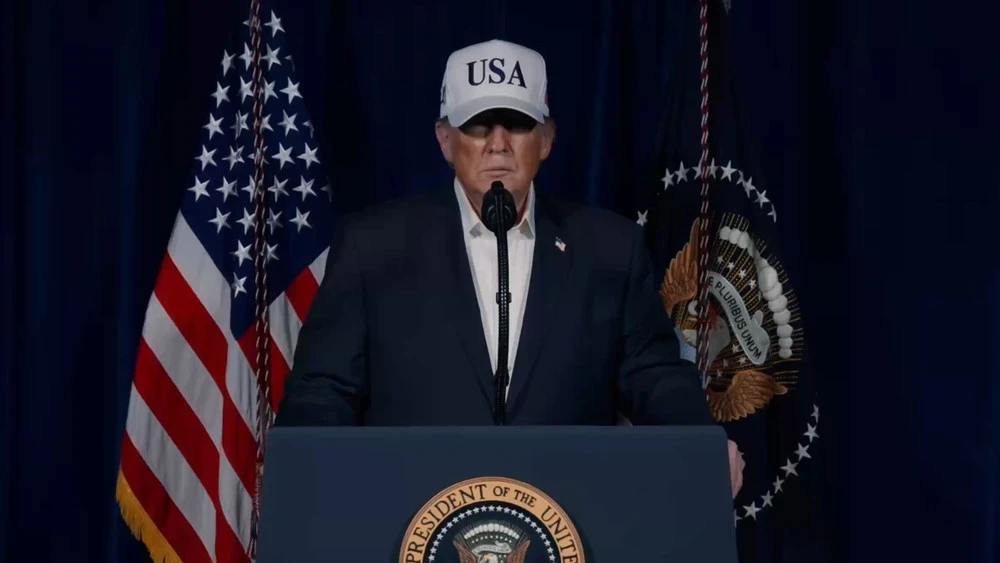
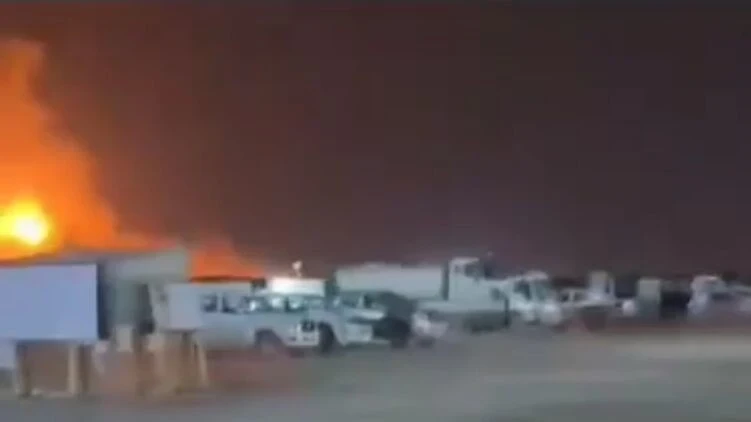
U.S. President Donald Trump published an extensive post on the Truth Social platform, discussing the Israeli attack on the South Pars gas field in Iran that occurred on Wednesday evening.
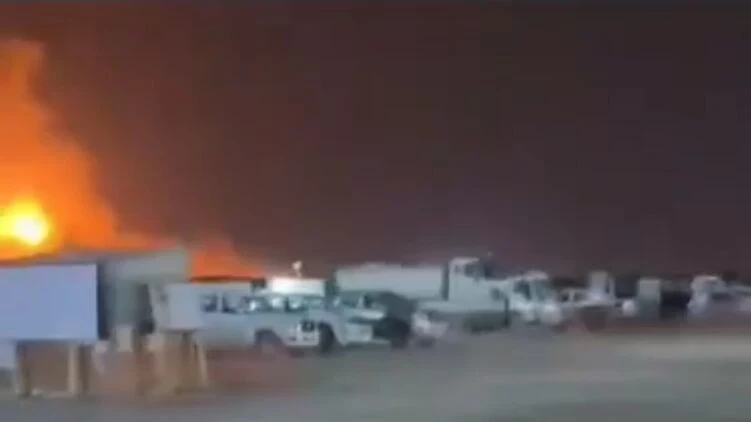
In response to this attack, Iran launched an assault on the Ras Laffan industrial zone in Qatar, which houses the world's largest liquefied natural gas (LNG) processing plant.
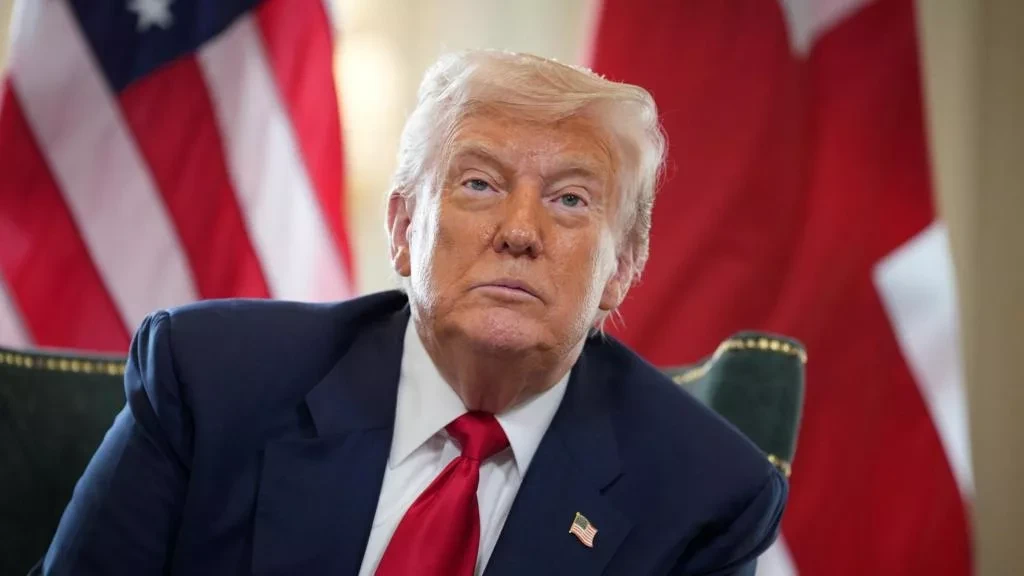
In his statement, Trump expressed dissatisfaction, claiming that the U.S. had no knowledge of the impending Israeli strike, and issued a threat of escalating the conflict in the event of another Iranian attack on Qatar.
“Israel struck fiercely out of anger over the situation in the Middle East,” Trump noted.
He added, “The United States was unaware of this attack, and Qatar was not involved and had no information about it.” Trump continued that Iran was not informed that its attacks on Ras Laffan “are unjustified and unfair.”
Trump also emphasized that Israel would not be able to attack the South Pars gas field “unless Iran makes the reckless decision to attack” another defenseless country, which in this case is Qatar.
In the event of a new Iranian strike on Qatar, Trump threatens that the U.S. “will massively destroy the entire South Pars gas field with unprecedented force and power.”
He noted that he does not wish to allow “such violence and destruction” due to the long-term consequences for Iran, “but if the Qatari LNG plant is attacked again, I will do it without hesitation.”
The FBI has launched an investigation into Joe Kent, a former counter-terrorism unit employee.
According to CBS sources, Joe Kent, the former director of the U.S. National Counterterrorism Center, is under investigation by the FBI.
The investigation is related to a leak of classified information and began before his resignation this week, triggered by the conflict in Iran.
Kent previously gave an interview to conservative commentator Tucker Carlson, where he stated that the operation to eliminate Iran's Supreme Leader Ali Khamenei “was the last thing we should have done.”
At the time of publication, CBS had not received comments from the FBI.
According to information provided by a senior administration official, the Pentagon has asked the White House to approve the allocation of more than $200 billion (£151 billion) to fund the war in Iran.
This amount significantly exceeds the costs of the Trump administration's campaign and will be directed towards an “urgent” increase in the production of critically important weaponry.
Over the past two weeks, the Pentagon has submitted several funding requests, and, as the Post suggests, the latest one could spark serious political disputes in Congress.
The Japan-U.S. alliance is at risk: Trump's meeting with the Prime Minister.
Jack Barton
Reporting from Seoul, South Korea.
This will be a significant test for bilateral relations, as it is Trump's first meeting with an important ally since the war began.
Changes to the original agenda, including tariffs and trade, are likely to be irrelevant. Trump is expected to pressure [Prime Minister Sanae] Takaichi again to send military ships to the Strait of Hormuz.
Japan heavily relies on energy supplies—about 90% of its imports come from this region. The Japanese navy, being a U.S. ally, possesses significant power.
The majority of the Japanese fleet consists of convoy ships, including 49 Aegis-equipped frigates and destroyers armed with modern missiles. This is significantly more than that of the UK and France.
Takaichi does not need to refer to parliament for a decision, but over 80% of Japanese voters oppose this, which could severely lower her ratings, especially among supporters. Additionally, the pacifist constitution limits the navy's capabilities—it has been used to combat piracy but cannot engage in war.
Japan has good relations with Iran, and some analysts believe it may try to negotiate with Tehran for safe passage of its cargoes in exchange for refraining from involvement in the conflict with the U.S.
Analysts also suggest that South Korea may consider a similar option. It has not outright rejected Trump's request to send military ships to the region, but most politicians in the ruling party view it as a violation of South Korean laws.
Sirens sound across Israel
According to Israeli media, sirens sounded in several areas of the country after the Israeli army detected missiles launched from Iran.
The missile strike carried out by Iran was the sixth since midnight.
New threat of war with Iran: food and water—The Atlantic.
A prolonged blockade of the Strait of Hormuz could trigger a humanitarian crisis.
Leaders of Arabian Peninsula countries bet years ago on using oil revenues to create prosperous societies. They sought to attract specialists from around the world by offering jobs, security, and a comfortable climate.
Anyone who has been to Dubai or Doha knows about the achievements of this strategy: over the past 30 years, the region's population has more than doubled, reaching approximately 60 million people, with further growth expected.
The war with Iran has revealed the vulnerability of this model.
Desert areas rich in oil effectively prevent agricultural development, forcing states to rely on food imports.
Most supplies pass through the Strait of Hormuz—a narrow corridor that has been blocked for commercial shipping due to threats of attacks from Iran and its allies.
Kuwait reports working to intercept missiles and drones.
The Kuwaiti army reports that its air defense systems successfully countered missile and drone attacks, about an hour after the National Guard reported downing several drones.
The army urges citizens to follow safety instructions and claims that any audible explosions are the result of intercepting threats.
The U.S. Federal Reserve forecasts inflation growth amid economic uncertainty.
The U.S. Federal Reserve has adjusted its inflation forecast, keeping interest rates unchanged, citing “uncertainty” in the economy due to the war with Iran.
Fed Chair Jerome Powell noted that people “will have to wait and see” how the U.S. and Israel's war against Iran will impact the country's economy.
“We are at the very beginning of this process and do not know how extensive it will be and how long it will last,” he added.
“It may or may not have a significant impact on the U.S. economy.”
South Korea concerned about loss of petrochemical resources necessary for exports.
Jack Barton
Reporting from Seoul, South Korea.
Local officials have expressed concern following Israel's strike on the South Pars gas field in Iran, and this anxiety has intensified after retaliatory attacks on Saudi Arabia, Qatar, and the UAE, which affected a significant portion of the energy infrastructure that the country relies on for its energy and petrochemical security, as well as helium supplies for semiconductors. In fact, this concerns products that the country exports.
Emergency meetings have become routine. At the latest meeting, the government reiterated the need to expand the list of energy importers and discussed possible price caps on oil from local refineries.
This is the first instance of price caps on petroleum products since the Asian financial crisis of 1997… The market is experiencing severe shocks.
The government is considering additional measures, including rationing supplies for vehicles; however, the UAE has provided support by organizing supplies bypassing the Strait of Hormuz: one has already reached [South Korea], and another is on the way.
In total, about 24 million barrels of oil are en route, along with a shipment of naphtha—critical for industries such as plastics manufacturing—but these reserves are limited.
The Lebanese Ministry of Health reported the number of casualties from Israeli attacks on several areas over the past two days.
Here are the figures:
- In Deir Zahra, three people were killed, including two children, and 15 were injured.
- In Sidon, two people were killed and five were injured.
- In Kharu, six people were killed and 10 were injured.
- In Jebchit, seven people were killed, including four Syrian nationals, and two were injured.
- In Baalbek, four people were killed and seven were injured.
- In Sahmara, nine people were killed and 23 were injured.
- In the city of Jmeimeh, three people were killed and four were injured.
- In Beirut, 11 people were killed, 45 were injured, including 14 children.
Iranian Foreign Minister Araqchi held phone talks with colleagues.
Iranian Foreign Minister Abbas Araqchi held phone conversations with his counterparts from Turkey, Egypt, and Pakistan.
According to the Iranian Foreign Ministry, Araqchi discussed with the ministers “the military aggression of the U.S. and Israel against Iran and its consequences,” as well as the need for coordination among regional countries to counter threats.
Araqchi also discussed with Swedish Foreign Minister Maria Malmer Stenergard her concerns regarding the execution of a Swedish citizen by an Iranian, who was accused of espionage for Israel.
Araqchi described the support given by Stenergard to this individual as “regrettable.”
QatarEnergy reports “significant fires” following Iranian attacks.
QatarEnergy reported “major fires” that broke out at several of its liquefied natural gas (LNG) production facilities as a result of recent Iranian attacks on the Ras Laffan industrial site.
The company stated that these attacks were “in addition to a previous assault on Ras Laffan on Wednesday,” which caused significant damage to the Pearl GTL (gas-to-liquids) plant.
The new attacks caused “significant additional damage,” and emergency response teams were deployed; no information about casualties was provided, QatarEnergy added.
Qatar states that Iran has crossed the “red line,” calling for de-escalation.
The Qatari Foreign Ministry issued a statement following the Iranian attack on the gas facility in Ras Laffan.
Saudi Arabia reserves the right to “military action” after Iranian attacks.
Saudi Foreign Minister Prince Faisal bin Farhan Al Saud stated that Riyadh reserves the right to take military action against Iran if necessary, following attacks on two of its oil refineries in the capital.
At a press conference after a meeting of foreign ministers in Riyadh, he noted that Iran must “reconsider its decisions,” emphasizing that such attacks will not benefit it.
Prince Faisal added that Iran “does not believe in dialogue with its neighbors,” trying to exert pressure on them, which will not succeed and will backfire against Tehran on the political and moral stage.
Overview of current events
- Qatar ordered the departure of Iranian security personnel and military attaches following a missile strike on the main gas storage facility in Ras Laffan.
- The United Arab Emirates closed the Habshan gas terminals in Abu Dhabi after the Iranian strike, while Saudi Arabia reported an attack on two of its oil refineries in Riyadh.
- These events occurred after the Israeli attack on the Iranian navy in northern Bandar Anzali and on the South Pars gas field, while Iranian President Masoud Pezeshkian warned of “uncontrollable consequences” that could “spread worldwide.”
- As a result of retaliatory attacks by Iran on Israel in Tel Aviv and the occupied West Bank, four people were killed.
- The Israeli armed forces continue bombings in Beirut and southern Lebanon, with the number of casualties from the attacks rising to at least 968 people.
- Israeli Defense Minister Israel Katz reported that Iran's Minister of Intelligence Esmail Khatib was killed as a result of the Israeli strike.
- U.S. National Intelligence Director Tulsi Gabbard told the Senate Intelligence Committee that the Iranian government “appears to have maintained its integrity but has significantly degraded.”
The article Trump threatens to “massively blow up” a major gas field in Iran. What else happened? first appeared on the K-News website.