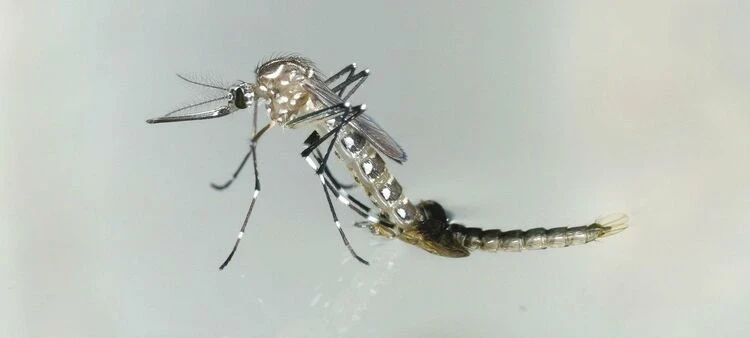
In Austria, the Aedes albopictus mosquito, known as the "tiger mosquito," was first recorded in 2012 and has since spread across all federal states. Graz has faced particularly high populations of these insects in recent years. In response to increased complaints and the threat of the spread of arboviruses in Europe, Graz turned to the IAEA, located in Vienna, for assistance in studying the MRR method.
The MRR method involves the release and recapture of a specific number of sterile male mosquitoes, marked with colored powder, in a designated area to study their behavior in the context of the local population.
Process of Conducting the Experiment
Over 800,000 sterile mosquitoes were released over seven weeks from a 15-hectare site in the southern part of Graz in August and September of last year."In recent years, mosquito populations, including invasive species such as Aedes albopictus, have been rapidly increasing in Europe and around the world due to climate change, urbanization, and the intensification of international trade. Warmer conditions and altered precipitation create ideal breeding conditions, allowing species that were previously found only in the tropics to expand their ranges into temperate regions. This range expansion poses serious public health challenges, as mosquitoes are carriers of dangerous diseases such as chikungunya, dengue, and the Zika virus," the organization noted.
Analysis of Collected Data
The data collected during the recapture of mosquitoes as part of the study conducted jointly by Graz and the IAEA provide important scientific information about the size of the wild mosquito population, the distance that sterile males can travel, their survival in the natural environment, and their competitiveness in mating.Effectiveness of the Method
Preliminary results of the experiment showed high effectiveness of this method. The sterility rate of the eggs was about 70%, and the number of females caught in traps significantly decreased during the study period compared to neighboring untreated areas. This indicates that sterile males successfully compete with wild ones and that their release could lead to a significant reduction in mosquito populations in densely populated cities.Photo on the main page: IAEA.