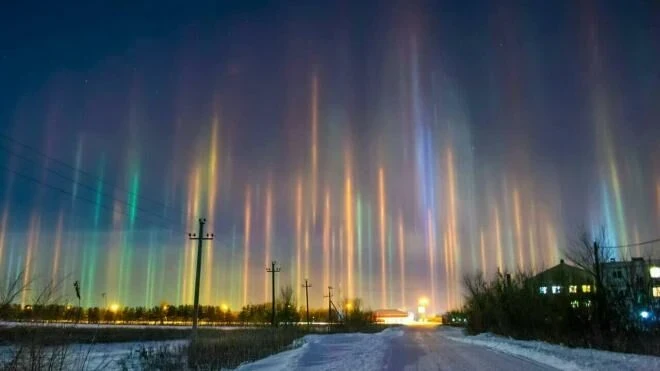
Experts explain that such effects occur due to the refraction and reflection of light in ice crystals present in the lower layers of the atmosphere. The combination of frosty weather and a high concentration of ice particles creates ideal conditions for the emergence of these optical phenomena.
A video of a rare halo phenomenon captured over Alaska also appeared on social media. In recordings made on January 16, 2026, four bright light discs resembling multiple suns can be seen. Meteorologists confirmed that this is also parhelion — a halo phenomenon where "false suns" form on either side of the Sun.
Similar phenomena were recorded in other northern regions in 2026. In January, residents of the Sakhalin region observed a classic parhelion with two light spots on either side of the Sun. A few days later, a similar phenomenon occurred in the city of Genkhe against a backdrop of severe frosts and the low position of the sun above the horizon.
Specialists emphasize that parhelia and other types of halos most often manifest in northern latitudes when the temperature is low and the atmosphere is saturated with ice crystals.