// picture alliance/AP
According to ISW data, in 2025, Russian troops captured 4,831 square kilometers of Ukrainian territory and reclaimed about 473 square kilometers previously occupied by Ukrainian forces in the Kursk region. In percentage terms, this accounted for 0.8% of the total area of Ukraine. For comparison, in 2024, Russian forces captured 3,604 square kilometers.
The General Staff of the Armed Forces of Ukraine reports that in 2025, the Russian army suffered significant losses — 416,570 personnel, which is equivalent to 78 soldiers for every square kilometer of captured territory in Ukraine and the Kursk region.
The average advance rate of Russian troops over the year was 13.24 square kilometers per day, an improvement compared to 9.87 square kilometers per day in 2024. However, throughout 2025, the pace of the offensive was uneven. The highest speed was achieved in November — 20.99 square kilometers per day, followed by a slowdown to 15 square kilometers per day in December. October, in turn, turned out to be one of the slowest months with a rate of 8.8 square kilometers per day.
Since the beginning of 2025, Russian troops began using a new operational model that included prolonged air blockade campaigns, tactical blocking operations, and mass attacks by small groups. This allowed them to advance in the directions of Pokrovsk, Aleksandrovka, and Hulyaipole in the fall of 2025.
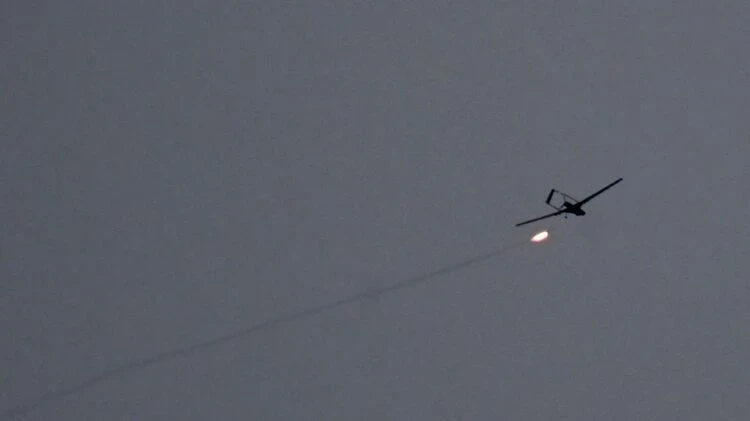
The achievements of Russian troops were also made possible by the use of drones, which began to be actively employed to block Ukrainian ground communication lines in early spring 2025. In April and May, the Russian military began deploying elite drone operators from the Advanced Drone Technology Center "Rubikon," which played a key role in their successes on the front.
The Russian army also increased the production of fiber-optic drones, which proved to be more resilient to the effects of Ukrainian electronic warfare, and their range increased from seven kilometers in early spring to 20 kilometers in the summer of 2025. The use of "mothership" drones significantly expanded the operational range of FPV drones against rear targets.
Recent technological innovations have extended the operational range of fiber-optic drones to 50-60 kilometers. On December 30, the Commander-in-Chief of the Armed Forces of Ukraine, Oleksandr Syrskyi, emphasized that the concentration of Russian drones with a range of over 20 kilometers in the area of Siversk contributed to the capture of this settlement.
The use of fiber-optic drones also allowed Russian troops to effectively counter Ukrainian electronic warfare systems in forested areas, such as the Serebryansky forest massif, where conventional radio-controlled drones face difficulties.
The tactical methods of attack by Russian troops have undergone changes, moving away from exhausting operations conducted by infantry in June 2025 to more flexible strategies based on infiltration and declaring false victories on the front. This change in approach allowed for quicker results in 2025, although losses continued to remain high compared to the successes achieved.