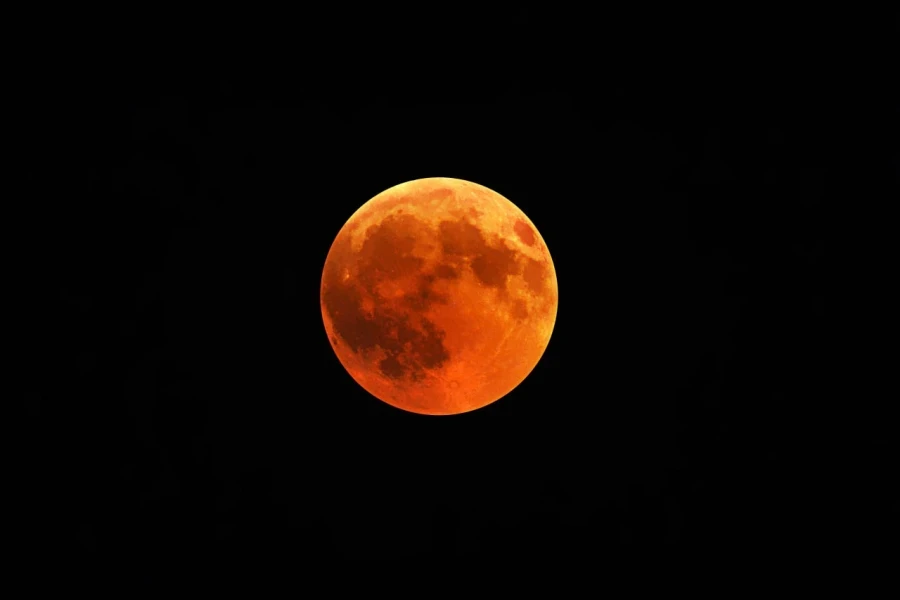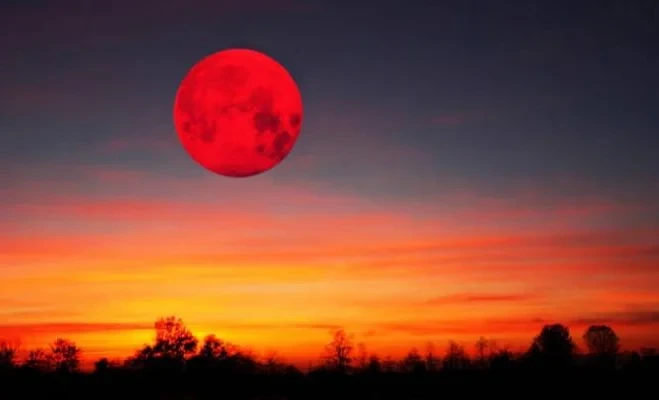
On March 3, residents of various countries will witness a total lunar eclipse, also known as a "blood moon." During this phenomenon, the Moon will take on a reddish-orange hue. This was reported by the Kazinform agency, citing AP.
In the morning, the eclipse will be visible to residents of North and Central America, as well as the western part of South America. In the evening, it will be visible in Australia and East Asia. Partial phases of the eclipse will be observed in Central Asia and most of South America, while Europe and Africa will not be able to see the total eclipse.
A total lunar eclipse occurs when the Earth is positioned between the Sun and the Moon, casting a shadow on the satellite. The red color of the Moon is due to the refraction of sunlight in the atmosphere of our planet.
The "blood moon" can be viewed with the naked eye, provided the weather is clear. Astronomer Bennett Maruka recommends stepping outside several times to not miss the process of the eclipse and the appearance of the red hue.
The next partial lunar eclipse is expected in August 2026, which will be visible to residents of North and South America, Europe, Africa, and Western Asia.
It should be noted that total lunar eclipses occur approximately every 18 months. Experts warn that the week before and after the eclipse may be tense, so it is better to avoid planning important events and major deals during these periods. In a geopolitical context, this time may be associated with an escalation of conflicts and increased military activity.
Adelya Klycheva