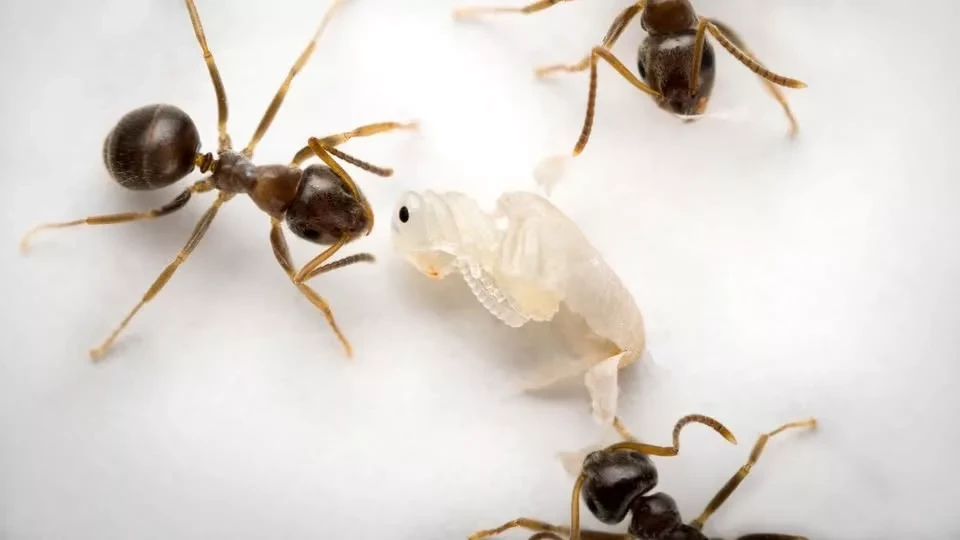
Working ants in colonies often destroy infected individuals to prevent the spread of disease. They can identify infected larvae and pupae thanks to specific chemical signals — cuticular hydrocarbons.
It was previously unclear whether these signals were a random side effect of the infection or a conscious signal maintained by selection, which could be understood as altruistic suicide.
Recent experiments with Lasius neglectus ants confirmed the second hypothesis. The study showed that pupae of worker ants infected with the fungus Metarhizium emit a chemical signal "kill me" for adult individuals, but only in the presence of worker ants. If there are no workers nearby, the pupae do not produce this signal.
In contrast, the pupae of queens, which are larger and genetically more valuable to the colony, do not send such signals. Instead, they mobilize more resources for immune defense, allowing them to successfully cope with the infection.
The results obtained align with the predictions of kin selection theory.