The United States of America has demonstrated its power as one of the most influential military forces in world history. However, unfortunately, in the 21st century, America has also shown its inability to maintain peace after military victories, notes Scott Faulkner.
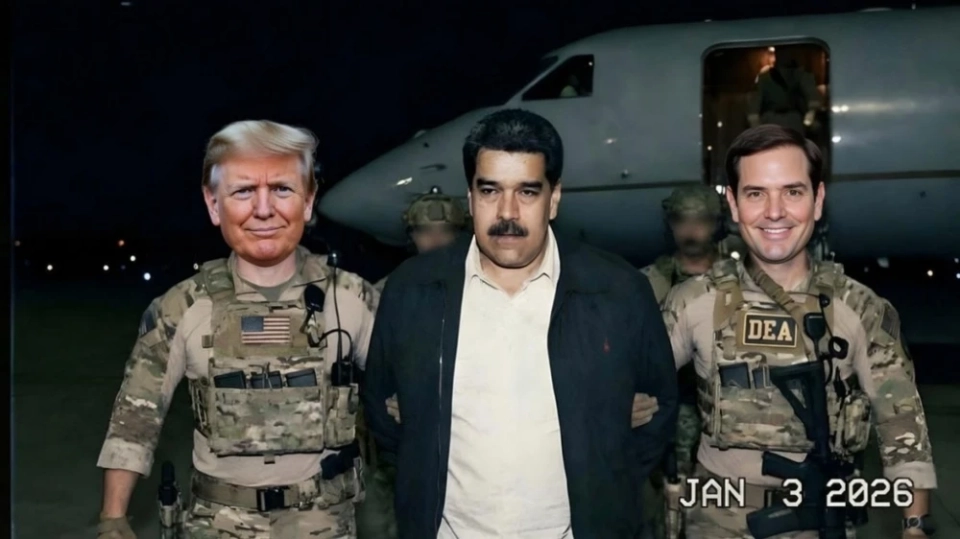
What will be the next step after the cessation of hostilities? This question has become relevant in Washington after the "epic fury" that led to the fall of the Iranian leadership. The answer to it is critically important for the balance of power in President Donald Trump's administration. What will be the consequences of the overthrow of Venezuelan President Nicolás Maduro? What awaits Iran? And what will happen if Cuban communists collapse?
America has confirmed its positions as a leading military power. However, in the 21st century, it has also demonstrated that it loses peaceful gains after military successes. Since the end of the Cold War, its actions toward creating pro-Western democratic societies have ranged from successful to unsuccessful and catastrophic.
SOVIET EMPIRE
The fall of the Berlin Wall on November 9, 1989, became a symbol of the end of 72 years of Russian oppression and that of other countries. In the former Soviet republics, the Baltic states, and Eastern Europe, there were strong opposition movements. Many Warsaw Pact states had viable democratic structures before being occupied by the Nazis and the Soviet Union.
Leaders such as Lech Wałęsa from Poland and Václav Havel from the Czech Republic were ready to take responsibility. Movements like "Solidarity" and "Samizdat" laid the groundwork for political activists who could fill the vacancies left by the fall of Eastern European leaders.
The United States did not engage in "nation-building," but provided significant assistance to new leaders who were freed from long oppression.
This interaction was the foundation of bipartisan cooperation. The State Department under Clinton, together with Newt Gingrich, invited delegations from the new states to learn about the workings of Congress. Prime ministers, general secretaries, and heads of parliaments spent several days receiving advice from the Speaker of the House on how to adapt their legislative processes to the conditions of their own countries.
The Kennedy School of Government at Harvard University, in collaboration with the State Department, organized training for members of various parliaments. These seminars, conducted by senators and members of Congress, aimed to impart practical knowledge on how to effectively represent the interests of their countries in debates and diverse opinions.
The European Union also played its role by helping to harmonize legal practices and guide new countries toward compliance with laws, which ultimately was supposed to lead to their EU membership. Non-profit organizations, such as the Atlantic Council and the European Institute, facilitated dialogue between EU leaders and regional players. European ambassadors working both in the U.S. and Eastern Europe acted as mentors and advisors.
A key point of success was creating conditions for each country to develop at its own pace, taking into account their unique cultural and historical characteristics. The implementation of "best practices" was suggested but not mandatory.
However, the only failure was Russia. Although Duma deputies actively attended courses at Harvard, they could not foresee that Boris Yeltsin's alcoholism and his corrupt connections would lead to Vladimir Putin's rise to power.
AFGHANISTAN
The successes of Eastern Europe were ignored by neoconservative circles that influenced President George W. Bush.
Afghanistan represented a feudal society divided among village elders, clergy, and warlords, each obligated to obey the shah. The Mohammadzai tribal leaders ruled the country for 155 years until the last shah was overthrown in a coup supported by the Soviet Union in 1978.
After that began years of chaos, including a civil war and Soviet occupation, which started in December 1979.
As a result of the conflict between the pro-Western Northern Alliance and Islamist groups known as the mujahideen, the Taliban emerged and ultimately prevailed.
The withdrawal of Soviet troops on April 14, 1988, left behind an unstable government formed by the Northern Alliance and the Taliban. The leader of the Northern Alliance was killed shortly before the September 11 attacks, which strengthened the Taliban's position and led to their overthrow following the U.S. intervention in December 2001.
The U.S. began the process of "state-building." Ignoring culture and history, Bush administration officials appointed Hamid Karzai as president after the Taliban's fall. Karzai, formerly a "treasurer" for the CIA, turned out to be corrupt and unreliable, arranging the sale of mining rights in the country for $40 million to his overseas accounts.
Bush officials hindered the restoration of traditional feudal structures and refused to restore the shah's family to power for national unity. Instead, they attempted to establish a Western democracy in a compressed timeframe, ignoring that Western Europe took centuries to achieve real representative governance.
Billions of dollars were invested in training and building infrastructure, most of which was squandered by contractors and the local elite.
Local communities became dependent on NATO and U.S. forces for maintaining peace, while Western values were imposed on the population. This created conditions for the Taliban's triumph. Karzai falsified the 2009 elections, ignoring several worthy opponents, which led to a decline in his authority and deepened corruption in the country.
In September 2014, Ashraf Ghani, one of the opposition candidates in the same elections, became president, but it was too late. The Taliban strengthened their position on the battlefield and found themselves in a winning position at the negotiating table. Their forces entered Kabul on August 15, 2021, following a failed withdrawal of American troops.
IRAQ
In 2003, neoconservative circles within the Bush administration began a war based on dubious intelligence, leading to the destruction of Iraq and enrichment through fictitious contracts.
The U.S. preferred to create a centralized government, which ignored the federal system and local self-governance that were the foundation of America's success. Centralization became a manifestation of laziness, as diplomats and officials were in the safe "Green Zone" of Baghdad and were unaware of the real problems.
This approach led to disaster. Iraq had always been divided into three groups: Kurds in the north, Shiites in the south, and Sunnis in the center. Britain united Iraq after World War I, creating a puppet state that collapsed in 1958 after a coup that brought the Ba'ath Party and Saddam Hussein to power.
The 2003 war overthrew Hussein and opened 20 years of corruption and waste. Instead of federalism, the occupying authorities created a unitary state, which caused discontent among historical groups.
The Kurds became victims of this policy. After the 1991 war, they achieved semi-independence, but their attempts to cooperate with the West were suppressed by the U.S. State Department.
One striking example was the project to provide electricity to Kurdistan using small hydro turbines. However, the State Department halted this project, fearing that decentralized power supply would weaken the central government. As a result, these villages still remain without electricity.
FUTURE
In Venezuela, there is an active opposition movement that failed in the last elections due to fraud. Its leader is Nobel Prize laureate María Corina Machado. President Trump seems to support interim president Delcy Rodríguez, who, despite her claims of independence, practically collaborates with the U.S. The future of the country will likely be determined by internal processes, with the U.S. promoting pro-Western policies and the establishment of a free society.
In Iran, there is also an active opposition both within the country and among the diaspora in other states.
The National Council of Resistance of Iran (NCRI), founded in 1981, is a coalition of 460 members striving for a democratic, secular, and nuclear-free republic. Their task is to conduct free elections within six months after the fall of the theocracy.
When the "Epic Fury" began, Maryam Rajavi, the elected president of the NCRI, announced the establishment of a transitional government to transfer power to the people of Iran and create a democratic republic based on a ten-point plan presented in December 2006 at a session of the Council of Europe.
The NCRI's plan includes the establishment of a pluralistic republic with a separation of religion and state, gender equality, abolition of the death penalty, peace and coexistence, as well as a nuclear-free Iran.
This well-organized initiative may be able to quickly fill the power vacuum after the current regime's fall if it manages to find a suitable symbolic leader, such as Crown Prince Reza Pahlavi.
After the attacks, there is hope for change if Trump and his team learn the lessons of the past.
Scott Faulkner served as the Chief Administrative Officer of the U.S. House of Representatives. He was the personnel director for Reagan's 1980 campaign, was part of the president's transition team, and worked in the White House under Reagan. He currently advises corporations on implementing strategic changes.
The article "After Iran: America's Next Steps" was first published on the K-News website.