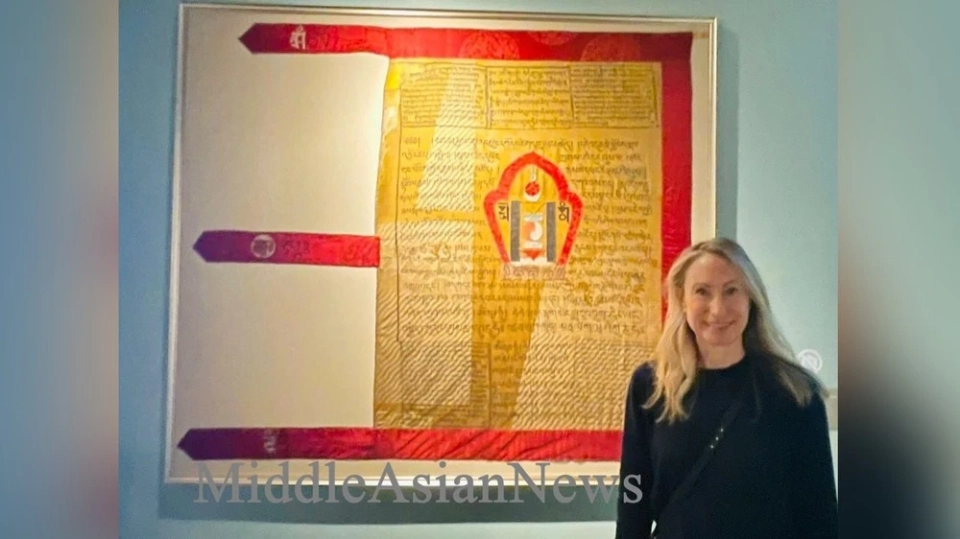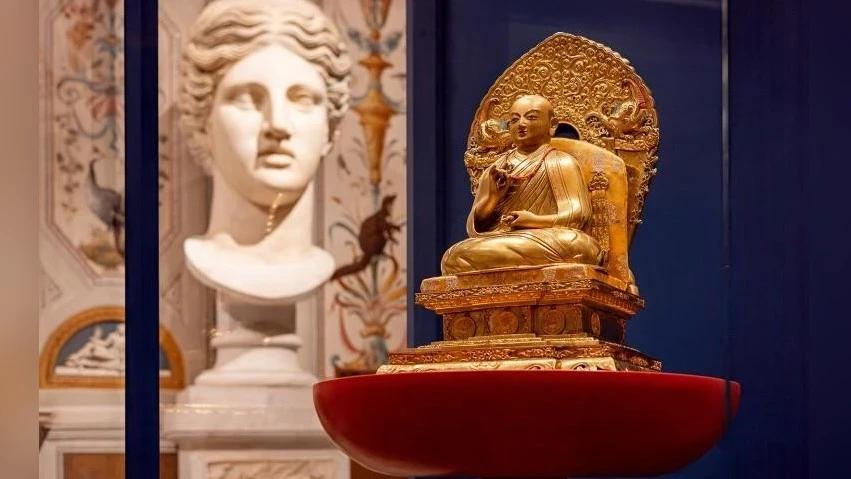
On January 19, the Borghese Gallery in Rome opened the exhibition "From Mongolia to the Baroque World" (Della Mongolia al Barocco Globale), dedicated to the 390th anniversary of the birth of the outstanding Chingizid Öndör-Gegëen Zanabazar, as reported by MiddleAsianNews.
The opening ceremony was attended by the Mongolian Ambassador to Italy Naranthungalag Tserendorj, the director of the National Museum "Chingis Khan" Chuluun Sampildondov, and the director of the Borghese Gallery Francesca Cappelletti.
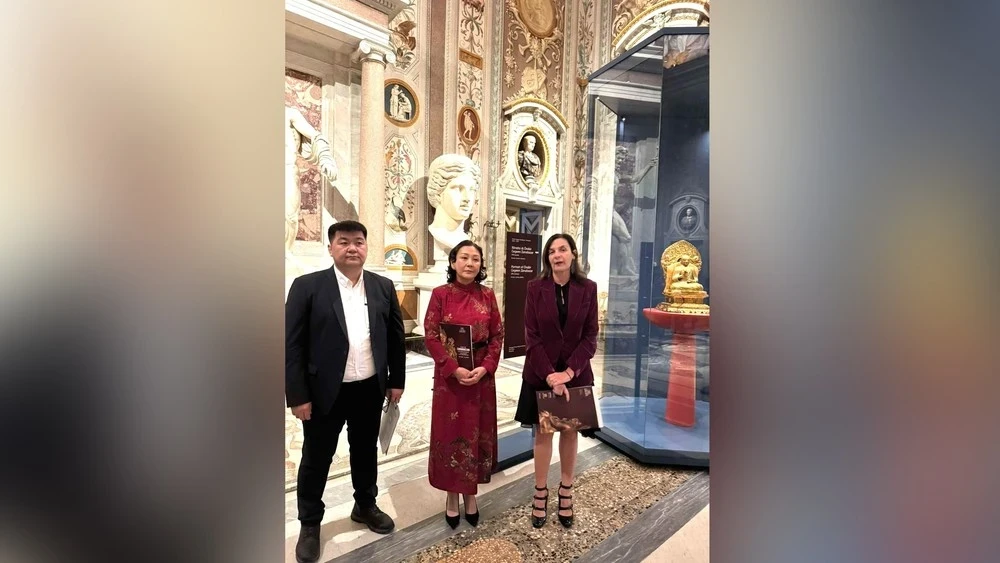
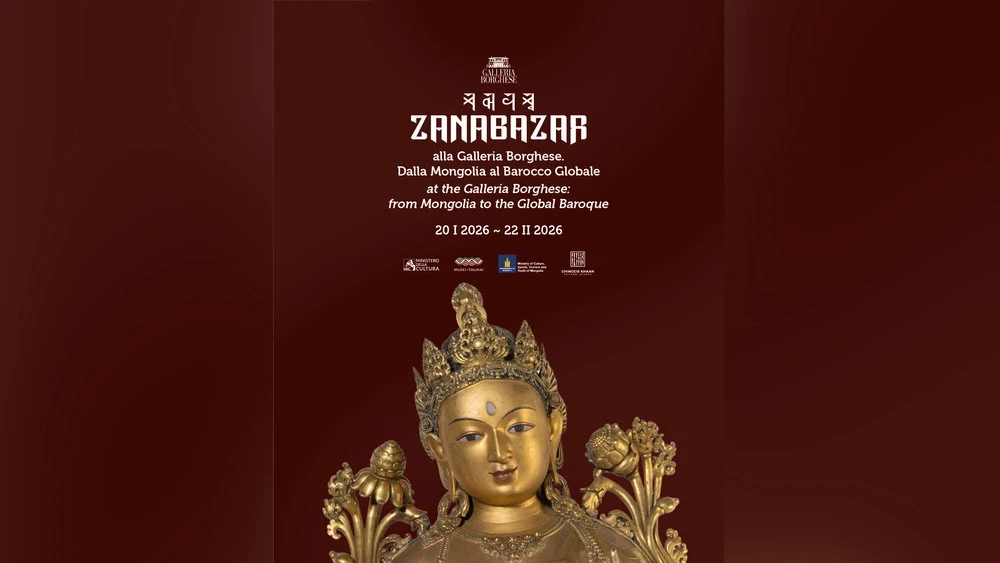
The exhibition will feature unique historical and cultural monuments from Mongolia, such as bronze castings of "Green Tara" and "Öndör-Gegëen Zanabazar." Visitors will be able to see them for a month, after which the exhibits will be transported to the Museum of Eastern Art in Turin for the exhibition "Zanabazar: Eyes of the Steppes," which will last until April 7.
On the same day, a Memorandum of Understanding was signed, establishing cooperation between the "Chingis Khan" Museum and the Italian Institute of Cultural Heritage.
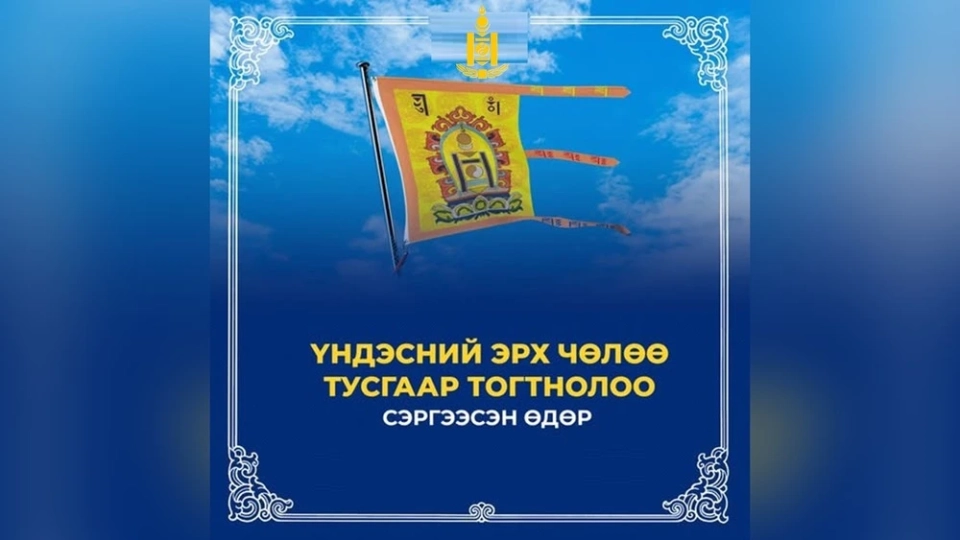
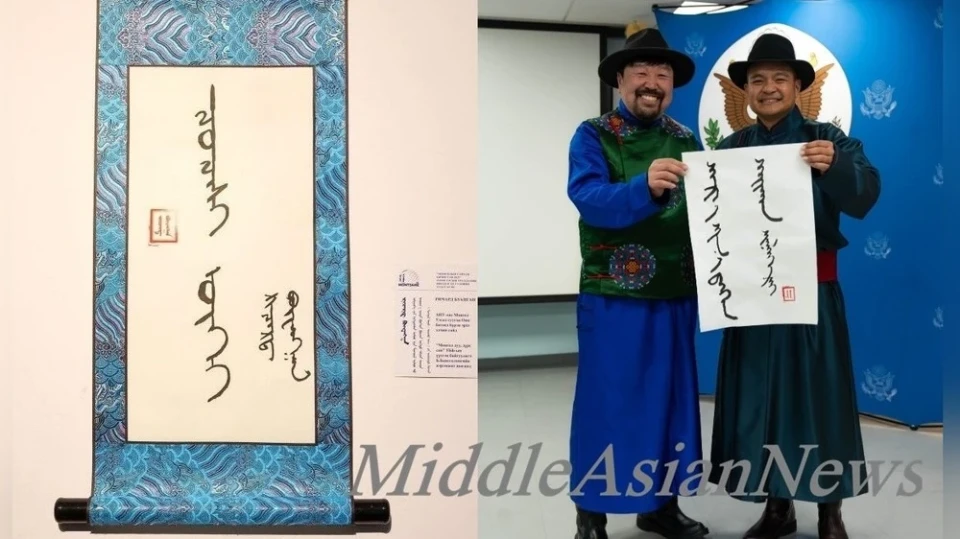
Zanabazar Gombodorj is not only the first Mongolian Bogdo-gegeen but also the greatest sculptor, the founder of Mongolian portrait painting, and the inventor of the Soyombo script. He was the ruler of Khalkha under the suzerainty of the Qing Empire.
The Chingizid Zanabazar was born in 1635 on the 25th day of the ninth lunar month (November 20) in the region of Yesönzuyl (modern Övörkhangai aimag), in the family of Tushiyet Khan Gombodorj from the Borjigin clan. The Gegeen-Tsetsen Khan Sholoi, who visited his parents, "awarded" him part of his title — "Gegeen" (which means bright, holy, exalted) and expressed the opinion that he could become a good lama.
Zanabazar became known for his sculptural works depicting Buddhas and Bodhisattvas. Experts believe that he first mastered the technique of casting sculptures in 1650 while in Lhasa, observing the work of Nepalese masters during the construction of the Potala Palace. It has been noted that his works bear a closer resemblance to the Nepalese sculptural tradition than to the Tibetan.
His most famous works include the White and Green Taras, as well as the Buddha Vajradhara. The image of Green Tara, considered one of the master's best works, reflects femininity and sensuality, linking him to European sculptors of the Renaissance; Professor Rinchen Biyamba even referred to Zanabazar as the "Mongolian Michelangelo." The masterpieces of Öndör-Gegëen faced the risk of destruction twice: at the end of the 17th century during the Dzungar invasion and in the 1930s during the repression against the clergy.
Subsequently, Zanabazar's unique style became the foundation of the so-called "Zanabazar school."