The new version of Seedance, released eight months after its initial launch in June 2025, has caused a real sensation. Many videos created with its help, featuring well-known characters, quickly spread across the internet, immediately drawing criticism from major studios like Disney and Paramount, which accused ByteDance of copyright infringement.
What is Seedance and why is it generating such interest?
According to experts, Seedance showcases new horizons in video content creation. Jan-Willem Blom from the creative studio Videostate believes that this system calls into question the future of AI in the creative field.
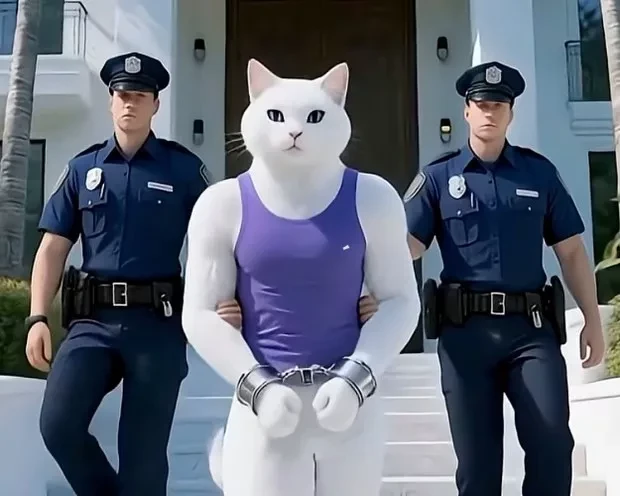
Seedance, like other AI tools such as Midjourney and Sora from OpenAI, can create videos based on short text prompts. In some cases, even a single prompt can lead to the creation of high-quality content.
Margaret Mitchell, an AI ethics researcher, notes that Seedance impresses with its ability to integrate text, images, and sound into one product.
One criterion for evaluating Seedance was the creation of a video in which Will Smith eats spaghetti. The resulting works went viral, showing Smith battling a spaghetti monster, creating the effect of a high-budget film.
Many professionals in the film industry believe that Seedance is launching a new era in video production. David Kwok from the Singaporean animation studio Tiny Island Productions notes that action scenes created with its help look more realistic than those of competitors.
According to him, using Seedance creates the feeling of working with a professional cameraman or director specializing in action scenes.
Challenges and Prospects
However, Seedance faces challenges related to copyright, which is becoming an increasingly relevant topic in the age of artificial intelligence.
Experts warn that companies working in the AI field may prioritize technology over human resources, creating more powerful tools and using data without proper permissions.
Major Hollywood studios have expressed dissatisfaction that Seedance uses copyrighted characters, such as Spider-Man and Darth Vader. Disney and Paramount have already sent the company letters demanding that they cease using their content. In Japan, an investigation has also been launched against ByteDance for copyright infringement following the emergence of viral videos featuring anime characters.
ByteDance stated that it is taking measures to "enhance existing protections" for its technologies. This is not a unique situation for Chinese companies.
In 2023, the New York Times filed a lawsuit against OpenAI and Microsoft, claiming that they used its materials without permission to train their AI. Reddit also sued Perplexity, alleging that it unlawfully collected user data. Disney expressed similar concerns regarding Google.
Margaret Mitchell emphasizes that it is important to clearly label content to prevent deception and build trust in AI, which is more important than creating more appealing videos.
Developers should create systems for managing licensing and payments, as well as provide mechanisms for contesting unauthorized use of content.
For example, Disney struck a deal worth $1 billion with OpenAI to use characters from "Star Wars," Pixar, and Marvel.
Shanan Koni, a computer science researcher from the University of Melbourne, suggests that the creators of Seedance were aware of potential copyright issues but chose to take the risk anyway.
“There are opportunities for strategic circumvention of rules to temporarily violate them and gain marketing advantages,” he adds.
Nevertheless, for smaller companies, Seedance becomes too valuable a tool to ignore.
Kwok from Tiny Island Productions claims that such AI allows them to create films that would otherwise cost significantly more.
He cites the rapidly growing market for short videos in Asia, where projects are typically created on a small budget, allowing for the production of up to 80 episodes, each lasting less than two minutes.
Previously, such projects were limited to romantic and family dramas, but now, according to Kwok, thanks to AI, more ambitious sci-fi, historical, and action projects can be created.
Is China a Step Ahead?
Seedance is once again drawing attention to Chinese technological achievements.
“This indicates that Chinese technology is at the forefront of modern capabilities,” notes Koni. “If ByteDance was able to create this, what other innovations can Chinese companies offer?”
Last year, another Chinese AI model, DeepSeek, made waves with its inexpensive processing of large volumes of data and became the most popular free app in the American Apple Store.
Beijing is actively investing in artificial intelligence and robotics, aiming to achieve technological superiority over the U.S. by funding the development of new computer chips and generative AI.
While Seedance 2.0 is in the spotlight, other Chinese companies are also presenting their new generative AI tools, albeit less noticeably, ahead of the Lunar New Year celebrations.
Analyst Bill Bishop believes that the Spring Festival is increasingly turning into a "festival of artificial intelligence," as companies launch new applications and millions of people experiment with new technologies.
He predicts that 2026 could be a critical moment for the mass adoption of AI in China—not only for chatbots but also for AI agents, programming, and video content creation.