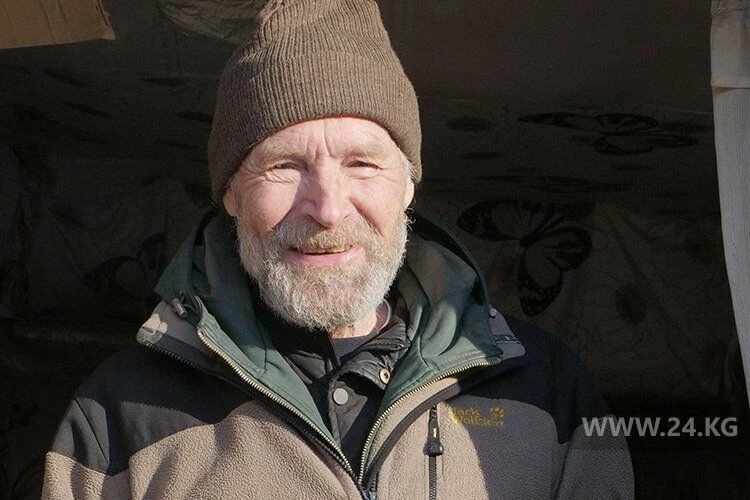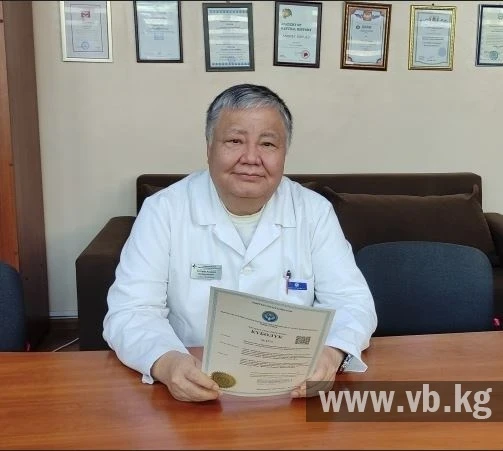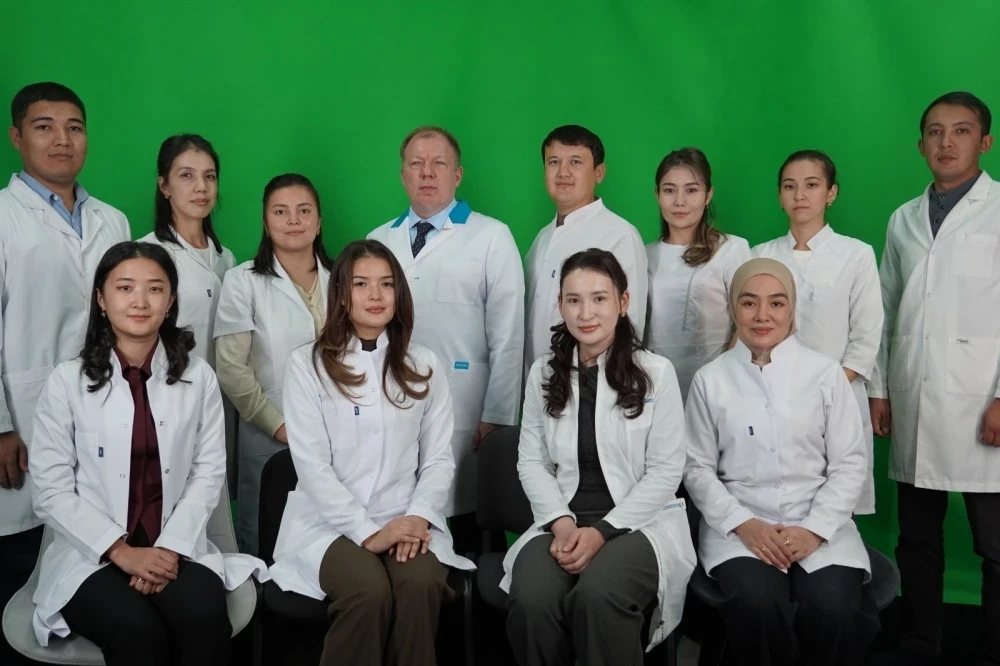
Igor Pershukov, a professor and head of the department of hospital therapy at the Medical Institute of Jalal-Abad State University, also a remote lecturer at the International Medical Faculty of Osh State University and a professor at the Kazakh-Russian Medical University in Almaty, came to Kyrgyzstan from Russia last year. As he noted in a conversation with vb.kg, his goal is to make Jalal-Abad University recognized worldwide.
At the beginning of the interview, we discussed what prompted his move to Kyrgyzstan and his fundamental ambitions.
“I intend to make JAGU a university known on all continents”
- Why Kyrgyzstan? (As a Soviet person, I am pleased to refer to your country this way.) This question is both simple and complex. Almost 30 years ago, I met Talant Batyraliev, who became an important figure in my life. This person, despite his stern appearance, turned out to be an outstanding professional and an interesting personality. I did not realize it at first, but his ability to attract people had a strong influence on me. He involved me in the work of a group of doctors founded in the 90s, which operated in Turkey and consisted mainly of specialists who had moved from Kyrgyzstan. This group, specializing in invasive and clinical cardiology, continues its activities worldwide. Later, I became the secretary of this group, and we met multiple times, exchanging experiences and knowledge.
Talantbek Abdullayevich, as a senior mentor, placed great importance on improving the quality of medicine in the CIS countries. He organized meetings of doctors and scientists from various countries, and the SanKo clinic became a training center for many doctors who gained new knowledge and skills. This knowledge allowed me to significantly improve my practice and increase work efficiency. I realized that such knowledge is necessary for doctors in the CIS, and we began conducting training seminars in Russia and Kazakhstan, where we encountered keen interest in new knowledge.
Friendship with Batyraliev opened doors for me to the American Society of Cardiovascular Angiography and Interventions, where I became the first member from Russia. I waited three years, from 2002 to 2005, until I was accepted into this prestigious organization. The second honorary member was our teacher, A.N. Samko. This society unites over 40,000 cardiologists from around the world.
My work in Kyrgyzstan was a response to Batyraliev's request for help in educating doctors and students. Initially, he suggested I teach remotely at the university in the south of the country. In 2015, I visited Osh for the first time, where I met the rector of OshSU, Professor Kanaybek Isakov, and began systematically working with doctors and students.
With each new visit to Osh, I noticed positive changes at the university: growth in knowledge and experience among faculty and students. I was pleased with the successes of the International Medical Faculty of OshSU and its leader, Professor Roman Kalmatov. In recent years, two of our students defended their dissertations and became doctors of philosophy (PhD). One of them, Begimai Akbalaeva, now heads a department, and Nurlan Rayimbek uulu became the deputy dean. They are studying cardio-oncology, which is a new topic in our region. This teaching experience at OshSU has become very important for me.
When in 2025 Talantbek Abdullayevich offered me a teaching position at JAGU, I gladly accepted. It coincided with my desires to head a clinical department engaged in scientific and practical work. At the beginning of the 2025 academic year, I began my activities at Manas, and I already have five graduate students at JAGU. I see that JAGU is a dynamically developing university, and its medical faculty offers great opportunities for education. We have started collaboration with professors from Russia and Kazakhstan, conducting remote lectures on various aspects of clinical medicine, and students are actively participating in the learning process.
What has your career path been from student to world-renowned professor?
- In 1994, I graduated with honors from the medical faculty of Kuban State Medical University and entered a residency in cardiology at the National Medical Research Center of Cardiology named after Academician E.I. Chazov. My journey in cardiology began in the arrhythmia department, where I worked under the guidance of the outstanding specialist Irina Savelieva. After her internship in Europe, I continued my work in angiography under the supervision of Anatoly Nikolaevich Samko, who became my scientific advisor. In 1999, I successfully defended my candidate dissertation.
After completing my postgraduate studies, I returned to Voronezh and worked there for 20 years, where I defended my doctoral dissertation. In 2010, I began working in outpatient cardiology. Over ten years, I accepted more than 24,000 patients, which allowed me to accumulate invaluable experience. I constantly studied literature and collaborated with various researchers. This enabled me to develop original treatment methods.
Since 2017, I have been engaged in cardio-oncology, helping cancer patients in need of cardiac support. From 2020 to 2023, I worked in private practice, then returned to state angiography, continuing my treatment work. My work has always focused on analyzing and understanding processes, which contributed to my rapid career advancement.
I also taught at Voronezh Medical Academy and later became an associate professor in the department of cardiology and therapy at the Central State Medical Academy under the Administration of the President of the Russian Federation.
Did you choose your profession back in school?
- In childhood, I dreamed of becoming a radio engineer. However, after my mother’s injury, we moved to Kuban, and I became interested in medicine. At a medical technology exhibition in Krasnodar, I saw modern devices and realized that I wanted to pursue medicine. My first job was as an orderly in a maternity hospital, where I met Boris Grigorievich Yermoshchenko, who became my first mentor.
Why cardiology? Since my second year, I became fascinated with pharmacology, but I understood that I wanted to work with patients. I was directed to the Chazov Cardio Center, where I met Professor Oleg Yurievich Atykov, who became my "godfather" in cardiology.
At the cardio center, I also met Talant Batyraliev, who became an important friend and colleague. His ability to communicate and genuine interest in people helped me in my further development.
“Patients in Manas can receive quality care, just like in Cleveland or New York”
What is your view on treatment: what is necessary to achieve patient health?
- I believe that the approach to treatment should be individual, based on an analysis of the patient's behavior and response. It is important to involve patients in the treatment process so that they understand their problem and know what they need to do. Many chronic diseases require constant monitoring and treatment, and it is important to explain to patients that temporary measures will not solve their problems.
In Kyrgyzstan, there is a widespread misconception that infusion therapy is a panacea, which complicates the treatment of chronic diseases. We must explain to patients that they need ongoing medications to manage their condition.
I strive to educate my patients so that they understand how their medications work. This helps minimize complications. I have a patient who has 7 stents in one coronary artery. I offered him day hospital care, and he was able to avoid repeat procedures.
I believe that there are opportunities for quality treatment in Kyrgyzstan, and we can achieve success if we work on improving education and medical practices.
I aim to ensure that our students and graduate students apply this knowledge and see real changes in their patients' conditions.
Unfortunately, it is impossible to completely cure people of chronic diseases, but risks can be minimized. This requires the right medications, physical activity, and adherence to a diet.
Excess weight is also a serious problem, and we need to address it.
“Openness and honesty in communication with patients play an important role”
Why do you think there are so many cardiovascular diseases?
- We have learned to save people from heart attacks, but modern life demands a lot of effort and stress from us. This leads to an increase in diseases. Alcohol also plays a negative role, and many people do not realize that even small doses can be dangerous.
I teach young doctors the correct methods, starting with aspirin, which is an effective remedy in suspected heart attacks. It is important to quickly call an ambulance and deliver the patient to a place with the necessary equipment.
Unfortunately, many dietary supplements and cheap generics do not work properly, which creates problems in treatment. Kyrgyzstan is striving to improve its healthcare system, and this requires joint efforts.
What should be done about high technologies in medicine that are inaccessible due to costs?- I understand people's concerns about high technologies in medicine, but it is important for doctors to be honest and open in their recommendations. I try to explain to patients why certain procedures are necessary, and this helps establish trust.
In Kyrgyzstan, it is necessary to develop the healthcare system to make it accessible to everyone. This will help many people receive the necessary assistance.
How do you evaluate Kyrgyz life, traditions, and cuisine?
- I like the openness of the society I find myself in. I appreciate the traditions and culture, as well as the freedom with which children grow up. However, there are also problems, such as power outages and traffic violations, which require attention.
As for the cuisine, it is interesting, but for me, it is too caloric. I prefer lighter dishes, such as salads and vegetables. I am glad that I found many nuts and dried fruits in the market, which are healthy.
Have you developed new dreams and plans in Kyrgyzstan?
- I am currently alone, but I want JAGU to become a university that is talked about on all continents. I have already brought my colleagues and hope that Manas will become a center for medical education and practice.
The cardiovascular center in Manas is already under construction, and if it is equipped with the latest technology, we will be able to attract the best specialists. The main thing is that the reforms in medicine and education continue.
Elena Bayalinova,
media expert on healthcare issues.