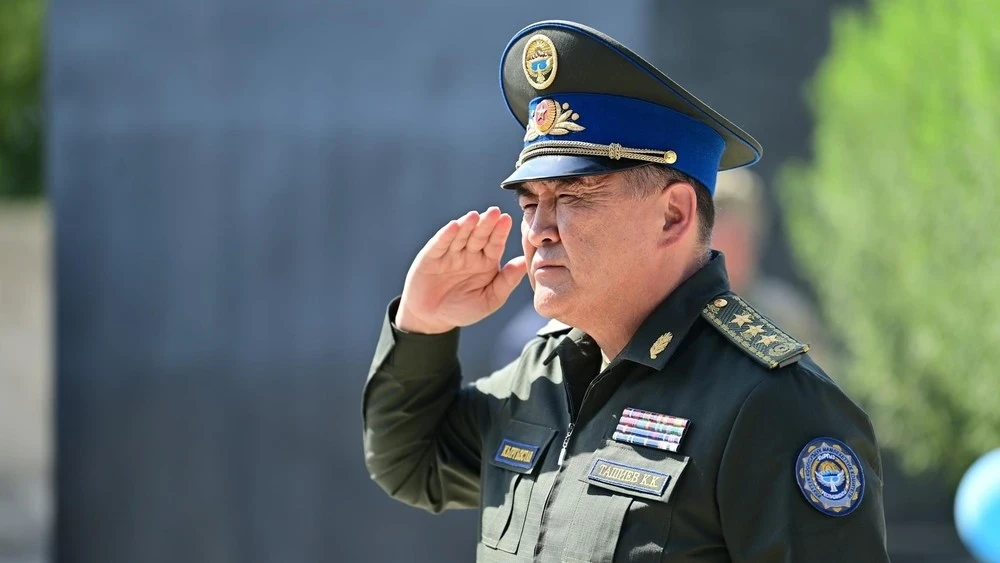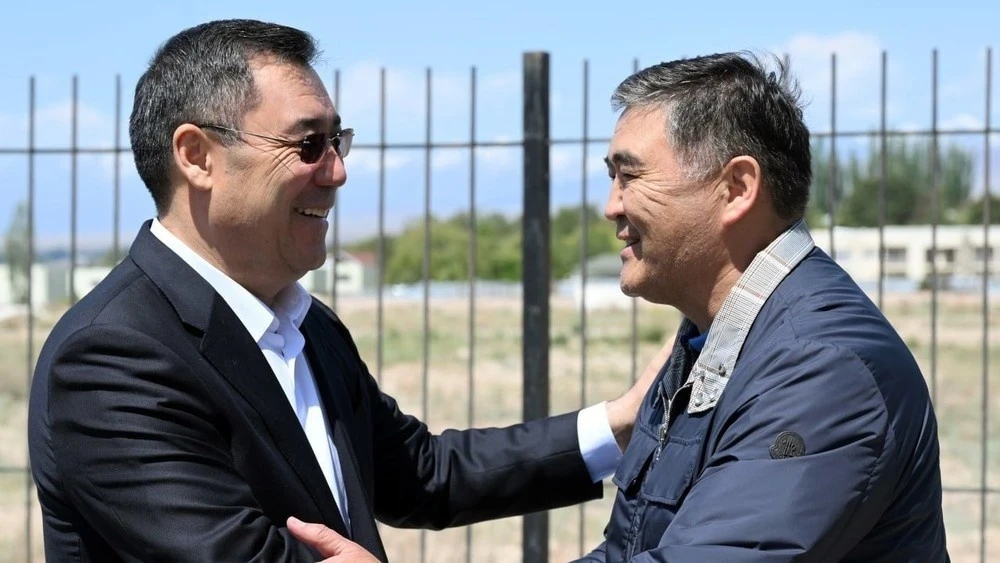
On the night of February 13, Colonel General Tashiev, the former head of the State National Security Committee (GKNB), returned to Kyrgyzstan from Germany, where he was undergoing treatment. According to some reports, his first step led him to the state residence.
Prior to this, a group of analysts among "independent journalists" speculated: would he return? Most leaned towards the idea that he would not. Some suggested that he might go to Bakiev in Minsk or stay in Munich, and even proposed the option of traveling to his son in Aleppo. It was believed that if he returned, he would be immediately arrested and subjected to harsh repression.
Particularly active was the "exiled journalist" Leila Saralaeva, who harbors animosity towards Tashiev, who at one time halted her anti-state activities. She aired her version of events, including Edil Baysalov, who allegedly "signaled" Tashiev about some imbalance in state governance. According to her information, an arrest of more than fifty employees and leaders of the GKNB is expected, which, she claims, is aimed at the moral and physical destruction of Tashiev.
Another exile, Bolot Temirov, also kept a close watch, tracking the route of the returning plane. He made assumptions about its path and even claimed that "flight radars can be deceived."
Nevertheless, Kamchybek Kydyrshaevich did not hide or deceive anyone. Sources report that his treatment at the clinic was not yet complete, and he was supposed to return later, but he flew back urgently due to the situation. Colonel General Tashiev did not intend to follow the information speculations and knows that he is innocent, has honestly served the people and the country, and the president has no claims against him, with no forceful measures anticipated against him.
The resignation of the head of the GKNB and the deputy chairman of the government of Kyrgyzstan sparked activity not only among local analysts but also among foreign observers, who began to voice their assumptions—often fantastical. Kazakh political scientists and some Russian publications even dubbed Tashiev "the main Russophobe of Kyrgyzstan," hinting that this was the reason for his dismissal.
To call Tashiev a "Russophobe" is akin to suspecting Saralaeva of a dislike for art. Tashiev has repeatedly emphasized the significance of Russia as a strategic partner, even before the start of his career in responsible positions. He has repeatedly stated the long-standing ties between Kyrgyzstan and Russia in various fields. How can he be a Russophobe if he always speaks in Russian?
The essence is not in who calls him what, but in the fact that over the past five years, the people of Kyrgyzstan have become convinced: the country can develop, live in peace with its neighbors, avoiding crime and corruption. There is a person in the country to whom one can turn for help.
This has been observed by President Sadyr Japarov, who supports Tashiev, empowering him with significant authority. Over the past five years, neither has betrayed the interests of the state or their friendship. Those who are now rejoicing at the possible collapse of their tandem should be more cautious. Sadyr Japarov and Kamchybek Tashiev are not the type to quarrel over personal ambitions. The president clearly stated his position through his press secretary: he has no questions for Tashiev; all the difficult questions concern those who acted on his behalf and created problems before the elections.
The decision to reorganize the security agency was made by Japarov consciously, to prevent a split in society and the state. For the president, serving the people has always been a priority, and this is supported by Tashiev, who believes that state discipline is more important than personal circumstances.
Tashiev retains the rank of Colonel General and holds the position of president of the Kyrgyz Football Union, vice-president of the Boxing Federation, chairman of the Board of Trustees of the KRSU, and co-chairman of the "Ata-Jurt" party. This means that he has the opportunity to return to big politics.