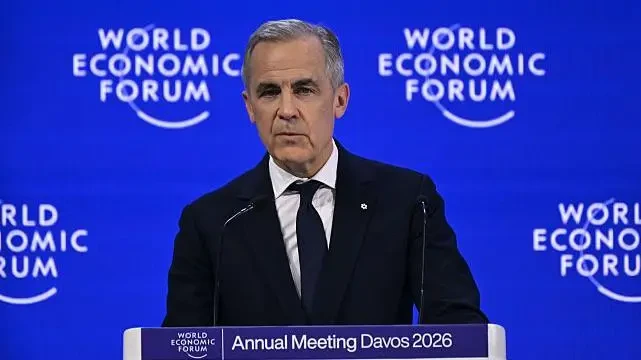
Spektor notes that the current international system, according to Karni, is no longer functioning properly. Western countries, the prime minister claims, have long used the rhetoric of liberal values while ignoring the need to adhere to these principles. For example, they advocated for free trade but applied it selectively; they spoke of law and human rights, yet often ignored these principles in relation to their allies and adversaries. “We participated in rituals and avoided pointing out the gap between words and actions,” Karni admitted. He emphasized that the stability of this system was ensured by American power, which, despite double standards, provided public goods that other countries depended on. But, he said, “this deal no longer works.”
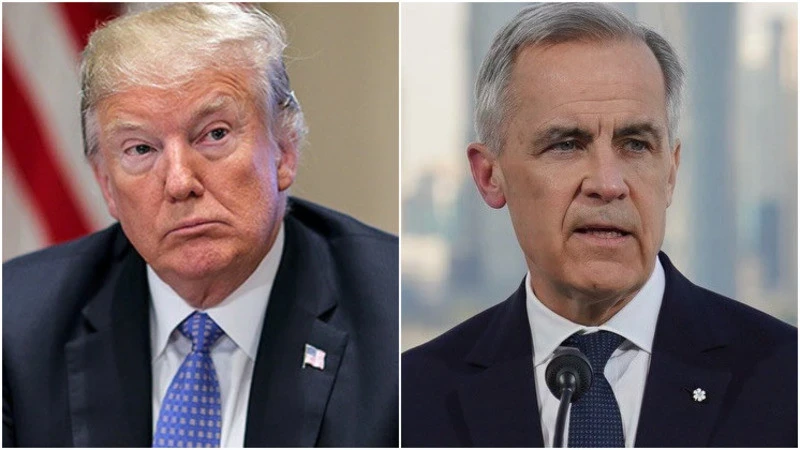
Karni described the “gap” in the international system as the result of the collapse of this very deal. Powerful states, primarily the U.S. under Trump, began to ignore the rules that upheld the international order, and even the necessity to justify their actions. If Karni is right, a serious shift has occurred. The call for middle and developing countries to stop following the broken system is underestimated, as with the disappearance of this semblance, much else is lost.
According to Karni, smaller countries like Canada can continue to advocate for liberal values even as the “rules-based order” begins to fade. However, it is unclear how such countries will cope with this “rescue operation” and whether a new value-oriented international regime can even emerge from the ruins left by the United States. This is alarming, as a world where powerful states no longer feel the need to morally justify their actions becomes not more just, but more dangerous. When great powers are not obliged to explain their actions, weaker countries lose means of influence. They can no longer refer to common standards, international law, and demand consistency between words and deeds, which creates instability that can threaten even the strong.
The Dual Role of Hypocrisy
Hypocrisy in international politics has always played a dual role: on the one hand, it created discontent and distrust among powers, while on the other, it limited their power by forcing them to adhere to the moral standards they proclaimed. For example, during the Cold War, the U.S. justified its actions with the language of democracy and human rights, even when those actions did not align with the stated ideals. Hypocrisy did not go unanswered — allies and non-aligned countries used U.S. rhetoric to criticize their behavior and demand adherence to principles. This pressure led to results: domestic and international scrutiny facilitated investigations into several actions of the American intelligence community in 1975.
After the Cold War, similar pressure persisted. When the U.S. invaded Iraq in 2003, it justified its actions by referring to international law and the threat of weapons of mass destruction, but these arguments proved untenable. The sharp international reaction to the invasion was due to Washington claiming it was acting within a rules-based order. This dynamic repeated itself around the use of U.S. drones in other countries, when international lawyers and organizations demanded accountability for the use of force. In response, Washington adapted its legal justifications, narrowing the criteria for targets and exercising greater control over the use of strikes.
Despite its imperfections, hypocrisy created certain limitations. American power, while predominant, still faced frictions, as the need to justify itself created a language of resistance and made the behavior of great powers accountable, albeit not fully, to higher standards than mere interests.
The Loss of the Need for Justifications
The modern dynamic has changed significantly. Now, not only are the principles that were previously upheld being violated, but the U.S. is increasingly refusing to justify its actions at all. Whereas American policy once cloaked itself in the language of legality and universal values, today the emphasis is on transactional aspects.
This shift became evident during Trump's first term. When he withdrew from the Iran nuclear deal in 2018, he did not claim that Tehran had violated international norms, but simply called it a bad deal for the U.S. Similarly, in response to the murder of journalist Jamal Khashoggi, he justified maintaining relations with Saudi Arabia not on strategic grounds, but on arms sales volumes. In both cases, Washington denied not the facts, but the necessity of moral justification.
During his second term, Trump completely abandoned any justifications. Threatening Denmark and other European allies with tariffs due to their resistance to his attempt to purchase Greenland, he framed the issue in terms of pure pressure — as a transactional demand. In February 2025, he imposed sanctions on the International Criminal Court not due to legal disputes, but because the court was investigating the actions of his ally, Israeli Prime Minister Benjamin Netanyahu. In an interview with The New York Times, he even stated that while the actions of Chinese President Xi Jinping against Taiwan would make him “very unhappy,” the decision rests with Xi. This is not merely a violation of principles, but a blatant expression of interests, devoid of even the appearance of morality.
The abandonment of moral justifications radically changes the game for weaker states. Critics may call Trump's policy crude, but it is difficult to accuse him of hypocrisy: there is no gap between proclaimed virtue and practice if the virtue itself is rejected. Power no longer appeals to a universal principle — it asserts private interests. This changes not only the style of diplomacy but also the foundations on which American power is built and the ways in which it can be interacted with.
The Absence of Commitments Makes Politics More Dangerous
At first glance, the abandonment of moral justifications may seem like a solution to the problem. If hypocrisy undermines trust, then the rejection of moral statements may appear more effective. Without appeals to universal principles, reputational costs decrease, and material interests take center stage. Some experts, such as Brazilian diplomat Celso Amorim, even argue that under Trump “there is no hypocrisy” — there is only “brutal truth,” allowing countries to negotiate without illusions about U.S. motives.
However, such effectiveness comes at a price. When great powers no longer need justifications, disputes that once had a legitimate character turn into mere tests of strength. For example, in the case of sanctions. Previously, a country imposing sanctions had to explain its actions and their compliance with common rules. When the Obama administration concluded a nuclear deal with Iran in 2015, it documented Iran's violations of commitments, presenting the agreement as legitimate. Now, a great power can impose sanctions to advance its interests. For instance, in August 2025, Trump imposed tariffs on India not due to trade violations, but out of personal dissatisfaction with New Delhi's refusal to accept his mediation. In this system, pressure replaces persuasion, and submission depends not on consent but on strength. International politics loses the language for negotiation, allowing the strongest to impose their terms.
While this shift may seem manageable for powerful states, it represents a destabilization for the global system as a whole. Without the constraints created by hypocrisy, power operates with fewer buffers and mediating institutions, leading to a bare hierarchy where maintaining cooperation becomes more difficult and conflicts escalate more easily.
The Impact of New Policy on Middle Powers
The costs of this transition are unevenly distributed and affect not only U.S. adversaries but also American interests themselves. A vivid example of this is the changing relationship with the Global South, where the disappearance of common standards and moral justifications complicates Washington's ability to manage conflicts through institutions. Throughout much of the post-Cold War period, countries of the Global South could challenge U.S. pressure by relying on common rules.
The experience of Brazil illustrates this dynamic. A country that later joined trade liberalization long resisted global free trade. However, upon adopting it, Brazil learned to use it to its advantage. In the early 2000s, challenging U.S. subsidies to the cotton industry, it took the case to the World Trade Organization. Washington lost the case and made concessions, as the dispute unfolded within a common legal framework, facilitating the expansion of bilateral trade.
Compare this with the current U.S. policy towards Brazil. In 2025, Trump imposed significant tariffs on Brazilian exports not due to trade violations, but in response to internal events in Brazil related to legal actions against the former president. Brazil did not turn to multilateral norms and instead reduced its dependence on the U.S., strengthening ties with China and signaling that its rare earth element reserves could become a bargaining chip. De-escalation only occurred after pressure from American companies with interests in Brazil.
A similar situation is observed in U.S. relations with its closest allies. For decades, countries like Germany accepted an asymmetric partnership with Washington, as common principles and institutions gave them a voice in the international system. Multilateralism did not eliminate American dominance but softened it.
Historically, the relationship between the U.S. and West Germany was based on this logic. German leaders, deeply integrated into NATO and the global trading system, used law and institutions to manage asymmetry with Washington. Disputes were perceived as disagreements within a common order rather than confrontations. However, with Washington's refusal to justify its actions by referring to liberal values, this balance has been disrupted. Trump began to frame pressure on Germany in overtly transactional terms, leading Germany to start reducing its dependence on the U.S., strengthening its industrial policy and diversifying its partnerships.
Canada faces a similar dilemma. Trump threatened the country with tariffs and demanded it abandon its independent energy policy. He even suggested that Canada become the 51st state of the U.S. Like Germany, Canada began to reduce its dependence on Washington, seeking strategic autonomy in an environment where the U.S. no longer restrains itself with common norms. Karni noted in his speech that this phenomenon has become a key sign of the new international rupture.
The Damage from Abandoning Moral Justifications
The U.S. abandonment of moral justifications has serious consequences. This step not only undermines American advantages but also triggers strategic diversification among Washington's partners, which could dismantle the system that the U.S. once managed. The uniqueness of American dominance lay not only in its might but also in its ability to turn that dominance into the consent of other countries. Alliances based solely on transactions may persist, but they will be less stable and less likely to mobilize in critical moments. By losing the language of principles, the United States loses the ability to make the use of its power acceptable to others.
Abandoning hypocrisy may seem like progress, a move towards honesty and a rejection of double standards. However, hypocrisy played an important role in maintaining the international order that is now crumbling. When powerful states act in the name of common principles, they make themselves vulnerable to challenge. This vulnerability provides weaker states with levers of influence and allows allies to manage asymmetry, making dominance more acceptable. The rejection of moral justifications may lead the United States to face difficulties in maintaining its bare dominance, in contrast to the imperfect order that others had reasons to believe in.