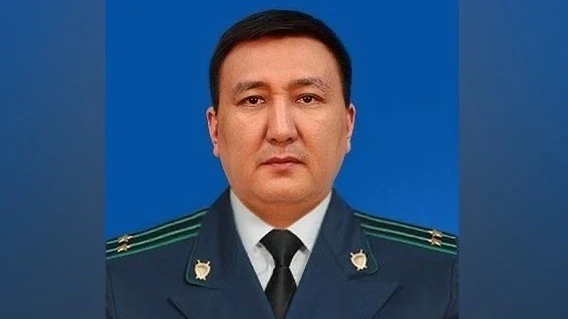
On the same day, by presidential decree, the Border Service was separated from the GKNB, and the 9th service responsible for the protection of high-ranking officials was transformed into an independent body subordinate to the president. These changes signify a significant reduction in the powers of the state committee, which previously managed many key functions. Security agencies believe this is just the beginning — a serious reform of the GKNB is expected, within which the special services will focus on counterintelligence, intelligence, and combating extremism.
According to Edil Baisalov, a certain stage of political history has ended, which came as a surprise to many.
Kaktus.media examines how the GKNB changed under the leadership of Kamchybek Tashiev.
GKNB as a Central Structure
Kamchybek Tashiev became the head of the State Committee for National Security on October 16, 2020. During this period, the committee significantly strengthened its position and became the main power structure in the country.Already in November 2020, the State Border Service was transferred to the GKNB, which was explained by the presidential administration as a necessity to enhance the fight against smuggling and threats related to banditry and drug trafficking.
In March 2021, the State Service for Economic Security was abolished, and its functions were also transferred to the GKNB.
One of the last initiatives of the GKNB under Tashiev was a draft law reforming the system of special ranks in the tax service, prosecutor's office, and customs, which prohibited employees of these agencies from wearing uniforms with epaulettes and receiving militarized ranks, except for law enforcement agencies. Interestingly, this issue was considered on February 10 by the deputies of the relevant committee of the Jogorku Kenesh in an extraordinary manner at Tashiev's request.
At the same time, internal security divisions were strengthened in most state structures, and former GKNB employees took leadership positions in civilian agencies. For example, Kanybek Dosmambetov, the former head of the GKNB department for the Jalal-Abad region, became the Minister of Health.
Tashiev repeatedly stated that at the time of his appointment, the committee was in decline, and its employees in the regions were languishing in abandoned libraries and culture houses. He also emphasized that the employees were demoralized and corrupt, with some even passing information to criminal groups. Under his leadership, active construction of new buildings for district offices of the GKNB began, as well as the construction of housing for intelligence officers, kindergartens, and camps.
Fight Against Organized Crime
One of the priorities of the GKNB under Tashiev was the fight against organized crime, which he stated, pointing out that criminal groups in Kyrgyzstan operated almost like a second government.The special operation on October 3, 2023, during which criminal authority Kamchy Kolbaev was eliminated, marked the beginning of this fight.
This was followed by a wave of arrests. Tashiev repeatedly emphasized that there would no longer be organized criminal groups in the country, and his words "we will identify them" and "respected bandits" became memes.
"I will personally lead the fight against organized crime groups. Behind me are the national security agencies, law enforcement agencies, the prosecutor's office, and the court. Together we will crush organized crime groups," Tashiev stated.
This fight also affected the business environment. Dozens of businessmen were arrested on suspicion of financing criminal groups. The scale of the arrests was so significant that even mid-level entrepreneurs began to fear attracting the attention of the special services. Moreover, they complained about unjustified inspections and pressure from government agencies, which generally worsened the conditions for doing business. Tashiev himself acknowledged this problem, noting that from January 1, unjustified inspections of honest entrepreneurs would cease.
Corruption and "Kusturization"
Sadyr Japarov, who came to power, promised an uncompromising fight against corruption. Arrests, high-profile criminal cases, and detentions of officials began, but it soon became clear that this did not always lead to real sentences. In many cases, defendants were offered to compensate for damages in exchange for leniency, which became known among the people as "kusturization."According to Tashiev, over five years, the state managed to recover property and financial assets worth more than 300 billion soms, as well as over a thousand enterprises and more than 30,000 hectares of land.
In 2024, at the initiative of the GKNB, a law was adopted that established mandatory real prison terms and a lifetime ban on public service for those accused of corruption and their relatives.
GKNB: A Universal Body
Although the formal powers of the GKNB were not increased, in practice, the state committee began to deal with issues that previously fell under the jurisdiction of the Ministry of Internal Affairs, local authorities, and even sanitary services, all by the personal directive of the chairman.Fight Against Prostitution
In November 2023, at the opening of a new GKNB building, Tashiev raised the issue of prostitution in the country."If we don't raise this issue, then who will? If people like us talk about it, society starts to listen. Recently, the behavior of girls has worsened. Students from villages come to Bishkek to study, bring money from their parents, study, and start engaging in prostitution," Tashiev said, instructing his employees to start fighting against brothels.
Immediately after this, operations were conducted across the country to identify a network of brothels disguised as massage parlors, saunas, and hotel rooms where intimate services were provided. However, the methods used by the GKNB caused outrage among human rights defenders, as the personal data of women were disclosed nationwide.
One of the most high-profile cases occurred on November 27, 2023, when the GKNB released a press release about the detention of 137 sex workers. This announcement included photographs and personal details of some of the detainees. The GKNB justified its actions as "preventive measures."
Medical Control
In 2023, the GKNB began checking dental clinics. During the inspections, violations in taxation, licensing, and sanitary standards were identified. Of the 122 clinics in the Jalal-Abad region, 78 were found to have serious violations. Employees of the State Sanitary and Epidemiological Surveillance Service suspected of corruption and illegal issuance of sanitary conclusions were detained.Inspections also extended to beauty salons and beauty clinics, where smuggled and low-quality products were identified.
"This could lead to the destruction of the gene pool of the nation, as most young Kyrgyz women turn to cosmetologists," the GKNB noted.
Corruption in Education
The GKNB began fighting corruption in the education sector. Directors of several capital schools were detained for accepting bribes for enrolling children in the first grade. Last year, the state committee checked electronic school registrations and identified cases of fictitious enrollment. The Ministry of Education warned parents and school leaders that enrollment in the first grade was under the control of the GKNB.Also, under the influence of the GKNB, the plan for transitioning to 12-year education was revised. Initially, it was planned that in the 2025/26 academic year, enrollment in both the first and second grades would occur simultaneously, as well as the transition of students through classes. However, after parents expressed outrage, Kamchybek Tashiev also became interested in school reforms. Following his intervention, the Ministry of Education changed the plan.
Universities also underwent inspections by the GKNB. Heads of several higher education institutions were removed from their positions, and thousands of students were expelled. Tashiev also threatened students with punishment for missing classes and "failing" exams.
Food Safety
Although food safety formally falls under other services, the GKNB also intervened in these matters. For example, in July 2025, the state committee identified expired products in the "Korzinka" store. The special services discovered that the company had been selling expired sauces and delicacies for five to six years, passing them off as fresh. To conclude the investigation, GKNB employees conducted the disposal of the products.Questions regarding food prices were also under Tashiev's control.
Fight Against Domestic Violence
Although the fight against domestic violence falls under the jurisdiction of the police and social services, at Tashiev's request, the GKNB actively engaged in this area. He urged women who suffered from violence to contact the GKNB and took control of some high-profile cases.Energy
In November 2025, amid an energy crisis, Tashiev ordered a ban on the operation of cafes and restaurants after 10 PM, threatening to cut off electricity in case of violations. Although the GKNB was not officially involved in this, Tashiev's personal directive had an effect, and the mayors of major cities began to impose restrictions. Additionally, a ban on the operation of mining farms was introduced in Kyrgyzstan until spring 2026.Pressure on Civil Society
With the growing influence of the GKNB, pressure on the civil sector also increased. Journalists, human rights defenders, and activists faced summons for questioning, detentions, and searches. Ordinary citizens who actively participated in social networks and expressed their opinions on current issues felt this pressure as well. For instance, the administrator of the popular Instagram account "Babsky Blog" was summoned for questioning by the GKNB after posting about how the restrictions on cafes and restaurants would affect workers in the restaurant business.Businessmen, politicians, and public figures actively participating in societal life became less public, fearing to come under the GKNB's scrutiny.
Thus, over five years, the GKNB transformed from a special service into a universal body controlling all spheres — from fighting organized crime and corruption to regulating prices and enrolling first-graders.