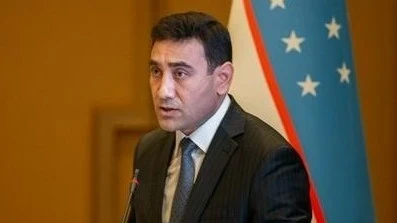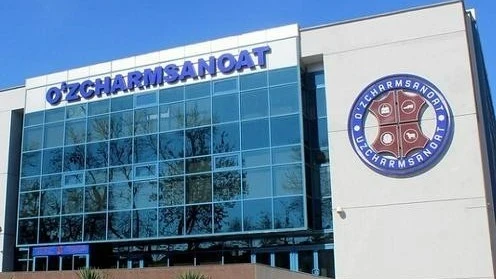
On February 13, the president visited the Akhangaran district of the Tashkent region, where he got acquainted with the work of several enterprises and held a meeting dedicated to key tasks for economic growth in various areas. According to him, both footwear products and the leather industry as a whole are showing negative results. In this regard, a decision was made to dismiss the head of the 'Uzcharmsanoat' association. The president emphasized that the footwear industry is experiencing rapid changes in fashion trends, and enterprises must respond quickly to market demands to remain competitive.
However, Uzbekistan faces serious problems: out of 972 companies operating in this sector, 378 have ceased their activities, and 120 enterprises are using less than half of their capacities. At the same time, there is a high dependence on imports concerning components such as insoles, laces, and other fittings.
As a result of last year, the leather industry failed to meet even 40% of the export plan, which amounted to $250 million. The president characterized the current plans for footwear production and exports as unsatisfactory. He instructed responsible officials to intensify efforts in this sector, increase production loads, develop localization and exports, and improve the management of the 'Uzcharmsanoat' association.
During the meeting, Mirziyoyev also noted that there is insufficient activity in implementing innovations and a slow response to changes in several other areas.
Over the past three years, the share of industry in added value has increased from 40.7% to 43%. However, in some sectors, this figure is below average: in the food industry, it is 30%, in electrical engineering — 29.3%, and in automotive manufacturing — 20.7%.
The president focused on the automotive industry. Uzbek factories can produce 650,000 cars per year but are not reaching this volume. In this regard, he instructed to increase production capacities to 510,000 units.
Additionally, the task was set to organize the production of 763 new types of parts in cooperation with local companies. To maintain stable demand, in the president's opinion, banks should lower interest rates on auto loans and increase the volume of such transactions.
There is also a need to increase the production of tractors, harvesting machines, and seedling planting machines. Farmers are ready to purchase 15,000 units of agricultural machinery per year if the Chirchik cluster reaches full capacity and competitive prices and favorable leasing conditions are offered.
Furthermore, key economic indicators were presented. Last year, Uzbekistan's gross domestic product exceeded $147 billion, corresponding to a growth of 7.7%.
"In 2026, economic growth is expected to be 6.6%, and GDP will reach $167 billion. This is a cautious forecast, taking into account the geopolitical situation and economic fluctuations," the president noted.