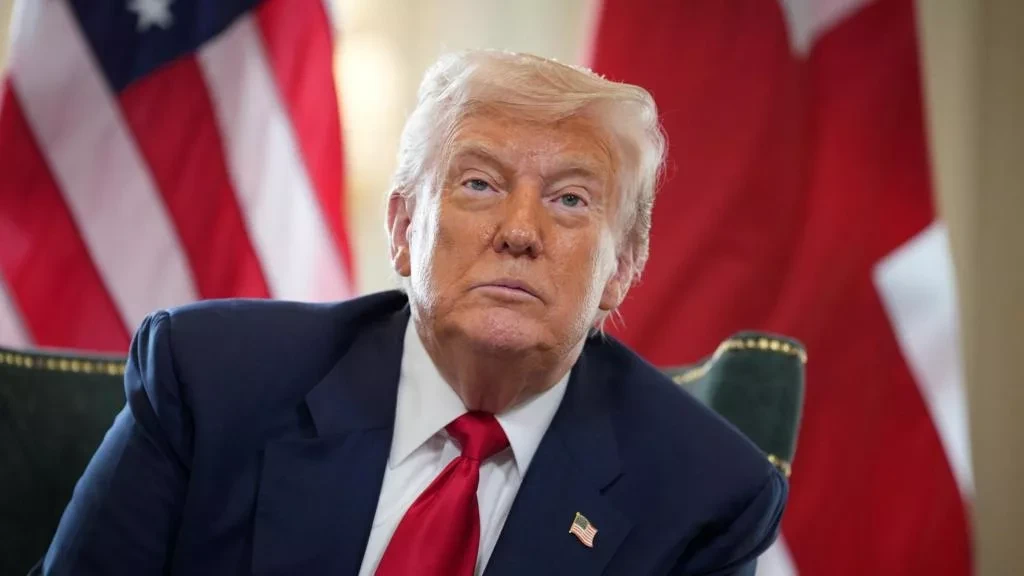
He emphasized that "the people we are dealing with are a completely different group... [they] are very professional."
Additionally, Trump confirmed his suspicions that Ali Khamenei's son and the new Supreme Leader of Iran, Mojtaba Khamenei, are likely dead or in critical condition. The President added: "The son is either dead or in extremely critical condition."
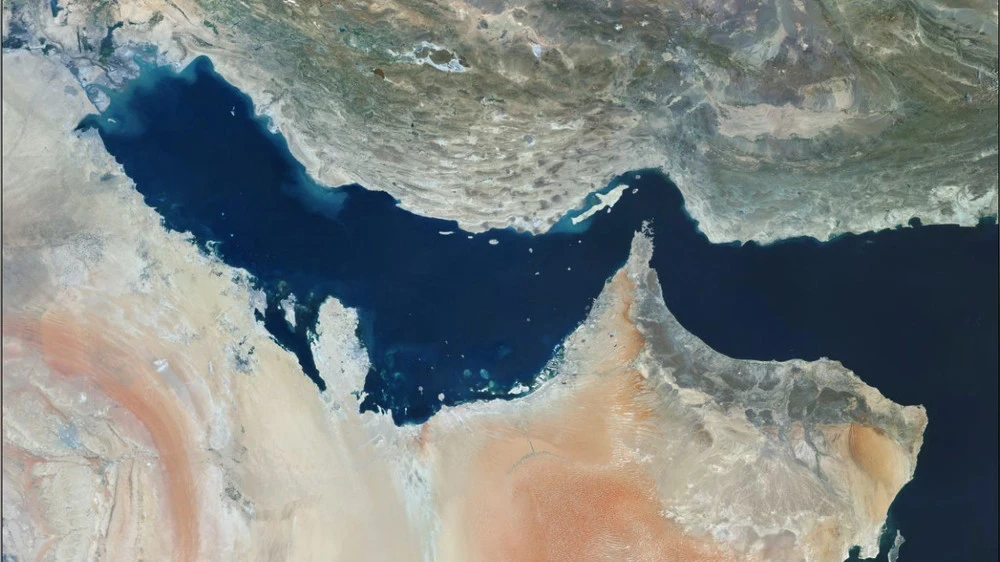
Trump also reported that Mohammad Bagher Ghalibaf, the speaker of the Iranian parliament, has authorized the passage of tankers through the Strait of Hormuz.
Israeli media reported a fire at an oil refinery in Haifa.
According to Israeli media, a fire broke out at the Bazan oil refinery, located in the northern part of Haifa, following a rocket attack.
This facility had already been attacked by Iran on March 19 in response to strikes on Iranian energy infrastructure.
What are the events on the 31st day of the attacks?
The U.S. and Israel continue to carry out nighttime strikes on Tehran and other cities, including energy infrastructure targets in the Iranian capital, causing unrest in global stock and oil markets.
As a result of the attacks, there was a power outage; however, according to Iranian authorities, it has already been restored.
In an interview, Trump expressed his intention to "seize oil in Iran," while Tehran accuses Washington of preparing a ground attack despite calls for negotiations. On Sunday, he noted: "I am almost certain that we will make a deal with them [Iran]."
The Syrian army reports drones near the Iraqi border.
This morning, the Syrian army reported a large drone attack on several of its bases near the Iraqi border, according to information from SANA.
The military claims that most of the drones were shot down; however, no details were provided about those that could not be intercepted.
Rocket attack on the Mohammed Alaa airbase in Iraq.
The Iraqi Ministry of Defense reported that this morning the Mohammed Alaa airbase, located near Baghdad International Airport, was subjected to a rocket attack. As a result of the attack, one aircraft was destroyed, and there were no casualties among the personnel.
The ministry added that authorities are currently assessing the damage and determining the source of the attack.
Land Day: Events in Palestine on March 30, 1976.
Mohammed Haddad
Every year on March 30, Palestinians commemorate Land Day, or Yom al-Ard, remembering the tragic events of 1976 when Israeli forces killed six unarmed Palestinians and injured over 100 during protests against the confiscation of Palestinian land.
Israel planned to confiscate 2,000 hectares (4,942 acres) of land owned by Palestinian citizens in Galilee, which became part of Israel's state policy after the establishment of the state.
Although the confiscation affected all of Galilee, the main protests of 1976 took place in the Palestinian towns of Sakhnin, Arabe, and Deir Hanna.
The area of confiscated land is comparable to 3,000 football fields or the territory from the southern tip of Manhattan to the beginning of Central Park in New York City.
Read more here.
Israel strengthens its position amid increasing isolation and new conflicts, says analyst.
Israel is preparing for a prolonged confrontation, conducting large-scale military operations against several countries as it faces increasing isolation in the region, stated a Middle East expert.
In an interview with Al Jazeera, Mohamad Elmazri from the Doha Institute for Graduate Studies noted that Israel's latest budget of $271 billion is the highest in its history, indicating the country's intention to wage wars on multiple fronts.
"Historically, the U.S. allocates significant amounts of military aid to Israel annually, amounting to $3.8 billion, which typically increases in wartime," Elmazri added.
In his opinion, there is a growing understanding within Israel that the situation may change. The American political landscape is shifting, and an increasing number of Americans are beginning to view both Israel and U.S. support for it critically.
"The latest budget shows that Israel does not consider itself on the brink of ending the war, but rather in the middle or even closer to the beginning," he emphasized.
"I think they realize that achieving their vision of a Greater Israel will require a prolonged war or several conflicts — from Syria and Lebanon to the Palestinian territories and Iran," Elmazri added.
Latest news
- Israeli forces carried out several airstrikes on the suburbs of Beirut and other areas of Lebanon.
- Israel reported six injuries among soldiers in three separate incidents in southern Lebanon.
At least three Palestinians were killed, and many were injured as a result of an Israeli airstrike southeast of Gaza.- The Prime Minister of Australia urged President Trump to provide clearer guidance regarding the objectives of the war in Iran and insisted on de-escalation.
The Vietnamese oil refining and petrochemical company Binh Son Refining and Petrochemical is negotiating with Russian partners for the purchase of crude oil and aims to expand purchases from Africa, the U.S., and Southeast Asia.- The price of Brent crude oil rose by 2.98% to $115.93 per barrel as of 00:00 GMT on Monday, increasing its value by more than 62% since February 27.
Iran confirmed the death of the IRGC Navy commander Tangsiri.
Iran officially confirmed the death of IRGC Navy commander Alireza Tangsiri.
According to a statement from the Islamic Revolutionary Guard Corps (IRGC), Tangsiri died from "the severity of his injuries."
Last week, Israeli Defense Minister Israel Katz reported that the commander was killed along with other high-ranking officials during a "precise and deadly operation" conducted by the Israeli military.
Israel reports more than 6,000 injured since the start of the war.
The Israeli Ministry of Health reported that since the beginning of the war with Iran on February 28, 6,008 injured individuals have been admitted to hospitals, with 121 continuing to receive treatment.
In just the last 24 hours, 232 injured individuals were admitted to hospitals.
Syria offers an alternative route amid the blockade of the Strait of Hormuz.
Syrian President Ahmed al-Sharaa, who is in Berlin for a meeting with German Chancellor Friedrich Merz, stated: "Syria, due to its strategic location and oil exports through Mediterranean ports, can ensure the rapid and safe delivery of goods to Europe in case of any disruptions in the Red Sea or the Strait of Hormuz." His words were reported by the Open Source Intel channel.
Societe Generale has revised its Brent crude oil price forecasts amid the ongoing crisis, expecting the average price in April to be $125 per barrel, considering that the Strait of Hormuz will remain effectively closed until mid-next month.
American missile, untested in combat, hit a gym and school in Iran.
According to visual evidence analyzed by the NYT and weapon experts, on February 28, the Pentagon used missiles that had not been tested in combat. As a result of the attack, civilian facilities near a military complex were damaged.
On the first day of the war with Iran, during an attack on a gym and adjacent school near a military facility in the south of the country, the latest weapon was used. Local officials reported at least 21 deaths as a result of this and other attacks in the city of Lamerd.
The attack on February 28 coincided with the moment when an American Tomahawk cruise missile struck a school in the city of Minab, killing 175 people. However, in the case of Lamerd, it was about weaponry that had not undergone combat testing.
NYT conducted an analysis of video recordings of the two attacks in Lamerd and the aftermath of these strikes. Reporters and munitions experts confirmed that the characteristics of the weapon correspond to the short-range Precision Strike Missile (PrSM), designed to detonate above the target and release small tungsten balls.
According to a press release from the army, prototype testing of the PrSM was only completed last year. On March 1, U.S. Central Command released a video of the missile launch within the first 24 hours of the war. A few days later, Admiral Brad Cooper stated that the PrSM was used for the first time in combat, actively promoting its debut.
Trump considers a military operation to seize Iranian uranium, WSJ reports.
According to U.S. officials, President Trump is considering a military operation to seize nearly 1,000 pounds of Iranian uranium. This complex and risky mission would likely require the presence of American troops on Iranian territory for several days or longer.
Trump has not yet made a final decision but is generally open to the idea, as it could help achieve his main goal of preventing Iran from developing nuclear weapons.
According to a source familiar with Trump's position, the president has also urged his advisors to pressure Iran to provide uranium as a condition for ending the war. Trump makes it clear that the Iranians cannot keep the material, and he is discussing the possibility of seizing it by force if Iran does not agree to hand it over.
The record Trump stated that there has already been a 'regime change' in Iran. What else has happened? first appeared on K-News.