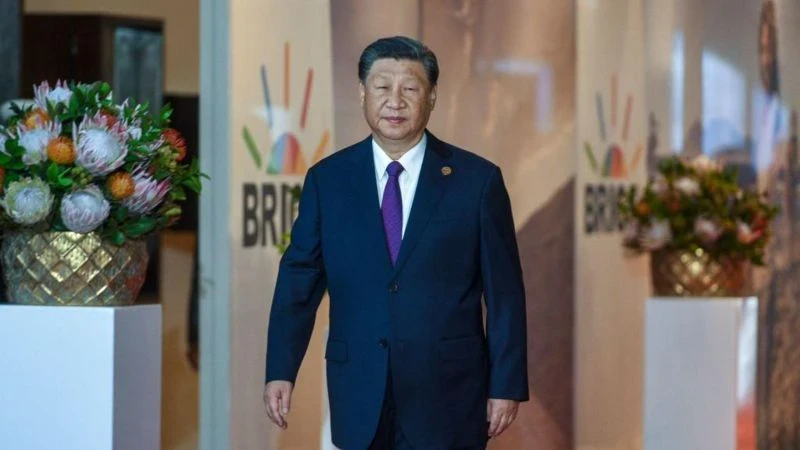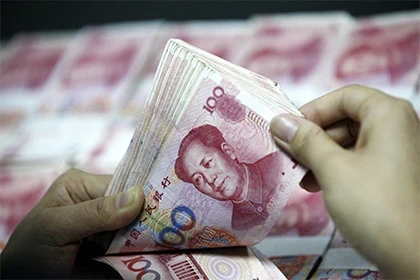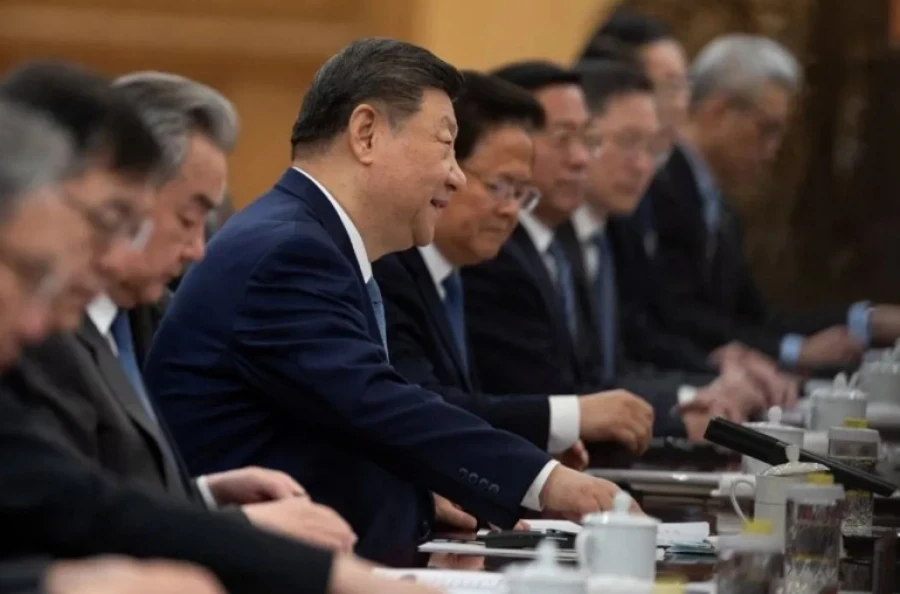
Recent statements by Xi Jinping about the need to create a “strong currency” and the corresponding financial foundation have sparked widespread resonance.
Xi Jinping, the Chairman of the People's Republic of China, has expressed a desire to make the yuan a global reserve currency, which he believes is critically important for a powerful financial state. The publication "TRT in Russian" analyzed whether China will be able to reduce its dependence on the US dollar.
The Need for a “Strong Currency” for China
Xi Jinping emphasized that the yuan must find broad application in international trade, investments, and currency operations. He aims to increase its significance in global settlements and reserves.
The Chinese leader outlined his ideas in the official journal of the Communist Party, Qiushi.
According to Xi Jinping, China needs a “powerful central bank” that can effectively manage cash flows. Additionally, competitive financial institutions are required to attract international capital and influence global prices.
China has long been working on the internationalization of the yuan, and now Xi Jinping's words about a “strong currency” and its financial foundation are becoming particularly relevant.
Initially, his statements were addressed to high-ranking officials back in 2024, but their publication only took place at the end of January 2026.
Xi Jinping's article was published against the backdrop of increasing uncertainty in global markets. Economist Kevin Lam from Pantheon Macroeconomics notes that “China feels that the shift in the global order has become more real than ever.”
It is not surprising that central banks around the world are actively buying gold, preferring it to the dollar.
In 2015, the dollar accounted for about 59% of reserves, while gold accounted for approximately 10%. Now, the American currency makes up 41%, while the precious metal accounts for 28%.
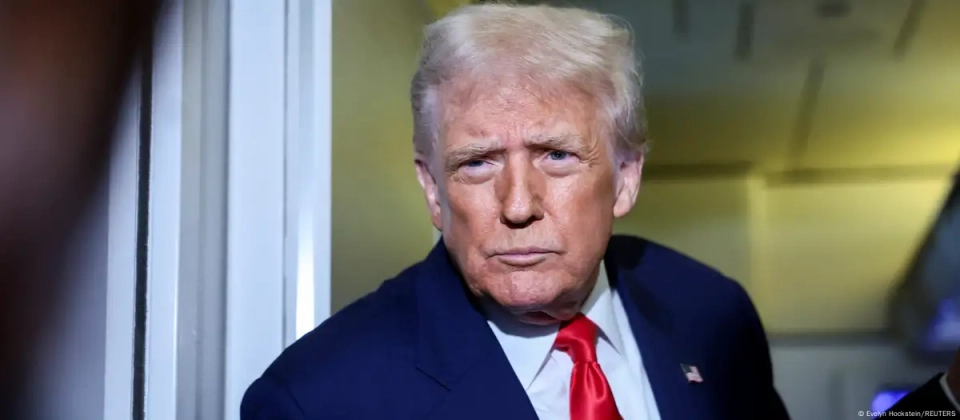
Experts point to the weakening of the dollar and the pressure that Donald Trump exerted on the US Federal Reserve System. A change in leadership at this regulator is expected in the spring.
Geopolitical tensions and trade wars are also prompting a reassessment of attitudes toward the dollar. Xi Jinping's increased attention to the yuan reflects changes on the international stage.
China's Long-Term Financial Strategy
The Chinese are known for their ability to plan for the long term, and it is not surprising that they began looking for ways to reduce dependence on the dollar 17 years ago.
The 2008-2009 crisis was a turning point when the Chinese authorities first allowed international settlements in yuan, establishing a special exchange rate controlled by the People's Bank of China (PBOC).
Since then, the yuan has gradually been turning into an international reserve currency, but this process is slow and variable in success.
“The yuan is strengthening its position in international settlements, especially in trade with Asia, the Middle East, and Africa. Bilateral currency agreements are being established, and the infrastructure for cross-border payments is developing,” explained investment advisor Yulia Kuznetsova.
According to Zhu Hexin, Deputy Chairman of the PBOC, in 2024, about 30% of China's foreign trade payments were conducted in yuan. Payments with Russia are made in both yuan and rubles, and by the end of 2025, the share of such transactions exceeded 99%.
However, experts are not rushing to assert that the yuan has a real chance of becoming a global reserve currency. According to SWIFT data, it ranks only fifth or sixth in the world in terms of transaction volume, with its share fluctuating between 2.5% and 3.5%. It lags behind not only the dollar and the euro but also the British pound and the Japanese yen. In global gold and foreign exchange reserves, the yuan accounts for no more than 2.5%.
Reasons for the Yuan's Barriers
These figures are significantly lower than China's share in the global economy, which is about 19-20%, and in global trade, which is about 15%.
Moreover, the yuan does not yet meet the main criteria for reserve currency status, as it is not freely convertible. The PBOC continues to control it, and for foreign trade settlements, a rate is used that differs from the domestic one. Additionally, there is a closed capital market in China.
“The status of a reserve currency has its downsides as well. High structural demand for it can lead to an appreciation of the exchange rate, which is not always good for export-oriented economies like China,” explained Yan Pinchuk, Deputy Head of the Exchange Trading Department at WhiteBird.
The Impossibility of Replacing the Dollar
Despite all the efforts of the Chinese authorities, the yuan is still not capable of claiming the role of a global reserve currency. Nevertheless, China continues to reduce its dependence on the dollar in international trade, expanding settlements in yuan, accumulating gold, and diversifying its currency reserves.
“However, in the near future, China will not be able to abandon the dollar, as it remains the main currency in global trade, in commodity markets, and in global finance,” emphasizes Yulia Kuznetsova.
According to her, no other currency has a chance of replacing it. For example, the euro, although it is the second most important currency, faces problems due to the fragmentation of financial policy in the European Union.
The recent statements by Chinese authorities should be viewed as part of a long-term strategy to strengthen financial sovereignty. Therefore, sharp changes should not be expected.
Experts suggest that the future lies not in a “new dollar,” but in a multipolar currency system, where the dollar would retain its dominant position, but its share would gradually decrease in favor of regional currencies, gold, and alternative settlement systems.
Photo www