Kazakhstan, starting in 2026 when it will chair the EAEU, is taking significant steps to protect its automobile and agricultural machinery manufacturers, despite criticism directed at its representatives in the EAEU, who allegedly cannot defend the country's interests, writes Maksat Nurpeisov.
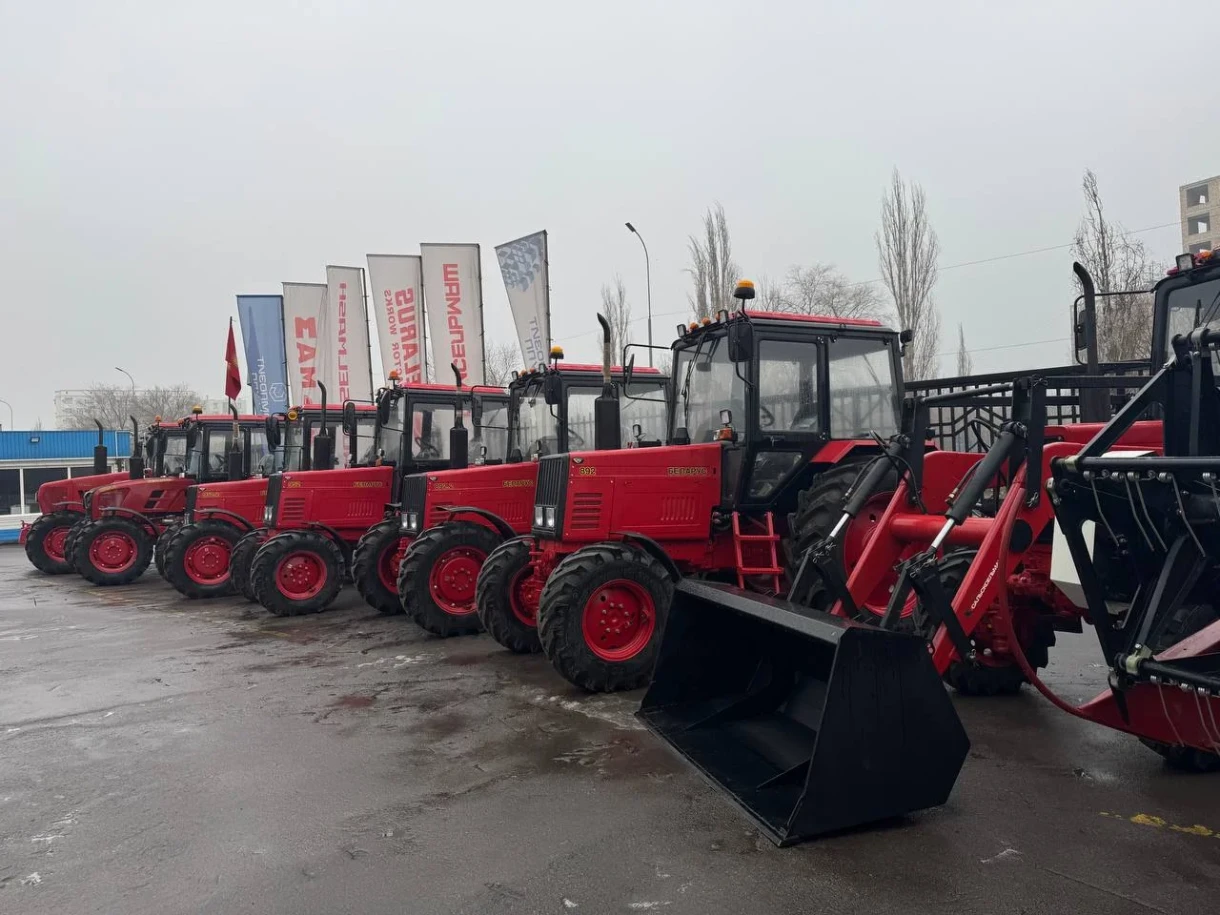
The public discussion of the draft order from the Ministry of Ecology of the Republic of Kazakhstan "On amendments to the order of the acting Minister of Ecology, Geology and Natural Resources of the Republic of Kazakhstan dated November 2, 2021 No. 448 'Methodology for calculating the recycling fee' has concluded. The agency proposes to increase the recycling fee on vehicles and agricultural machinery imported from Russia and Belarus.
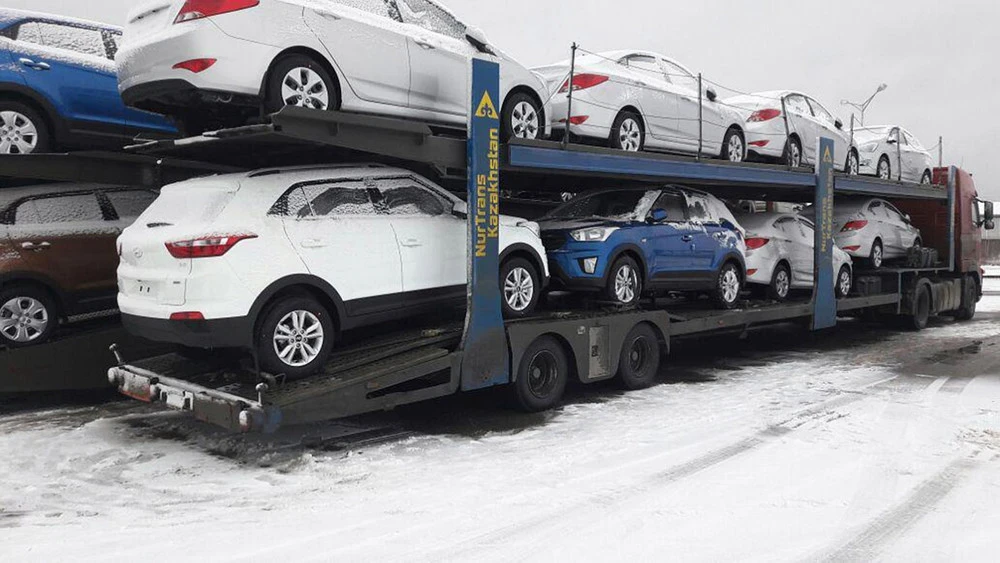
This step can be seen as a "symmetrical response" to the actions of the Russian side, which has significantly raised recycling fees on equipment from neighboring countries. Last autumn, the Russian Telegram channel Baza reported that since spring 2024, more than 30,000 Hyundai, Kia, and Skoda vehicles assembled in Kazakhstan under the EAEU framework had been imported into Russia. Vehicles produced in a special economic zone were only subject to a "commercial" recycling fee ranging from 667,000 to 1.9 million rubles upon import. However, starting in October, the Federal Customs Service began to demand additional payments en masse – from 750,000 to 3.5 million rubles, citing the presence of an import declaration for vehicles from Kazakhstan. Otherwise, owners risk losing their EPTS (electronic vehicle passport). According to Baza, "at one time, customs officers did not require import declarations and accepted payments without questions, but now they are imposing additional charges. The Kazakh side distanced itself from the problem, stating that the actions of the Federal Customs Service are not within their competence."
Now, as reported by the Ministry of Industry and Infrastructure Development of Kazakhstan, "the balance will be restored," and this will only affect equipment imported from Russia and Belarus.
So far, there has been no official response from Moscow and Minsk, but representatives of industry associations in these countries have reacted nervously. It is worth noting that the Russians have reasons for concern: the current rates of the recycling fee when importing a vehicle into Kazakhstan amount to 757,000 tenge (114,000 rubles), which is significantly lower than the Russian rates (800,000 rubles) when importing in the opposite direction. The draft order from the Ministry of Ecology of the Republic of Kazakhstan proposes to increase the coefficient nearly 40 times, which will lead to rates of 29 million tenge, equivalent to 4.4 million rubles.
What does this mean? Firstly, the import of products from neighboring automakers, such as AvtoVAZ, will become not just expensive but economically unfeasible. Secondly, this will create additional opportunities for the Kazakh automotive industry, the need for accelerated development of which has been raised at the level of the Kazakh government. At the same time, AvtoVAZ, which is in poor condition, holds not only economic but also political significance for the Russian authorities. Anton Shaparin, Vice President of the National Automobile Union of the Russian Federation, believes that this step represents "another blow from Kazakhstan to the EAEU." Although he does not directly indicate possible retaliatory measures from Moscow, they will certainly follow – whether in this direction or another.
"This is again an internal problem: Kazakhstan is closing its market to AvtoVAZ, as Russia has restricted its market for others. I fear that such practices will spread to other types of products, and measures will be taken to block Russian certificates and goods entering the Kazakh market," Shaparin is quoted by the Russian industry portal NGS22.ru.
In his opinion, "the recycling fee is used as a tool of political pressure, and we hope that serious negotiations about the future of the EAEU, customs operations, and the preservation of a unified certification space are currently underway."
Under Kazakhstan's chairmanship, mutual "strikes" in the Eurasian "ring" are likely to continue. But can we expect the beginning of a "great trade war" between Astana and Moscow? Just yesterday, such a framing of the question seemed strange. However, today we are witnessing significant changes in global trade, and Kazakhstan is beginning to challenge even the "sacred" contracts with transnational raw material companies. Moreover, this is being done successfully. In light of the situation with the response to Russia's closure of its market to Kazakh automakers, it seems that Kazakhstan is finally ready to bring order to its integration union, once established by Nazarbayev.
The EAEU, although it contains the word "economic" in its name, has long become a field for pressure from Russia on its partners. Many remember the "sugar crisis" of 2022, when Russia blocked the supply of raw materials for Kazakh sugar factories through the EAEU, leading to a sharp rise in prices. Over the past 10 years, Russia has applied more than 500 "non-tariff" measures against Kazakhstan and other member countries, including sanitary and technical restrictions. Kazakhstan has long been unable (or unwilling?) to provide an adequate response to these actions. The reasons for this are varied, both objective and subjective. Objectively, Russia is much larger in territory and economy, and Kazakhstan is historically dependent on Russian imports.
But why does Kazakhstan continue to trade at a loss not only with Russia but also with other EAEU members? In 2023, Kazakhstan's negative trade balance with Russia and Belarus is estimated in the billions of dollars. The well-known publicist Petr Svoik links "Russian dependence" to "differences in economic potentials." But is this really the only reason?
As noted by Olzhas Zhoraev, an expert from the Association for Analysis and Management of State Policy, the very structure of the Eurasian Economic Commission creates limitations for promoting the interests of member countries. "If the director of a department can be from Kazakhstan, and his deputy can be a representative from Belarus or Armenia, then the minister can be a Russian or a representative from the Kyrgyz Republic," he explains. Thus, Eurasian integration becomes something abstract: it seems to be in the interests of all countries, but does not take into account the interests of each of them individually.
Kazakh economist Arman Beisembaev emphasizes that Kazakhstan is the only country in the EAEU that does not derive economic benefits from this union:
"We have a huge trade imbalance with Russia – about 10 to 1. A large amount of imports comes from Russia. The similarity of our economies nullifies the benefits for Kazakhstan from this union." His colleague Tulegen Askarov previously estimated Kazakhstan's losses from participation in the EAEU at 20 billion dollars over the first 7 years, which amounts to about half of the revenue part of the budget of the Republic of Kazakhstan.
According to Olzhas Zhoraev, the main reason for such losses lies in the lack of competencies among Kazakh integrators. "The selection for the EEC from Kazakhstan is not transparent, which increases the risks of delegating unsuitable personnel." He also points to the lack of reliable statistics, which affects Kazakhstan's positions in international organizations. "Five years ago, at the Astana Economic Forum, Moscow economists reproached the Kazakh side for not having a grasp of the situation in their economy. And judging by the quality of our statistics, this problem remains relevant," he adds.
Overall, the current events confirm the thesis about the uselessness of the EAEU for Kazakhstan. And although it is still too early to assert that actions to protect its automotive market are a sign of Astana's intention to sever relations, the fact that Kazakhstan is showing activity is already progress, even if it is in the form of a response. As they say, "a bad beginning is half the battle"…