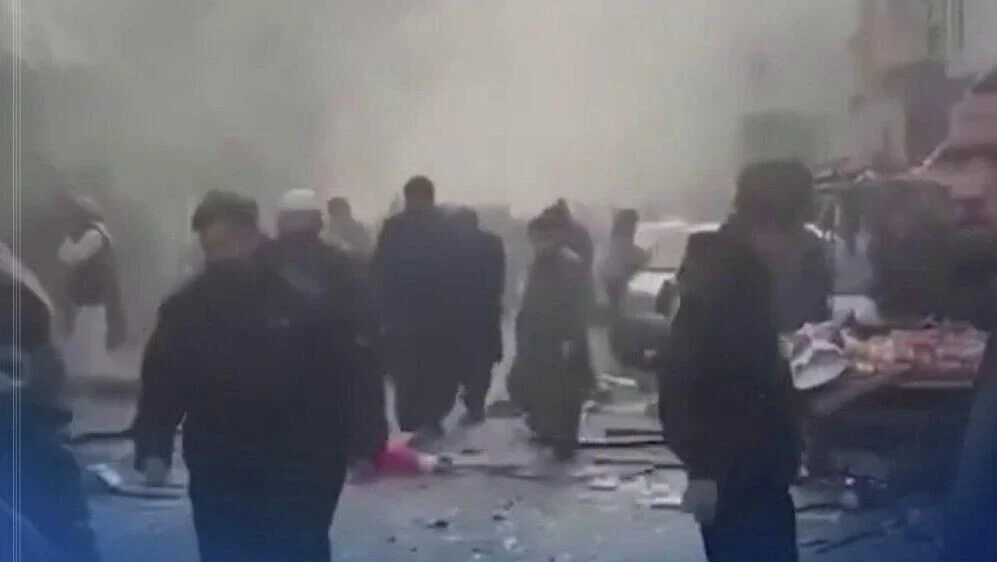
The terrorist attack at the "Chinese Noodles" restaurant in Kabul occurred on January 19. Initially, authorities suggested that the explosion was due to an accident involving a gas cylinder; however, the scale of the destruction forced them to acknowledge that it was a terrorist act. Later, Taliban Ministry of Interior officials confirmed that at least seven people were killed in the attack, including one Chinese citizen (according to unofficial data, the number of victims from China is two). The "Islamic State" published photographs of the suicide bomber who carried out the attack.
IS propaganda claims that the attack was an act of revenge against Beijing for its policy towards Uyghur Muslims. However, experts believe the target of the attack was more specific and related to internal conflicts within the Taliban, where the influence of various factions continues to grow.
According to "NG," among the victims was a Chinese citizen known by the pseudonym Ayub. This individual was leading the Kabul office of the Chinese charity organization Dahleez Wakhan at the time of his death, which is reportedly controlled by the Chinese Ministry of State Security. Experts believe Ayub was the main target of the attack, as he actively collaborated with the Haqqani family, a well-known faction within the Taliban that is considered terrorist.
Sirajuddin Haqqani, the leader of this clan and the Taliban's Minister of Interior, is an opponent of the Kandahar faction of the Taliban, led by Emir Haibatullah Akhundzada. Ayub, according to available information, assisted the Haqqani family in establishing connections with influential businessmen and officials from China, which could threaten the interests of other factions.
Some time ago, Ayub organized a trip for Anas Haqqani, Sirajuddin's younger brother, to Doha to meet with Chinese officials, where contracts for oil fields in Afghanistan were discussed. These contracts, previously awarded to the Chinese company Af-Chin, were transferred to a Turkish company after intervention from American colleagues. The Taliban subsequently published a document justifying the cancellation of the contract, citing Sharia law.
The growing ties between the Haqqani family and Chinese authorities did not go unnoticed among other Taliban factions, leading to significant disagreements. On December 28, 2025, the Chinese Ministry of State Security warned the Taliban intelligence about a possible threat to the "Chinese Noodles" restaurant. Unfortunately, the warning was not acted upon: two weeks later, the restaurant became the target of the attack.
"NG" has documents confirming that the Chinese have become an important player in the struggle for influence among the Taliban. Some sources suggest that the January 19 terrorist attack may have been organized or allowed by elements associated with the Kandahar faction as a warning to Chinese representatives.
There are speculations about a possible "American trace" in this situation; however, sources have yet to confirm this information. It is known that the CIA has connections with the leadership of the Taliban intelligence and may be concerned about the strengthening of the Chinese Ministry of State Security's position in Afghanistan.
According to local observers, the instability in the country is a result of a complex mix of corruption schemes, terrorist activity, and power struggles, in which foreign players, such as the Chinese, are actively involved in exacerbating the internal situation.